Preventing HVAC Water Leaks in Your Home
A small puddle near your indoor AC unit can turn into stained drywall, damaged flooring, or a ceiling leak faster than most homeowners expect. In Central Texas, where air conditioners work hard through long, humid stretches, preventing HVAC water leaks is a practical part of protecting your home – not just a maintenance detail.
Your air conditioner naturally creates condensation as it removes humidity from indoor air. That moisture is supposed to flow safely through a drain line and outside your home. When the system cannot move that water where it belongs, the result can be anything from a damp utility closet to a costly repair.
Why HVAC Systems Start Leaking Water
Most residential HVAC water leaks come from a drainage problem, but the source matters. A technician needs to identify whether the issue is a simple clogged line, a mechanical failure, or a sign that the system is not operating correctly.
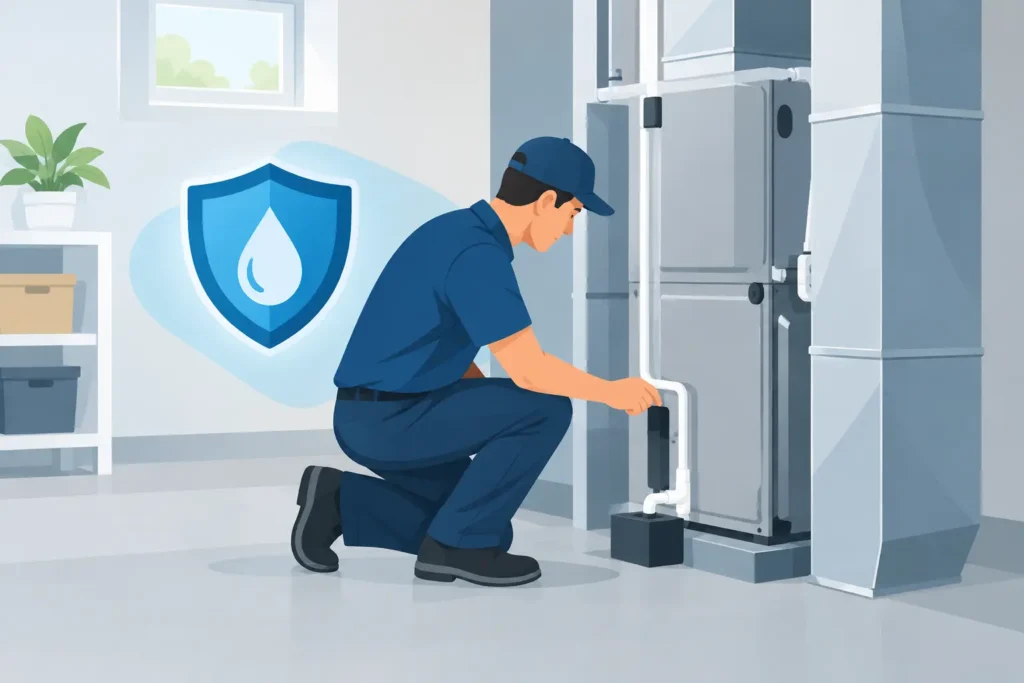
A clogged condensate drain line is one of the most common causes. Over time, algae, mold, dust, and debris can build up inside the line. Water backs up into the drain pan, and once that pan fills, it can overflow around the air handler or through the ceiling below it.
A damaged or rusted drain pan can cause similar trouble. Older systems may have a primary pan beneath the evaporator coil and, in some installations, a secondary safety pan. If either pan cracks, rusts through, or sits out of position, it may not catch and direct water properly.
Frozen evaporator coils are another concern. A dirty air filter, blocked airflow, low refrigerant, or a blower problem can allow the coil to freeze. When the ice melts, the system may produce more water than the drain setup can handle. This is why simply cleaning up a leak without finding the cause can lead to a repeat problem.
Early Warning Signs You Should Not Ignore
Water does not always appear directly beside the HVAC equipment. Many Central Texas homes have air handlers in attics, closets, garages, or secondary spaces, so the first clue may show up somewhere else.
Watch for a musty smell near vents or around the indoor unit, dark spots on a ceiling, peeling paint, warped flooring, or a stain that gradually grows after the AC runs. You may also notice the system shutting off unexpectedly if it has a float switch designed to stop operation when the drain pan fills.
If you see water around the indoor equipment, turn the thermostat off while you assess the situation. Continuing to run an overflowing system can add more water to the problem. Do not remove access panels or handle electrical components if water is nearby. A prompt service call is usually the safer choice, especially when the unit is installed in an attic or the leak has reached finished areas of the home.
Preventing HVAC Water Leaks With Routine Care
The best prevention is a combination of homeowner attention and professional maintenance. Some steps are simple, while others require a trained technician who can inspect parts inside the system safely.
Change the air filter on schedule
A clean filter supports steady airflow across the evaporator coil. When airflow is restricted, the coil can become cold enough to freeze, creating excess meltwater later. Check your filter monthly during periods of heavy cooling use and replace it based on its condition and the filter manufacturer’s recommendation.
Homes with pets, frequent foot traffic, or construction dust may need more frequent filter changes. A very high-efficiency filter can also restrict airflow if it is not compatible with your system. If you are unsure which filter is right for your equipment, ask during your next maintenance visit.
Keep the condensate drain line clear
Your drain line should remain open so condensation can exit without backing up. The line often has a small access point near the indoor unit, but drainage layouts vary from home to home. Pouring household cleaners or unapproved chemicals into the line can damage components or create a problem if used incorrectly.
A maintenance technician can clear the line properly, check its slope and connections, and make sure water is draining at the exterior termination point. This service is particularly worthwhile before the hottest part of the cooling season, when your system will be producing the most condensation.
Check around the indoor unit after heavy use
A quick visual check can catch trouble early. Look around the air handler, drain pan, and nearby ceiling or wall surfaces after several days of high AC use. You are not trying to diagnose the system yourself. You are simply looking for moisture, corrosion, water staining, or a drain outlet that is not releasing water when the AC is running.
For attic systems, use caution. Do not step on unsupported areas, and avoid disturbing ductwork, wiring, or refrigerant lines. If you see standing water in an attic drain pan, turn off the system and arrange service.
The Value of Professional Seasonal Maintenance
A professional tune-up does more than check whether the air conditioner is cooling. It gives the technician a chance to inspect the components that help manage condensation before they cause damage.
During an AC maintenance visit, the technician can inspect the evaporator coil, clean or clear the condensate drain, examine drain pans, test a safety float switch if present, and look for signs of restricted airflow or refrigerant concerns. They can also verify that the equipment is level and that drain connections are secure.
For homeowners in Georgetown, Round Rock, Hutto, Jarrell, Leander, and nearby communities, scheduling maintenance before peak summer temperatures is often the most practical approach. It is easier to correct a slow drain or aging pan on a planned visit than to deal with water damage during a weekend heat wave.
When a Leak May Point to a Larger HVAC Issue
Not every leak is a simple drain-line clog. If your system repeatedly freezes, has weak airflow, runs constantly, or is not cooling well, the water may be a symptom rather than the main problem. Refrigerant levels, blower performance, duct restrictions, and coil condition may all need evaluation.
There is also a trade-off with older equipment. Replacing a drain pan or repairing a drainage issue may be the right, cost-effective choice when the rest of the system is in good shape. But if the unit is older, needs frequent repairs, and has declining efficiency, it may make sense to discuss repair and replacement options together. A clear assessment helps you make a decision based on the condition of your home and equipment, not guesswork.
What to Do If You Find HVAC Water in Your Home
If the leak is active, switch the thermostat to off and place towels or a shallow container where it is safe to limit spread. Move stored items away from the area, particularly if the system is located in a closet, garage, or attic. Take a few photos of the water and any visible staining before cleanup, since they can help show where the issue began.
Avoid using the AC again until the source is checked if water is overflowing, the ceiling is wet, or the unit has shut itself down. A ceiling bulge, electrical concern, or major attic leak deserves immediate attention. For a smaller leak with no visible damage, timely service is still wise because moisture can encourage mold growth and damage materials out of sight.
Neal HVAC can help homeowners identify the source of a water leak, restore safe drainage, and address the system issue behind it. A little attention before the next long Central Texas cooling stretch can keep condensation where it belongs – out of sight and away from your home.