
How to Fix Common Home Humidity Problems
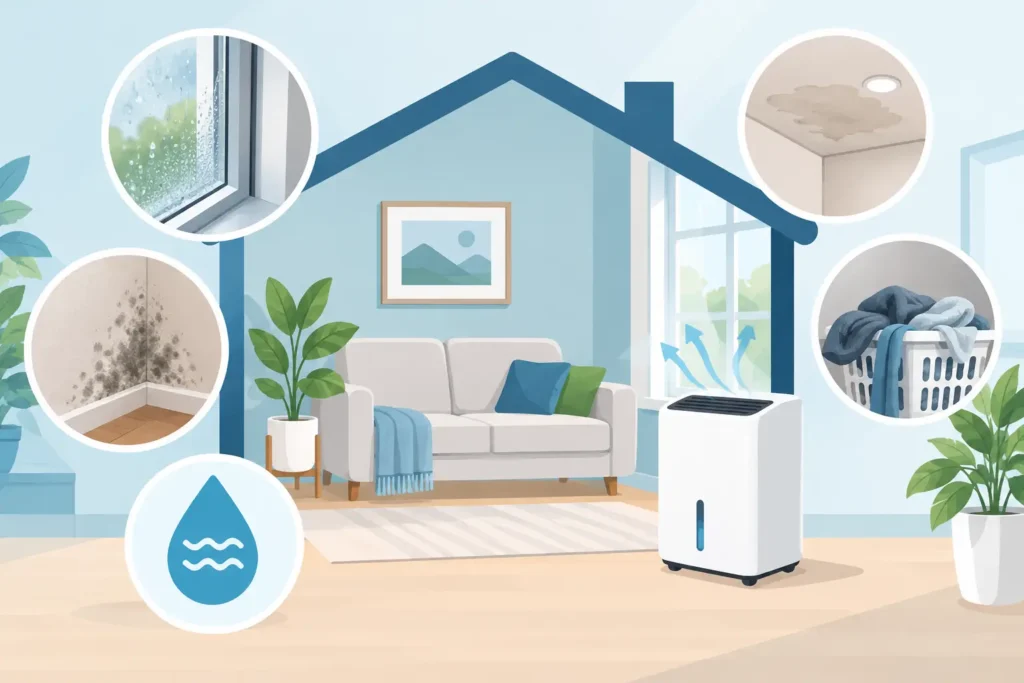
A thermostat can say 74 degrees while your home still feels sticky, smells musty, or leaves you waking up with a dry throat. Those are often home humidity problems, not simply temperature problems. In Georgetown and surrounding Central Texas communities, moisture levels can rise quickly during warm, humid weather, while heated indoor air can become uncomfortably dry during cooler stretches.
Humidity affects how your home feels, how hard your HVAC system works, and even how long building materials and furnishings last. The right fix depends on whether your home has too much moisture, too little moisture, or an air conditioning system that is not controlling humidity as it should.
What Humidity Level Should a Home Have?
Most homes feel best when indoor relative humidity stays between 35% and 55%. Many homeowners aim for about 45% to 50% during cooling season. The number can shift somewhat with outdoor conditions, but a consistent reading above 60% is a reason to pay attention. It creates conditions that can encourage mold growth, dust mites, and musty odors.
Low humidity is usually less common during a Central Texas summer, but it can show up when the heat runs for long periods or when dry outdoor air moves indoors. Levels below roughly 30% may lead to dry skin, irritated sinuses, static shocks, and shrinking wood floors or furniture.
A small digital hygrometer is an easy way to move beyond guesswork. Place it away from supply vents, exterior doors, kitchens, and bathrooms, then check readings at different times of day for several days. One unusually humid shower or rainy afternoon does not tell the whole story. A pattern does.
Signs of Home Humidity Problems
High humidity often feels obvious, but the warning signs are not always dramatic. Rooms may feel warmer than the thermostat setting, even when the AC is running. You may notice condensation on windows, a persistent damp smell in closets, or towels that seem to take too long to dry.
Other signs include peeling paint, bubbling wallpaper, mildew around bathrooms, and wood doors that swell or stick. In some homes, the upstairs feels especially clammy because warm air and moisture rise while airflow struggles to reach the upper level.
Dry air produces a different set of clues. Static electricity, itchy eyes, cracked lips, frequent nosebleeds, and gaps around wood trim can all point to low indoor humidity. If your family feels uncomfortable but the temperature appears normal, checking humidity is a practical next step.
Why a Sticky House Can Still Be Cool
Sweat is one of the body’s natural cooling systems. When the air already holds a great deal of moisture, sweat does not evaporate as easily, so 74 degrees can feel much warmer than it should. Lowering the thermostat may provide temporary relief, but it can also raise energy use without solving the underlying moisture issue.
Your air conditioner is designed to remove some humidity as it cools the air. If it cannot run long enough, has an airflow issue, or is the wrong size for the home, it may satisfy the thermostat before removing enough moisture.
Common Causes of High Indoor Humidity
Some humidity comes from everyday living. Cooking, showering, laundry, and even breathing add moisture to indoor air. In a well-functioning home, bathroom fans, kitchen ventilation, and the HVAC system help manage that moisture. Problems begin when the moisture entering the home is greater than what the home can remove.
In Central Texas, outdoor humidity can also make its way inside through gaps around doors, windows, attic penetrations, and poorly sealed ductwork. A home with return ducts leaking in a hot attic may pull humid, unconditioned air into the system. Crawl space moisture, plumbing leaks, roof leaks, and poor drainage near the foundation can contribute as well.
HVAC concerns are another frequent cause. A clogged condensate drain, dirty evaporator coil, incorrect refrigerant charge, or restricted airflow can reduce an AC system’s ability to remove moisture. These issues should be inspected by a qualified technician rather than handled as a trial-and-error repair.
An Oversized AC Can Create Moisture Issues
It seems logical that a bigger air conditioner would provide better comfort. In reality, an oversized system can cool a house too quickly. It reaches the temperature setting and shuts off before completing the longer cycles needed for meaningful dehumidification.
Short cycling also places added wear on equipment and can create uneven temperatures from room to room. Proper system sizing is based on more than square footage. Insulation, window exposure, duct design, ceiling height, air leakage, and household needs all matter when selecting replacement equipment.
Practical Ways to Lower Humidity at Home
Start with the straightforward steps. Run bathroom exhaust fans during showers and for at least 15 to 20 minutes afterward. Use the kitchen exhaust fan when boiling water or cooking meals that create steam. Make sure dryer vents discharge outdoors and are not blocked or disconnected.
Keep doors and windows closed when the AC is operating, especially on humid days. If you use a portable dehumidifier, select one sized for the space and empty or drain it as required. It can help a problem room, but it may not be the best whole-home answer if every room feels damp.
Your thermostat fan setting matters, too. During cooling season, set the fan to Auto instead of On unless an HVAC professional has recommended otherwise. When the fan runs continuously after a cooling cycle ends, it can move moisture from the wet evaporator coil back into the home instead of allowing it to drain away.
A clean air filter supports proper airflow, but do not assume a filter change will solve all moisture concerns. Filters should be checked regularly, especially during heavy cooling use. If you are changing filters often because they become dirty quickly, an HVAC inspection can help identify airflow or ductwork issues.
When Low Humidity Is the Problem
If your home becomes too dry in winter, resist the urge to run a portable humidifier nonstop. Excessive moisture can still cause window condensation and mold in hidden areas. Use a hygrometer and add moisture gradually.
Portable humidifiers can help bedrooms or small living areas, provided they are cleaned often. A dirty humidifier can spread mineral dust or microorganisms into the air. For recurring whole-home dryness, a professionally installed humidifier may be worth discussing, particularly for households dealing with dry sinuses, static, or wood damage every heating season.
The right approach depends on your home, your HVAC equipment, and the source of the dryness. A home that is too dry because of air leaks needs different attention than a home that is dry only when the furnace operates.
When to Call an HVAC Professional for Humidity Issues
Call for service if your AC runs but the house remains clammy, if humidity stays above 60%, or if you see water around indoor equipment. Musty odors from vents, ice on refrigerant lines, weak airflow, frequent system cycling, and a condensate drain that repeatedly clogs also deserve prompt attention.
An HVAC technician can check the condition of the evaporator coil, blower, drain system, refrigerant operation, thermostat settings, ductwork, and overall equipment sizing. That evaluation helps separate a simple maintenance need from a larger concern, such as a duct leak or system that was not properly matched to the home.
For homeowners in Georgetown, Round Rock, Hutto, Jarrell, Leander, and nearby communities, Neal HVAC can help identify whether your humidity concern is tied to equipment performance, airflow, or a need for a more effective comfort solution. A clear diagnosis is the best way to protect your comfort without paying to cool your home more than necessary.
A comfortable home should feel dry enough to rest well, breathe easily, and enjoy every room. If humidity keeps getting in the way, addressing it early can prevent a small comfort issue from becoming a larger repair or moisture problem.