
Why Does AC Smell Musty in Your Home?
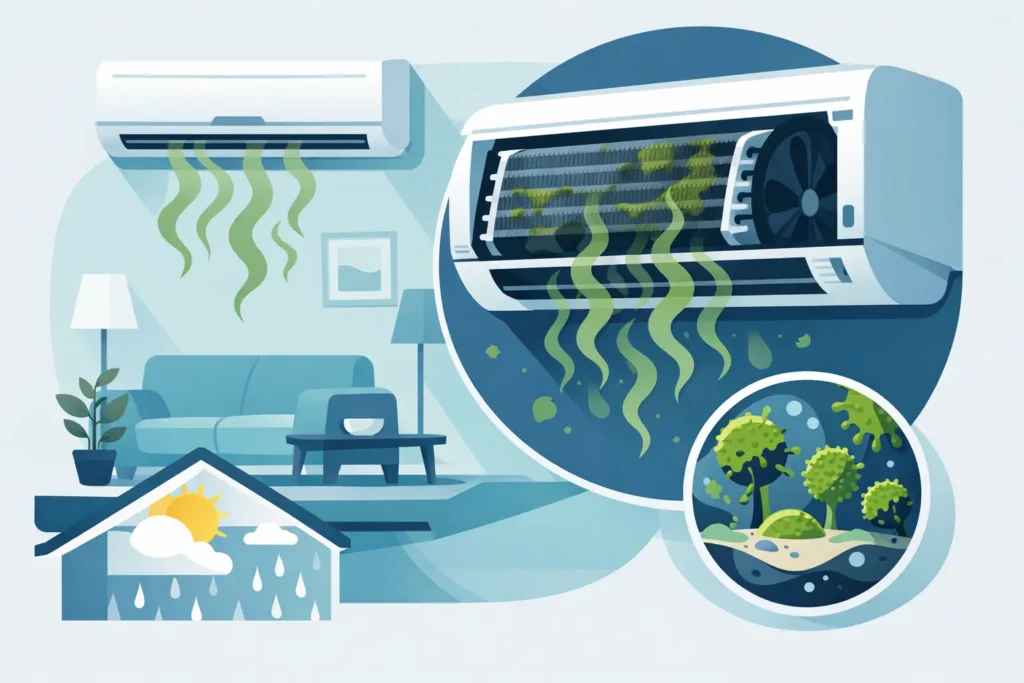
That first blast of cool air should make your home feel better, not smell like a damp closet. If you are asking, why does AC smell musty, the issue usually points to moisture where it should not be, along with dust, buildup, or restricted airflow somewhere in the system. The smell may seem minor at first, but it is often a sign your air conditioner needs attention before comfort and air quality get worse.
In Central Texas, air conditioners work hard for long stretches of the year. That constant use means condensation, dirt, and wear can build up faster than many homeowners realize. A musty odor does not always mean a major repair is coming, but it does mean something is off.
Why does AC smell musty when it turns on?
Most musty AC smells come from one simple combination: moisture plus organic buildup. Your air conditioner naturally removes humidity from the air as it cools your home. When that moisture does not drain properly, or when dust and debris collect on damp surfaces, mildew and mold-like odors can develop.
Sometimes the smell hits only when the system first starts. In that case, the odor may be coming from moisture sitting in the drain pan, on the evaporator coil, or inside sections of the ductwork. If the smell stays constant while the AC runs, the problem may be more widespread or may involve airflow issues that keep parts of the system damp for too long.
The exact cause matters because the fix can be very different. A clogged drain line is not the same issue as dirty ductwork or a heavily contaminated coil.
The most common reasons your AC smells musty
A clogged condensate drain line
Your AC pulls humidity from indoor air, and that water has to go somewhere. It normally drains through a condensate line. When that line gets clogged with algae, sludge, or debris, water can back up into the drain pan or remain trapped in the system.
Standing water creates the perfect environment for musty odors. In some homes, it can also lead to water damage around the indoor unit. If you notice a musty smell along with excess moisture near the air handler, this is one of the first things a technician will check.
A dirty evaporator coil
The evaporator coil is one of the most common odor sources. It stays cold while your AC runs, so it naturally attracts condensation. If dust, pet hair, and airborne particles coat the coil, that damp surface can start to smell stale or musty over time.
This problem is especially common when filters are not changed regularly. A dirty coil can also reduce efficiency, which means your AC may have to work harder to cool the house.
Mold or mildew in the drain pan
The drain pan is designed to catch condensation, but it is not meant to hold water indefinitely. If water sits there too long, mold or mildew can grow. That odor often gets pulled into the airflow and pushed throughout the house every time the system runs.
This is one of those issues that may start as a smell and turn into a bigger maintenance problem if ignored.
Dirty air filters and poor airflow
A clogged air filter does more than make your system strain. It can reduce airflow enough to create extra moisture problems inside the unit. Restricted airflow may also let dust build up more quickly on internal components, which adds to stale or musty odors.
This is the easiest problem to check on your own, and sometimes the simplest fix makes a noticeable difference. Still, if the smell remains after replacing the filter, there is likely another issue deeper in the system.
Ductwork contamination
If moisture gets into your duct system, dust and debris inside the ducts can start to smell. In some cases, leaks in ductwork allow humid attic or crawlspace air to enter, which creates a damp environment and makes odors worse.
Duct-related smells can be tricky because the source is hidden. You may notice the odor is stronger in one room than another, or only from certain vents.
An oversized AC system
This is a less obvious cause, but it matters. An oversized air conditioner can cool your home too quickly without running long enough to remove enough humidity from the air. That leaves the house feeling cool but clammy, and extra indoor moisture can contribute to musty smells over time.
This is not the most common reason for a sudden odor, but it does come up in homes with comfort and humidity issues that never seem to go away.
Is a musty AC smell dangerous?
A musty smell does not automatically mean your system is unsafe, but it should not be ignored. At a minimum, it usually means there is unwanted moisture, dirt, or microbial growth somewhere in the system. That can affect indoor air quality and make the home less comfortable.
For some people, especially those with allergies, asthma, or respiratory sensitivities, musty air can be more than a nuisance. It may trigger irritation, headaches, or breathing discomfort. Even if nobody in the home is especially sensitive, the smell itself is a signal that the system is not as clean or dry as it should be.
There is also the equipment side to consider. Moisture problems tend to get worse, not better, when left alone. A minor drainage issue today can become water damage, reduced efficiency, or a larger repair later.
What you can check before calling for service
There are a few reasonable things homeowners can look at before scheduling an AC visit. Start with the air filter. If it is dirty, replace it and give the system a little time to see whether the smell improves.
Next, look around the indoor unit for visible water, damp spots, or signs of overflow near the drain pan area. If your thermostat has the fan set to run continuously, switching it to auto may also help in some cases. A constantly running fan can sometimes keep pushing moisture back into the air instead of letting parts of the system dry out between cooling cycles.
You can also pay attention to when the smell is strongest. If it only happens at startup, that points toward moisture on the coil or in the drain area. If it is constant in multiple rooms, the issue may involve the duct system or broader contamination inside the air handler.
What you should not do is start taking the system apart or spraying household cleaners into vents or equipment. That often creates a bigger mess and does not solve the root problem.
When to call for professional AC service
If the odor lasts more than a day or two, comes back repeatedly, or is getting stronger, it is time to have the system inspected. The same is true if you notice weak airflow, water leaks, poor cooling, or rising indoor humidity along with the smell.
A technician can inspect the evaporator coil, condensate line, drain pan, blower area, and accessible duct connections to find the actual source. That matters because musty smells are easy to misdiagnose from the outside. What seems like a duct issue may be a backed-up drain line. What seems like a filter problem may be heavy buildup on the coil.
For homeowners in Georgetown and nearby communities, this is the kind of issue where local experience helps. Neal HVAC sees how long cooling seasons, humidity, and heavy AC use affect residential systems in this area, and that makes it easier to pinpoint problems without overcomplicating the fix.
How to keep musty odors from coming back
The best prevention is regular maintenance. A clean system with proper drainage and healthy airflow is much less likely to develop odors. Seasonal tune-ups can catch early signs of buildup before you ever notice a smell from the vents.
Filter changes matter too, especially during heavy-use months. If you have pets, ongoing construction dust, or allergy concerns, you may need to change filters more often than the standard schedule.
It also helps to address humidity issues in the home. In Central Texas, indoor moisture can creep up during certain times of year, and that puts extra pressure on your cooling system. If your house often feels sticky even when the AC is running, that is worth mentioning during service because humidity control and cooling performance go hand in hand.
A musty smell from your AC is easy to put off when the system is still blowing cold air, but your nose is often catching a problem early. Taking care of it sooner can protect your comfort, your air quality, and the life of the system before a small issue turns into a bigger one.