
Why Is Upstairs Hotter in a Home?
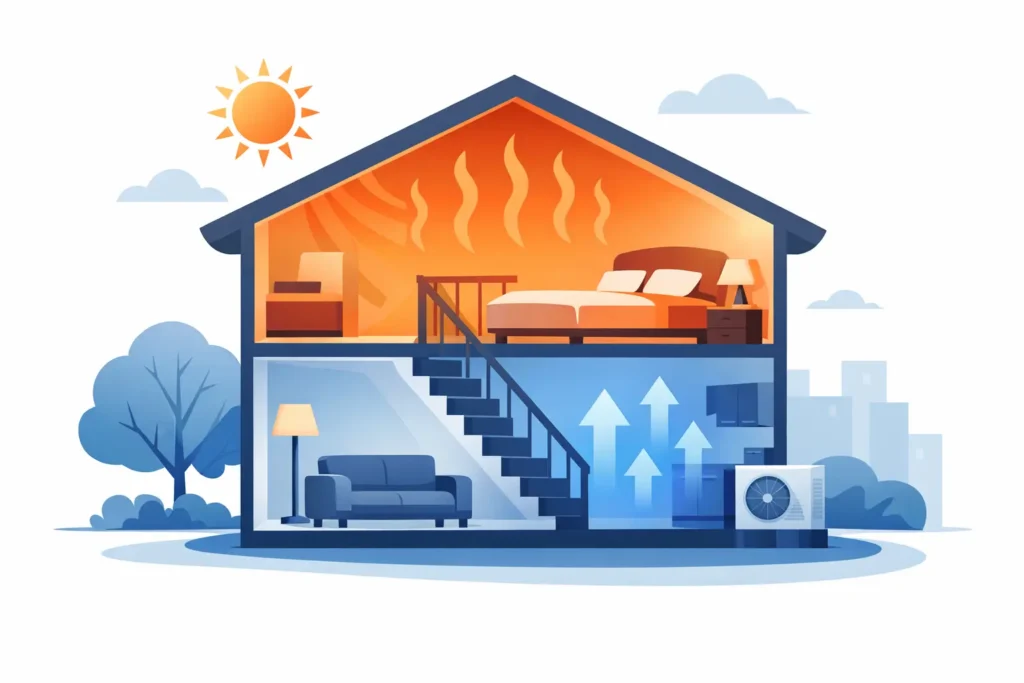
You set the thermostat to a reasonable temperature, the downstairs feels fine, and somehow the bedrooms upstairs still feel stuffy by late afternoon. If you have been asking why is upstairs hotter home comfort so uneven, you are not imagining it. This is one of the most common problems homeowners deal with in Central Texas, especially during long summer heat.
The short answer is simple: heat rises, and second floors usually take on more of it. But that is only part of the story. In many homes, the real issue is a mix of insulation, ductwork, airflow, sun exposure, and HVAC system sizing. When those things stack up, the upstairs can stay several degrees warmer than the rest of the house.
Why is upstairs hotter home comfort-wise?
Most two-story homes are naturally harder to cool evenly than single-story homes. Warm air moves upward, so your second floor starts at a disadvantage. On top of that, the upper level is closer to the roof, which absorbs a lot of heat during a Texas day.
If the attic is hot, that heat radiates downward into ceilings and walls. Even a good air conditioner can struggle to fully overcome that load if insulation is weak or airflow is limited. This is why the problem often gets worse in the afternoon and early evening, when the roof and attic have had hours to heat up.
In other words, upstairs rooms are not always hotter because your AC is broken. Sometimes the house itself creates conditions that make even cooling difficult. The key is figuring out whether you are dealing with a normal temperature difference or a fixable problem.
The most common reasons upstairs stays hotter
Heat buildup in the attic and roofline
The second floor sits closest to the hottest part of the home. In summer, attic temperatures can climb far above the outdoor air temperature. If the attic is poorly ventilated or insulation is lacking, that heat pushes into the upstairs living space.
This tends to show up as rooms that feel hot even when the AC is running. Ceilings may feel warm, and the discomfort often starts before sunset. In Georgetown, Round Rock, Hutto, Jarrell, and Leander, intense afternoon sun can make this issue even more noticeable.
Inadequate insulation
Insulation slows heat transfer. When there is not enough of it in the attic, walls, or around ductwork, cool air does not stay where it should. The upstairs loses the battle faster because it is exposed to more heat from above and from sun-facing walls.
This is especially common in older homes or homes where insulation has settled over time. It is not always obvious from inside the house, but the comfort difference can be significant.
Airflow problems
A lot of upstairs temperature complaints come down to poor airflow. The AC may be producing cool air, but not enough of it is reaching the second floor. That can happen when ducts are undersized, partially disconnected, leaking, or poorly balanced.
Closed or blocked vents can also create problems. So can a dirty air filter, which reduces the amount of air the system can move. If the downstairs gets plenty of cooling while upstairs rooms barely feel any air at the vents, airflow is one of the first things to check.
One thermostat for two floors
Many homes have one thermostat located downstairs. That means the system turns off when the first floor reaches the set temperature, even if the upstairs is still too warm. The thermostat is doing what it was designed to do, but it is reading only one part of the house.
This setup often creates a trade-off. If you lower the thermostat enough to cool the upstairs, the downstairs may feel too cold. If you raise it to keep the first floor comfortable, the second floor may stay warm.
Duct design and system balancing
Not every HVAC system was designed with even temperature control in mind. Some homes have duct layouts that favor the downstairs, or they were built with a system that does not distribute air well between floors.
Balancing dampers can help in some cases, but not always. If the duct system was poorly designed from the beginning, there may be limits to what a basic adjustment can accomplish.
AC system size or age
A system that is too small may run constantly and still struggle to keep up, especially upstairs. A system that is too large can create a different issue by cooling the house too quickly without running long enough to remove heat and humidity evenly.
Older systems may also lose efficiency over time. If your AC has trouble keeping the second floor comfortable during peak heat, age and performance are worth considering.
What you can check before calling for service
Some causes are simple enough to spot on your own. Start with the air filter. If it is dirty, replace it and give the system some time to improve airflow.
Next, make sure upstairs supply vents are open and not blocked by furniture or rugs. Check return vents too. Good cooling depends on air circulating back through the system, not just blowing out of vents.
You can also look at window coverings. Bedrooms with large west-facing windows often heat up fast in the afternoon. Keeping blinds or curtains closed during the hottest part of the day can help reduce solar heat gain.
Ceiling fans can help rooms feel cooler, even though they do not lower the actual temperature. They improve air movement, which can make a warm room more comfortable while you work on the bigger issue.
If you can safely access your attic, signs of thin insulation or excessive heat buildup may point to part of the problem. But most homeowners are better off having a professional inspect insulation levels, duct condition, and overall system performance together instead of guessing one piece at a time.
When the problem is more than a simple hot upstairs
A small temperature difference between floors is normal. A large one usually is not. If your upstairs is consistently 5 to 8 degrees warmer than downstairs, or certain rooms never seem to cool off, it is time to look deeper.
Watch for signs like weak airflow from upstairs vents, hot and cold spots between rooms, an AC that runs for long periods, rising electric bills, or humidity that makes the second floor feel sticky. Those are clues that the issue may involve duct leakage, system capacity, thermostat placement, or attic heat intrusion.
Sometimes homeowners assume they need a full replacement when the real fix is less dramatic. Other times, they keep chasing minor adjustments when the equipment itself is no longer the right fit. That is why a proper diagnosis matters.
How HVAC solutions can help
The right fix depends on what is causing the imbalance. In some homes, a duct inspection and air balancing adjustment can make a clear difference. In others, sealing leaks, improving attic insulation, or correcting return air issues has more impact.
If thermostat location is the main problem, zoning or thermostat upgrades may help. Zoning allows different parts of the home to be cooled more independently, which can be a strong option for two-story houses. It is not the right answer for every home, though, because installation costs and existing duct design both matter.
If your equipment is aging or undersized, repair may only go so far. A properly matched high-efficiency system can improve both comfort and energy use, but only when the installation is based on the home’s actual needs. Bigger is not automatically better.
That is where working with an experienced local HVAC company helps. A good technician should look at the whole picture, not just the outdoor unit. Neal HVAC serves homeowners across Georgetown and nearby communities with straightforward evaluations focused on comfort, airflow, and long-term performance.
Why this issue is so common in Central Texas
Central Texas homes face long cooling seasons, intense sun, and heavy afternoon heat. Even a well-functioning AC system can be put under pressure when attic temperatures soar and upper rooms get direct sun exposure.
That is why upstairs comfort problems show up so often in this area. What feels like an AC failure may really be a house-and-system issue working together. The good news is that many of these problems can be improved once the real cause is identified.
If your upstairs stays hotter than the rest of the house, do not assume you just have to live with it. A more comfortable second floor is often possible with the right inspection, the right fix, and a clear plan that fits your home.