Why Is Furnace Blowing Cold Air?
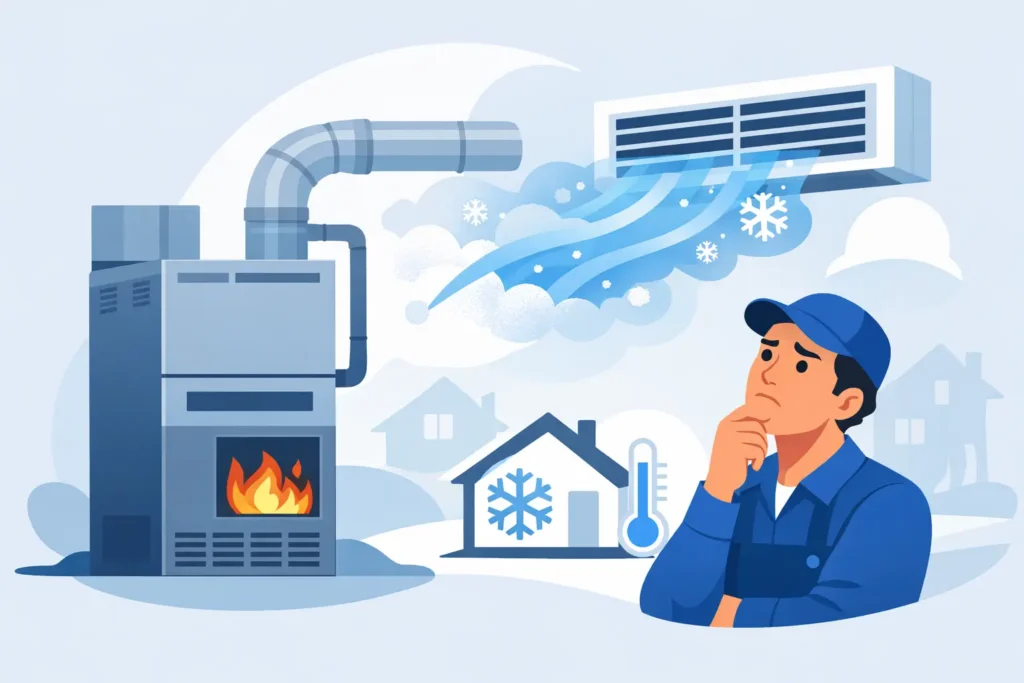
You set the thermostat, wait for warm air, and instead your vents start pushing out a chilly draft. If you are asking, why is furnace blowing cold, the answer can be simple or more serious depending on what your system is doing. Sometimes it is a thermostat setting or a dirty filter. Other times, it points to an ignition issue, overheating, or a problem that needs professional furnace repair.
The good news is that cold air from a furnace does not always mean the whole system has failed. In many homes, the blower can still run even when the furnace is not producing heat. That is why the air keeps moving, but the house never gets comfortable.
Why is furnace blowing cold air in the first place?
A furnace has two separate jobs. It creates heat, and it moves air through your ductwork. When the heating side is not working right but the fan still turns on, you end up with air coming from the vents that feels room temperature or cold.
That can happen for a few different reasons. The thermostat may be set incorrectly. The filter may be so clogged that the system overheats and shuts the burners off. A gas furnace may have trouble lighting. In some cases, the furnace is heating normally, but the air feels cool because of duct leaks or because the blower starts before the heat exchanger has warmed up.
The exact cause depends on the age of the system, the type of furnace, and the symptoms happening at the same time. If the unit starts and stops quickly, that tells a different story than a furnace that runs constantly without warming the home.
Start with the thermostat
Before assuming the worst, check the thermostat carefully. This is one of the most common reasons homeowners think the furnace is failing when the issue is actually a setting problem.
Make sure the thermostat is set to HEAT and not COOL. Then look at the fan setting. If it is set to ON, the blower will run all the time, even when the furnace is not actively heating. That can make it seem like the furnace is blowing cold air, especially between heating cycles. Switching the fan from ON to AUTO usually solves that issue.
It is also worth checking the temperature setting itself. If the thermostat is only set a degree or two above room temperature, the furnace may not need to run long enough to deliver noticeably warm air. Weak batteries in some thermostats can also cause odd behavior.
A dirty air filter can shut heat down
If the thermostat looks fine, the next thing to check is the air filter. A clogged filter restricts airflow, and that causes more trouble than many homeowners realize.
When airflow drops too low, the furnace can overheat. Modern systems are designed to protect themselves, so the burners may shut off while the blower keeps running to cool the unit down. From your side of the vent, it feels like cold air. From the furnace’s side, it is trying to avoid damage.
This is especially common during colder weather when the furnace is running more often. If the filter looks packed with dust and debris, replace it with the correct size and type. Then give the system a little time to cycle again.
If changing the filter fixes the problem, that is a good sign. If the furnace keeps overheating, there may be another airflow issue, such as a blocked return, dirty blower components, or a larger problem inside the system.
The pilot light or ignition system may not be working
On gas furnaces, no flame means no heat. Older systems may use a standing pilot light, while newer systems usually rely on electronic ignition. If the burners are not lighting, the blower may still turn on and push unheated air through the house.
If you have an older furnace and the pilot light is out, that may be the source of the problem. Newer systems can have trouble with the igniter, flame sensor, gas valve, or control board. These are not good guess-and-check repairs for most homeowners because gas and electrical components are involved.
A flame sensor issue is especially common. When that sensor gets dirty, the furnace may light briefly and then shut back down. That often creates short cycles and uneven heat, with cool air in between.
The furnace may be overheating and short cycling
If your furnace starts, runs for a few minutes, then shuts off before the home reaches the set temperature, overheating is one possibility. This is closely related to airflow problems, but not always caused by the filter alone.
Blocked vents, closed registers, dirty evaporator coils in shared HVAC systems, or blower motor problems can all contribute. In some cases, the furnace is simply too large for the house and heats too quickly, though that is more of a long-term performance issue than a sudden change.
Short cycling matters because it puts extra wear on the system while leaving the home uncomfortable. It also tends to drive up utility costs. If you are replacing the filter and keeping vents open but the furnace still cannot complete a normal heating cycle, that is a strong sign the unit needs service.
Your ductwork could be part of the problem
Sometimes the furnace is making heat, but not enough of it is reaching the rooms. Leaky or poorly insulated ducts can let warm air escape before it gets to your vents, especially in attics, garages, or crawl spaces.
That does not always make the air truly cold, but it can make it feel lukewarm or weak. In a Central Texas home, this can be confusing because outdoor temperatures may not be extreme enough to make the issue obvious right away. You just notice the house never feels quite right.
Duct problems also show up as uneven temperatures from room to room. One area may feel comfortable while another stays cool no matter how long the furnace runs.
It may be normal for a moment
Not every blast of cool air means something is wrong. At the beginning of a heating cycle, some furnaces briefly move air before the heat exchanger is fully warmed. That short burst can feel cool for a minute, then turn warm.
Heat pumps can also confuse people because the air they produce often feels less hot than gas furnace air, even when the system is working normally. If your home has a heat pump with auxiliary heat, the answer to why is furnace blowing cold may actually involve a different type of equipment and a different kind of repair.
The key is duration. A short cool burst at startup can be normal. Air that stays cold through the whole cycle is not.
What you can safely check yourself
There are a few things homeowners can do before scheduling service. Start by confirming the thermostat is on HEAT and the fan is set to AUTO. Replace the air filter if it is dirty. Make sure supply vents and return vents are open and not blocked by furniture, rugs, or curtains.
You can also check the breaker if the system seems to be acting strangely, though repeated tripping points to a bigger issue. If your furnace has an obvious warning light or error code, make note of it. That can help a technician diagnose the problem faster.
What you should not do is open sealed furnace panels, force parts to reset repeatedly, or attempt gas-related repairs. A heating system that is not firing correctly needs a safe and accurate diagnosis.
When to call for furnace repair
If the easy checks do not solve it, it is time to bring in a professional. Call for service if the furnace is blowing cold air continuously, turning on and off too often, making unusual noises, giving off a gas smell, or failing to keep up with the thermostat setting.
A professional inspection can identify whether the issue is airflow, ignition, sensor failure, electrical trouble, or a worn-out component. That matters because the right repair depends on the real cause. Replacing a filter helps only if the filter is the issue.
For homeowners in Georgetown and nearby communities, local service matters here. Heating problems rarely show up at a convenient time, and getting a clear answer quickly can make the difference between a simple repair and a bigger breakdown. Neal HVAC works with homeowners across Georgetown, Round Rock, Hutto, Jarrell, and Leander to find the source of heating issues and restore reliable comfort.
Why fast action matters
A furnace blowing cold air is easy to put off for a day or two, especially during milder weather. But systems that are overheating, short cycling, or failing to ignite can get worse with continued use.
Waiting can also affect safety and efficiency. Even when the problem starts small, poor performance usually means the system is working harder than it should. That adds wear, wastes energy, and increases the chance that you will lose heat completely when you need it most.
If your furnace is blowing cold air, trust what your home is telling you. A quick check may uncover a simple fix, but if it does not, getting the problem diagnosed early is the best way to protect your comfort and avoid a larger repair later.