Furnace Tune Up Benefits for Central Texas Homes
A furnace can sit quietly through much of a Central Texas year, then become essential when a cold front rolls through Georgetown, Round Rock, Hutto, Jarrell, or Leander. That is why furnace tune up benefits matter before the first chilly night arrives. A professional maintenance visit gives your heating system a chance to run safely, efficiently, and reliably when your family needs it most.
For many homeowners, furnace maintenance feels easy to postpone because the system still turns on. But heating problems often start as small issues: a worn part, a dirty filter, a loose electrical connection, or a burner that is not operating as cleanly as it should. Finding those concerns early is usually simpler and less stressful than dealing with a no-heat call during a cold spell.
The Main Furnace Tune Up Benefits Homeowners Notice
The most immediate benefit is peace of mind. During a tune up, a trained HVAC technician checks the components that help your furnace start, heat, and shut down properly. The goal is not to sell a repair that is not needed. It is to identify current concerns, explain what they mean in clear terms, and help you make an informed decision about your home.
A properly maintained furnace can also use less energy to produce the same level of warmth. Dust buildup, restricted airflow, and parts that are out of adjustment make equipment work harder. That extra strain may show up as longer heating cycles, uneven temperatures, or higher utility bills. Maintenance helps keep the system operating closer to the condition it was designed for.
Reliability is another major advantage. No service can guarantee that a mechanical system will never fail, especially as equipment ages. However, regular maintenance can catch worn belts, weak ignitors, dirty flame sensors, and other developing issues before they cause a full breakdown. For busy households, avoiding an unexpected heating repair is often reason enough to schedule service.
What Happens During a Furnace Tune Up?
A thorough maintenance appointment looks beyond whether the thermostat says the heat is on. The technician evaluates how the furnace is actually performing and checks the condition of key safety and operating components.
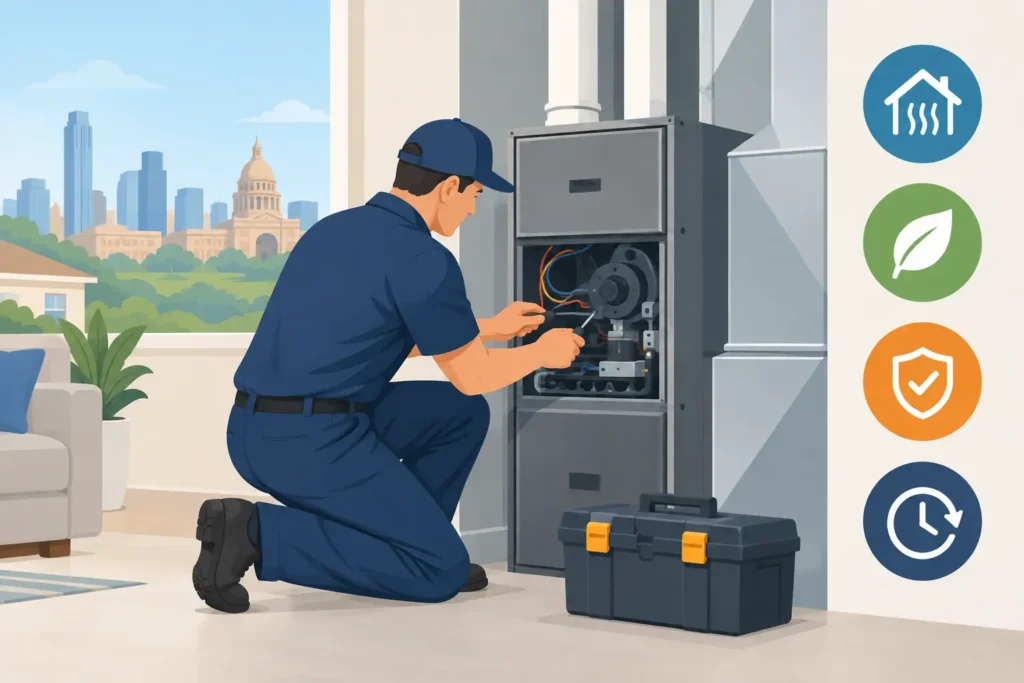
Depending on the type, age, and condition of your equipment, a tune up may include inspecting the filter and airflow, checking electrical connections, testing thermostat operation, examining burners and ignition components, cleaning the flame sensor where appropriate, inspecting the blower assembly, and verifying the furnace cycles on and off correctly. For gas furnaces, safety checks are especially important. The technician may inspect the heat exchanger for visible concerns, evaluate venting, and test for proper combustion-related operation.
Each furnace is different, so the exact work can vary. A newer high-efficiency unit may have different components and diagnostics than an older conventional system. If the technician finds a concern, ask what is urgent, what can be monitored, and what repair options are available. Straightforward answers help you plan rather than feel pressured.
Lower Energy Waste Without Sacrificing Comfort
Heating costs in Central Texas may not be as high as in colder parts of the country, but inefficient operation still adds up. A furnace that runs longer than necessary can waste energy every time temperatures dip. Because our weather can shift quickly, homeowners may also notice that a neglected system struggles to keep up during those sudden cold stretches.
Maintenance supports efficient operation by addressing issues that create resistance or force the system to work harder. A dirty air filter is one of the most common examples. When airflow is restricted, the blower has to push harder, comfort can become uneven, and the furnace may overheat or cycle off prematurely. Replacing filters on schedule is a simple homeowner task, while a tune up addresses the deeper system checks that a filter change cannot cover.
There is a practical trade-off here: a tune up will not turn an aging, inefficient furnace into a brand-new high-efficiency model. If your system is near the end of its expected service life, has repeated repair needs, or cannot heat your home evenly, replacement may be worth discussing. Still, maintenance can help you get a clearer picture of whether repairs make sense now or whether it is time to plan ahead.
Better Safety Checks for Gas Furnaces
A furnace should provide comfort, not create a concern for your household. Gas furnaces involve combustion, electrical components, venting, and safety controls that deserve professional attention. A maintenance visit gives a qualified technician the opportunity to inspect how these parts are working together.
Homeowners should also pay attention between appointments. Schedule service promptly if you notice unusual odors that do not go away after initial seasonal use, yellow or flickering burner flames, soot around the furnace, frequent cycling, new banging or screeching sounds, or a carbon monoxide alarm. If a carbon monoxide alarm activates, get everyone to fresh air and follow local emergency guidance before reentering the home.
A tune up is not a substitute for working smoke alarms and carbon monoxide detectors. Every home with fuel-burning equipment should have properly placed, functioning detectors. Together, regular maintenance and dependable alarms add meaningful protection for your family.
Fewer Surprise Repairs During Cold Weather
Furnaces rarely choose a convenient time to stop working. A failure can happen at night, during a weekend, or in the middle of a sharp temperature drop. Seasonal service reduces the chance that a minor issue stays hidden until the system is under heavier demand.
Four warning signs often point to a furnace that needs attention:
- Rooms feel unevenly heated, even after adjusting the thermostat.
- The furnace starts and stops repeatedly or runs much longer than usual.
- You hear rattling, grinding, squealing, or repeated clicking during operation.
- Your heating bill rises without a clear change in weather or household use.
These symptoms do not always mean the furnace needs a major repair. Sometimes the answer is a filter, thermostat setting, airflow adjustment, or routine cleaning. The only way to know is to have the system evaluated by a professional who can diagnose the cause rather than guess.
When Should You Schedule Furnace Maintenance?
Fall is generally the best time to schedule a furnace tune up, before you need consistent heat. Booking early gives you time to address any repair recommendations without the pressure of an active breakdown. It also helps avoid the rush that often follows the first serious cold front.
If fall has already passed, maintenance is still worthwhile. A furnace can benefit from a checkup in winter or even before the next heating season. The important thing is to avoid waiting until the system quits. Most residential furnaces should receive professional maintenance once a year, though older systems or homes with heavy use may need closer attention.
Between service visits, keep return vents clear, replace filters according to the manufacturer recommendation and your home’s conditions, and avoid blocking supply registers with furniture or rugs. These small habits help protect airflow and make it easier for your furnace to do its job.
Choose Local Service You Can Count On
Your furnace is part of the everyday comfort of your home, even when you are not thinking about it. A maintenance visit should leave you with a better understanding of your system, not more confusion. Look for a local HVAC team that explains findings clearly, respects your home, and gives practical recommendations based on your equipment and budget.
Neal HVAC serves homeowners across Georgetown and nearby Central Texas communities with dependable heating and cooling service focused on comfort and clear communication. If your furnace has not been checked in the past year, scheduling maintenance now can help you head into the next cold front with greater confidence.