Furnace Maintenance Checklist for Central Texas Homes
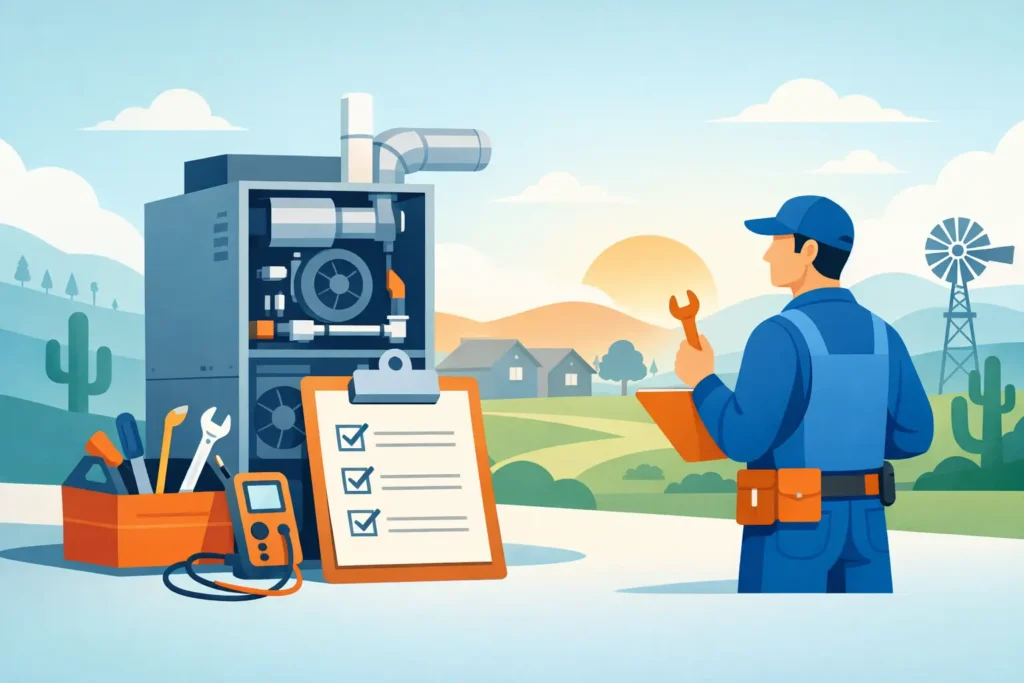
A Georgetown cold snap can arrive quickly, and that is when a neglected heater tends to show its age. This furnace maintenance checklist helps Central Texas homeowners catch small issues before they become a no-heat call on a chilly night. A few simple habits can support better comfort, safer operation, and more dependable performance when your family needs heat.
Furnaces in our area may sit unused for long stretches, then work hard during a sudden freeze. That stop-and-start pattern makes preseason attention especially worthwhile. Some tasks are appropriate for homeowners, while gas connections, electrical components, combustion checks, and internal repairs should always be handled by a qualified HVAC technician.
Furnace Maintenance Checklist: What Homeowners Can Do
Start your checklist in early fall, before the first real cold front. You do not need to take the furnace apart to make a meaningful difference. Focus on airflow, thermostat operation, and the area around the equipment.
Replace or inspect the air filter
A dirty filter is one of the most common causes of poor heating performance. It restricts airflow, which can make the furnace run longer, heat rooms unevenly, or shut down on a safety limit. Check the filter monthly during the heating season and replace it when it looks dirty.
The right replacement schedule depends on your home. A household with pets, allergies, construction dust, or several occupants may need a new filter every 30 to 60 days. In a low-dust home with a high-capacity filter, the interval may be longer. Use the filter size and type recommended for your system, rather than choosing the most restrictive filter available. Excessively dense filters can reduce airflow in systems not designed for them.
Test the thermostat before cold weather arrives
Set the thermostat a few degrees above the current room temperature and listen for the heating cycle to begin. Warm air should reach the supply vents within several minutes. If the thermostat screen is blank, replace the batteries if applicable. Confirm it is set to Heat, not Cool or Fan Only.
Pay attention to what happens next. A furnace that starts and stops repeatedly, blows cool air, makes unusual noises, or never reaches the set temperature needs professional attention. Waiting for a harder freeze can turn an easy scheduling decision into an urgent repair.
Keep vents and returns clear
Walk through the house and make sure supply vents are open and not blocked by rugs, furniture, curtains, or storage. Check return-air grilles as well. They need open space to pull air back to the system.
Closing multiple vents to force heat into one room usually does not save energy. It can disrupt the airflow your system needs and may create comfort problems elsewhere. If one part of the home is consistently colder, the cause could be duct leakage, insulation, airflow balance, or an equipment issue. A technician can help identify the source instead of relying on temporary workarounds.
Clear the area around the furnace and outdoor equipment
Keep the furnace closet, attic access area, or utility room free of boxes, paint, cleaning products, and anything flammable. Leave clear working space around the unit so it can receive proper airflow and be serviced safely.
If your heating system uses a heat pump, its outdoor unit also needs attention. Remove leaves, grass clippings, and loose debris from around it, but do not use sharp tools or high-pressure water on the coil. A heat pump may produce steam and temporarily enter a defrost cycle during cold, damp weather. That can be normal. Persistent ice buildup or loud mechanical sounds are not.
Check carbon monoxide and smoke alarms
Every home with gas-burning equipment should have working carbon monoxide alarms. Test them according to the manufacturer’s instructions and replace batteries as needed. Smoke alarms matter, too.
If a carbon monoxide alarm sounds, or if you smell gas, leave the home immediately and call emergency services and your gas utility from a safe location. Do not turn switches on or off, light a flame, or try to diagnose the furnace yourself. Safety always comes before keeping the house warm.
What Annual Professional Furnace Maintenance Includes
Homeowner checks are useful, but they do not replace a professional tune-up. An annual heating maintenance visit gives a trained technician the chance to inspect parts you should not handle and find wear that is not obvious from the outside.
During a typical furnace maintenance appointment, a technician may inspect and clean the burners, check the ignition system, test safety controls, evaluate the blower assembly, inspect electrical connections, and confirm proper airflow. For gas furnaces, the visit should also include a careful review of combustion performance and venting. These checks help protect against unsafe operation while supporting efficient heating.
The technician may inspect the heat exchanger for signs of damage or deterioration. This component separates combustion gases from the air circulated through your home, so it deserves careful attention. They can also look for condensate drainage issues on high-efficiency furnaces, which can cause shutdowns if a drain line becomes blocked.
Maintenance is not a promise that an older furnace will never fail. Parts can still wear out unexpectedly. What regular service does provide is a clearer picture of your system’s condition and a better chance to address concerns before they become more expensive or disruptive.
Warning Signs to Put on Your Checklist Now
Do not wait for your next scheduled visit if your furnace is already sending warning signs. Call for service when you notice repeated cycling, weak airflow, cold air from vents, a burning or electrical smell that does not fade quickly, rattling, banging, or screeching sounds, or a new jump in heating costs without a clear reason.
Uneven temperatures are worth investigating, especially if certain rooms never seem comfortable. The fix may be straightforward, such as a clogged filter or thermostat setting. In other cases, it may involve ductwork, blower performance, insulation, or a system that is no longer properly sized for the home.
Age is another factor. Furnaces often provide many years of service when maintained well, but repair decisions should be based on more than age alone. Consider repair history, safety, efficiency, the availability of replacement parts, and the cost of the repair compared with replacement. A dependable technician should explain the options clearly and let you decide what works for your household.
A Simple Seasonal Routine for Central Texas Homes
For most homeowners, the best schedule is simple: inspect the filter monthly, test alarms and thermostat at the start of heating season, keep vents and equipment areas clear year-round, and schedule professional furnace maintenance once a year. Early fall is ideal, though it is still worth scheduling service later if your system has not been checked.
Write down the filter size, installation date, and any changes in noise or comfort. This small record helps you notice patterns and gives your technician useful information if a problem develops. It is also helpful for rental property owners who need a clear maintenance history between tenants.
Neal HVAC serves homeowners in Georgetown, Round Rock, Hutto, Jarrell, Leander, and nearby communities with straightforward heating service and clear communication. If your furnace is due for maintenance or showing signs that something is wrong, addressing it before the next cold front can help keep your home comfortable when temperatures drop.