Furnace Ignition Repair: Signs You Need Help
A cold Central Texas morning is a bad time to discover that your furnace is running but not producing heat. Often, the issue comes down to the ignition system – the set of components that safely lights the burners when your thermostat calls for heat. Furnace ignition repair can restore dependable warmth, but the right repair depends on what is preventing the system from starting.
Modern furnaces are designed with safety controls that stop the heating cycle when something is not working as it should. That can feel frustrating when your home is chilly, but it helps prevent unsafe operation. A qualified HVAC technician can identify the source of the problem, explain the repair clearly, and make sure your system is operating safely before leaving your home.
What Happens During Furnace Ignition Repair?
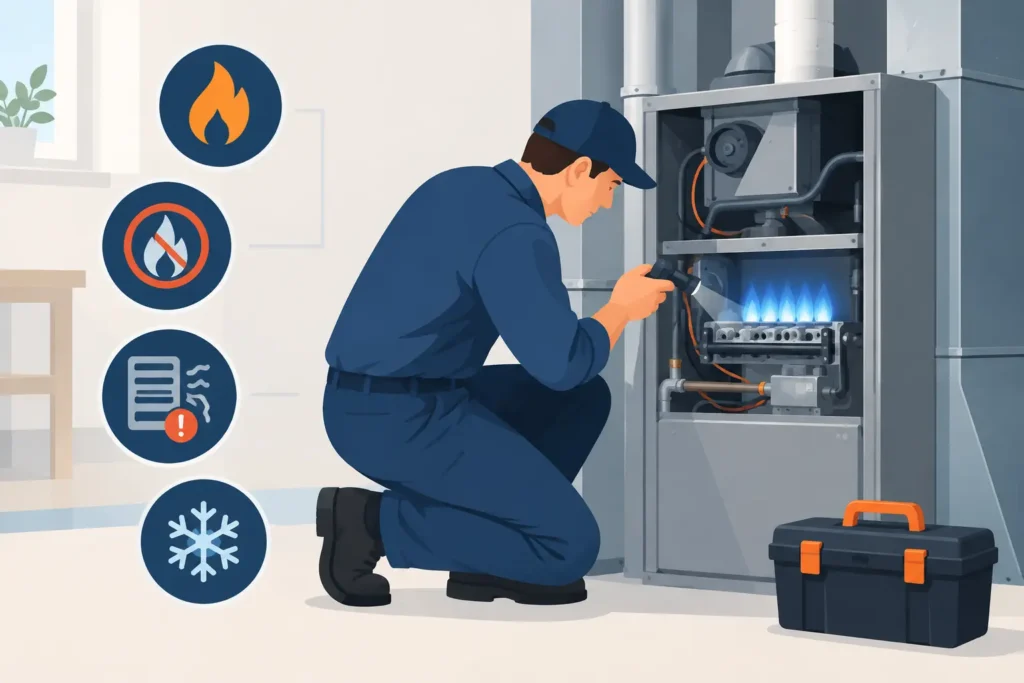
A furnace does not simply turn on and make heat. Once the thermostat signals for warmth, the furnace starts a sequence of safety checks. The inducer motor runs, the pressure switch confirms proper venting, and the ignition component heats up or creates a spark. Then the gas valve opens, the burners light, and a flame sensor verifies that a stable flame is present.
If any part of that sequence fails, the furnace may shut down, blow cool air, or repeatedly try to start without success. Furnace ignition repair means finding the point where that sequence stops. In some homes, the answer is a worn igniter. In others, the problem may be a dirty flame sensor, a faulty pressure switch, a control board issue, or a venting concern.
Most newer gas furnaces use a hot surface igniter. This small component glows hot enough to light the gas at the burners. Older systems may use a spark ignition system or, in some cases, a pilot light. The repair approach varies by furnace type, age, and condition.
Signs Your Furnace May Have an Ignition Problem
A furnace with an ignition issue does not always fail the same way. Some systems stop completely, while others run through a few unsuccessful startup attempts before shutting down. Paying attention to what your furnace is doing can help a technician narrow down the problem quickly.
One common sign is a furnace that turns on but only blows cool air. You may hear the unit start, followed by clicking, humming, or a brief attempt to light the burners. If the burners never stay on, the system cannot produce warm air.
Short cycling can also point to an ignition-related problem. This is when the furnace starts, shuts off shortly after, and repeats the process. A dirty flame sensor is a frequent cause. The burners may light briefly, but if the sensor cannot confirm the flame, the furnace shuts the gas off as a safety measure.
You may also notice that the furnace is not responding to the thermostat at all. Before assuming the igniter has failed, check that the thermostat is set to Heat, the temperature setting is above the current room temperature, and the furnace switch is on. A tripped breaker or a clogged filter can also interrupt normal operation.
If you smell gas, hear a loud boom when the burners attempt to light, see soot around the furnace, or have a carbon monoxide alarm activate, turn the system off if it is safe to do so and leave the area. Contact your gas utility or emergency services as appropriate, then arrange for professional HVAC service. These are not symptoms to troubleshoot on your own.
Why Ignition Problems Happen
Hot surface igniters are effective, but they are not permanent parts. They become extremely hot during each heating cycle and can eventually crack or burn out. Even a small crack can keep an igniter from reaching the temperature needed to light the gas.
Flame sensors can collect a thin layer of residue over time. When that happens, the sensor may not detect the burner flame reliably. The furnace then shuts down even though the ignition process initially worked. This is one reason annual furnace maintenance is valuable – cleaning and testing these components can help prevent a no-heat call when temperatures drop.
Airflow and venting problems can create symptoms that resemble ignition failure. A heavily clogged air filter may cause overheating and limit the furnace’s operation. Blocked intake or exhaust vents, damaged vent piping, and pressure switch problems can stop the ignition sequence before it reaches the burners.
Electrical issues matter, too. The furnace control board coordinates the startup sequence, while wiring connections, switches, and sensors communicate system status. A failed component in that chain can prevent ignition. That is why replacing an igniter without proper testing is not always the right answer.
Safe Checks Homeowners Can Make First
There are a few simple checks that are reasonable for a homeowner before scheduling service. Start with the thermostat. Make sure it is set to Heat and that its fan setting is on Auto rather than On. Replace thermostat batteries if your model uses them.
Next, check the furnace power switch and the circuit breaker. The furnace switch often looks like a standard light switch and may be located near the equipment. If a breaker has tripped once, you can reset it. If it trips again, leave it off and call for service rather than repeatedly resetting it.
Look at your air filter as well. A dirty filter should be replaced with the correct size and type for your system. Finally, if your furnace has exterior intake and exhaust pipes, check from the ground for leaves, debris, or obvious obstructions. Do not disassemble venting, remove furnace panels, or attempt to bypass a safety switch.
Avoid touching the igniter. Hot surface igniters are fragile, and skin oils can shorten the life of a replacement part. More importantly, gas furnace repairs involve electricity, combustion, and safety controls that need to be tested as a complete system.
What a Professional Furnace Repair Visit Includes
A thorough repair visit starts with confirming the symptom and checking the thermostat, power supply, filter, and furnace error codes. The technician then observes the startup sequence and tests the parts involved, including the igniter, flame sensor, pressure switch, gas valve, and control board when needed.
The goal is not simply to get the burners to light once. A proper repair includes checking that the furnace lights smoothly, the flame remains stable, safety switches respond correctly, and the unit completes a normal heating cycle. Depending on the diagnosis, the technician may recommend cleaning a sensor, replacing a worn igniter, repairing wiring, addressing a venting issue, or discussing whether an older furnace is becoming less practical to repair.
For a newer furnace with a single failed component, repair is often the sensible choice. For an aging system with repeated breakdowns, costly control board issues, or declining efficiency, replacement may deserve consideration. The best decision depends on the repair cost, the furnace’s age, its maintenance history, and how reliably it has heated your home.
Preventing Future Ignition Trouble
Regular maintenance gives your furnace its best chance of starting reliably when you need it. A seasonal service visit allows a technician to inspect ignition components, clean the flame sensor, check electrical connections, test safety controls, and look for venting or airflow concerns before they become a no-heat emergency.
Homeowners can help by changing filters on schedule, keeping the area around the furnace clear, and paying attention to new sounds or changes in heating performance. If your furnace begins taking longer to start, cycling more often, or producing uneven heat, scheduling service early can prevent a complete shutdown.
When your furnace will not ignite, dependable help should not feel hard to find. Neal HVAC serves homeowners in Georgetown, Round Rock, Hutto, Jarrell, Leander, and nearby communities with straightforward heating service and clear communication. A timely inspection can bring your heat back and give you confidence that your system is ready for the next cold night.