Should HVAC Fan Run Continuously at Home?
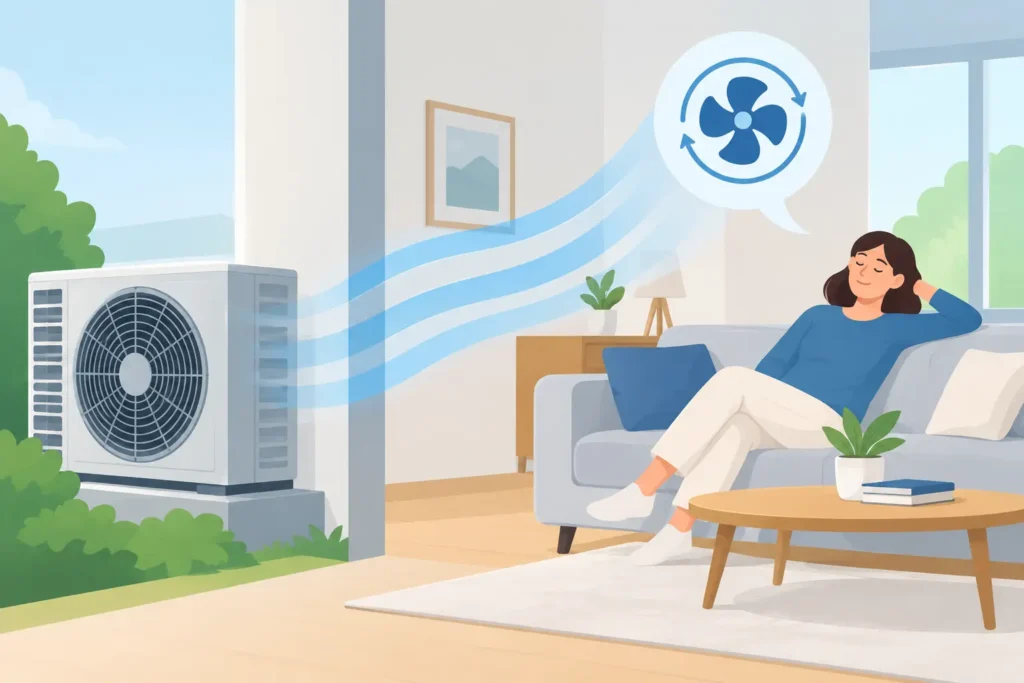
A hot Georgetown afternoon can make any thermostat setting feel like a high-stakes decision. So, should HVAC fan run continuously when you want steadier comfort, or should you leave it on Auto? For most Central Texas homes, Auto is the best everyday setting. Still, running the fan continuously can be useful in specific situations, especially in rooms that feel warmer, stuffier, or harder to cool than the rest of the house.
The right choice depends on your comfort concerns, your system’s condition, and how much extra energy use you are comfortable with. Here is a clear way to decide.
What the On and Auto Fan Settings Actually Do
Your thermostat usually gives you two choices for the indoor blower fan: Auto and On. The setting does not turn your air conditioner or furnace on by itself. It controls when the blower moves air through your ducts.
On Auto, the fan runs only while your air conditioner or heating system is actively conditioning the air. Once the thermostat reaches the set temperature, the system cycles off and the fan stops shortly afterward. This is the standard setting for most homes.
On On, the blower keeps circulating air even when the AC compressor or furnace is not running. The home may feel more evenly mixed from room to room, but the fan is using electricity for more hours each day.
Some newer thermostats also offer a circulation setting. This option runs the fan for a limited amount of time each hour, often giving you better air movement without keeping it on around the clock.
Should Your HVAC Fan Run Continuously?
There is no single answer for every home. If your system is properly sized, maintained, and delivering even temperatures, leaving the fan on Auto is usually the practical choice. It limits electricity use and, during cooling season, helps prevent moisture from being moved back into the home after the AC cycle ends.
Continuous fan operation can make sense when you have uneven temperatures between rooms. A two-story home in Round Rock, for example, may have a warm upstairs bedroom even when the downstairs feels comfortable. Keeping the fan running can help blend the air throughout the house and reduce some of that difference.
It may also help if your home has areas with weak airflow, such as a room at the end of a long duct run, a converted garage, or a space with many sunny windows. The fan can move conditioned air around more consistently, though it will not correct a serious duct, insulation, return-air, or equipment problem.
Think of continuous fan operation as a comfort adjustment, not a repair. If one room is always too hot or too cold, the better long-term solution may involve airflow testing, duct improvements, thermostat placement, insulation work, or HVAC service.
The Main Benefits of Running the Fan All the Time
The most noticeable benefit is more even temperatures. Air continues to move through the home between cooling cycles, reducing pockets of warm air and helping rooms feel less stagnant. Families who spend time in upstairs bedrooms, home offices, or back rooms often notice the difference first.
A continuously running fan can also improve filtration. More air passes through the HVAC filter, which means the filter has more opportunities to capture dust, pollen, and other airborne particles. This can be helpful during high-pollen stretches in Central Texas or when pets are part of the household.
There is also a comfort benefit for people who prefer gentle background airflow. A fan running consistently can make a room feel less stuffy even when the thermostat is already at the desired temperature.
These benefits depend on having a clean filter and a system that is moving air properly. A clogged filter, dirty blower components, or undersized return ducts can reduce airflow and put unnecessary strain on the equipment.
The Trade-Offs: Energy Use, Humidity, and Wear
The biggest drawback is added electricity use. Older blower motors can use a meaningful amount of power when they operate nonstop. Newer systems with variable-speed or electronically commutated motors generally use less energy at lower speeds, but they still add to your monthly utility bill.
Humidity is another concern during a Central Texas cooling season. Your air conditioner removes moisture as it cools the air. When the cooling cycle ends, moisture remains on the indoor coil. If the blower keeps running, some of that moisture can evaporate back into the air and circulate through your home.
That does not mean every house will become humid with the fan set to On. Results depend on the system, indoor humidity level, runtime, and airflow settings. But if your home already feels clammy, your windows show condensation, or you are having trouble keeping humidity under control, Auto is usually the safer setting.
Continuous operation can also increase wear on the blower motor, bearings, and related electrical components over time. Modern equipment is built to run, and occasional extended fan use is not inherently harmful. Still, more operating hours generally mean more maintenance needs over the life of the system.
A Practical Way to Choose the Right Setting
Start with Auto as your default. It is efficient, works well for most households, and supports better moisture removal while the air conditioner is running.
If comfort is uneven, try switching the fan to On for a few days. Pay attention to the rooms that usually cause trouble, how the house feels in the afternoon, and whether indoor air begins to feel more humid. If comfort improves without a noticeable humidity issue, you may prefer the added circulation during the hottest parts of the year.
A circulation setting can be an even better middle ground. It keeps air moving for part of each hour instead of all day and night. This is often enough to reduce hot and cold spots while avoiding the full energy cost of constant operation.
You can also use the settings seasonally. During mild weather, when the AC is not running as often, fan circulation may help freshen the home. During the most humid summer weather, Auto may deliver better comfort because it allows the system to complete its moisture-removal cycle.
Signs the Fan Setting Is Not the Real Problem
If you have to run the fan continuously just to make your home tolerable, it is worth looking beyond the thermostat. Persistent comfort problems are often symptoms of an underlying issue that deserves attention.
A room that stays hot may have a blocked supply register, leaky or disconnected ductwork, poor insulation, too little return airflow, or direct sun exposure. Weak airflow throughout the house can point to a dirty filter, blower problem, duct restriction, or frozen evaporator coil. High humidity may indicate an oversized air conditioner, drainage issue, airflow imbalance, or equipment that is not operating as intended.
Changing a thermostat setting can mask these problems for a while, but it will not solve them. A professional inspection can identify whether the issue is airflow, ductwork, system performance, or something as simple as a maintenance need.
Keep Your System Ready for Continuous Fan Use
If you choose to run your fan more often, check the air filter regularly. A fan that runs longer moves more air through the filter, so the filter may need changing sooner than it would with the Auto setting. Use the filter type recommended for your system, and avoid choosing an overly restrictive filter just because it has a high rating.
Seasonal maintenance matters, too. A technician can inspect the blower assembly, electrical connections, condensate system, refrigerant performance, and overall airflow. This is especially valuable before the heavy cooling demand that Georgetown, Hutto, Jarrell, Leander, and nearby communities experience each summer.
Your comfort should not depend on guessing at thermostat settings. If your home has stubborn hot spots, weak airflow, rising humidity, or an AC system that seems to run more than it should, Neal HVAC can help identify the cause and recommend a straightforward path forward. The best fan setting is the one that keeps your home comfortable without asking more of your system than necessary.