7 Best HVAC Upgrades for Texas Homes
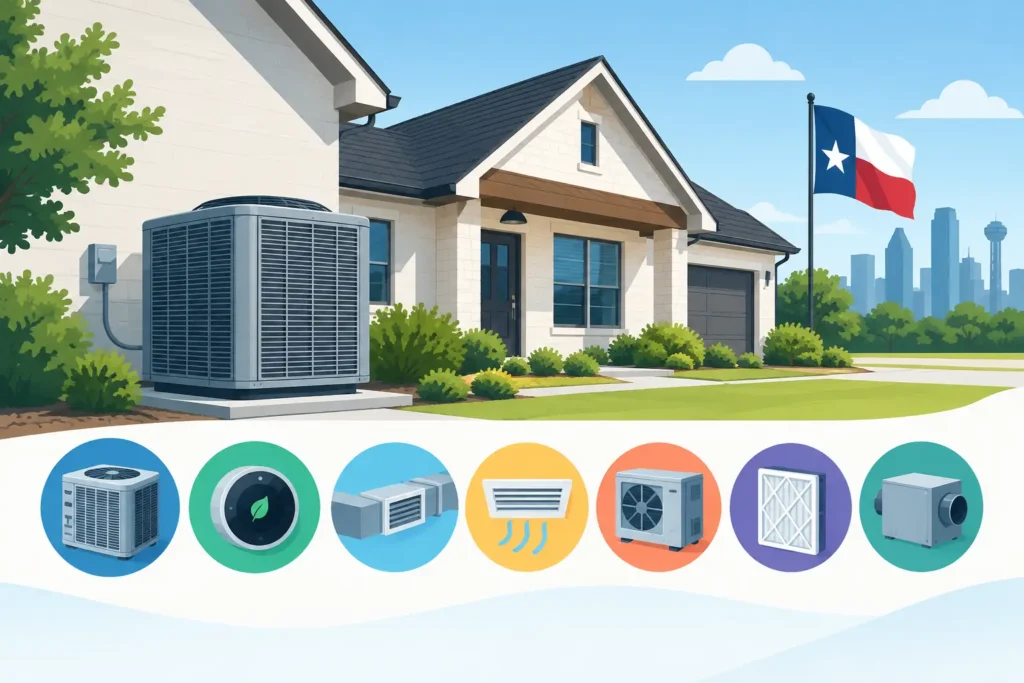
A Central Texas summer can turn a small comfort problem into a long, expensive afternoon. If your AC runs constantly, some rooms never cool down, or monthly bills climb every July, the best HVAC upgrades Texas homes can make are usually the ones that address the whole system – not just the outdoor unit.
For homeowners in Georgetown, Round Rock, Hutto, Jarrell, Leander, and nearby communities, the right upgrade depends on your home’s age, ductwork, insulation, comfort concerns, and how much useful life your current equipment has left. A good HVAC professional should explain those trade-offs clearly before recommending a replacement.
Start With the Problem, Not the Product
A new air conditioner can be a smart investment, but it is not automatically the answer to every comfort issue. A system that is undersized may struggle through peak heat. A system that is oversized can cool the house too quickly, shut off before removing enough humidity, and wear components faster through frequent starts and stops.
Before choosing an upgrade, look at the symptoms. High energy use may point to aging equipment, leaky ducts, poor attic insulation, or a thermostat that is not being used effectively. Hot bedrooms may be a duct balance issue, weak airflow, or a home layout that would benefit from zoning. Solving the actual cause helps prevent spending money on equipment that cannot deliver the comfort you expect.
1. High-Efficiency AC or Heat Pump Replacement
For many homeowners, replacing an aging air conditioner is the most meaningful upgrade. Older systems lose efficiency over time, especially when they need repeated repairs or have trouble keeping up during the hottest part of the day. Modern equipment offers better efficiency ratings, quieter operation, and more consistent cooling.
A heat pump is worth considering when it is time for a full replacement. It cools your home in summer and provides efficient electric heat during the mild winters common in Central Texas. Whether it is the right fit depends on your existing heating setup, budget, and household preferences, but it can be an especially practical option for homes moving away from older, less efficient equipment.
Higher efficiency does come with a higher upfront cost. The goal is not simply to buy the highest-rated unit available. It is to choose a properly sized system with efficiency features that make sense for your home and expected years of ownership.
Proper sizing matters more than a bigger unit
An HVAC contractor should calculate the home’s cooling load rather than sizing a new system based only on the old one. Square footage matters, but so do window exposure, ceiling height, insulation, air leakage, number of occupants, and duct condition. A correctly sized system runs in longer, steadier cycles that support better comfort and moisture control.
2. Variable-Speed Equipment for More Even Comfort
Variable-speed air handlers and compressors adjust their output instead of operating at only full power. On a normal hot day, they can run at a lower level for longer periods. When the Texas heat climbs, they can increase capacity as needed.
The benefit is often noticeable in homes with uneven temperatures. Longer, lower-speed operation can reduce dramatic temperature swings, improve airflow, and remove more humidity than a basic single-stage system. These systems are also typically quieter indoors and outdoors.
This upgrade is not necessary for every household. If your existing system is fairly new and keeps the home comfortable, the cost may not be justified yet. But when replacing old equipment, variable-speed options deserve a conversation, particularly for homeowners who value consistent room-to-room comfort.
3. Duct Sealing and Duct Insulation
Your ductwork carries cooled air to every room. If ducts leak in an attic, garage, or other unconditioned area, part of the air you paid to cool never reaches your living space. Dust, heat, and humidity can also be pulled into the system through gaps and poorly connected sections.
Duct sealing is one of the best HVAC upgrades for Texas homes because it supports nearly every other improvement. A high-efficiency AC system cannot perform at its best if conditioned air is escaping before it reaches the vents. In older homes, duct repairs may also improve weak airflow in distant rooms.
Duct insulation matters, too, especially where ducts run through a hot attic. The attic temperature can be far higher than the temperature set on your thermostat. Proper insulation helps protect the cool air moving through those runs. A technician should inspect the duct system for leaks, crushed sections, disconnected runs, and poor support before recommending major equipment changes.
4. A Smart Thermostat That Matches Your Routine
A smart thermostat gives homeowners more control without requiring constant adjustment. You can schedule higher temperatures while the home is empty, return to a comfortable setting before everyone comes home, and monitor performance from a phone.
The savings come from using the thermostat wisely, not from the device alone. During summer, setting the temperature a few degrees higher when no one is home can reduce strain on the system. Avoid large, frequent changes that cause the AC to work hard to catch up during the hottest hours.
Compatibility matters. Some advanced systems need specific communicating thermostats to access all their features. Before buying a thermostat on your own, confirm that it will work with your current or planned HVAC equipment.
5. Zoned Cooling for Hot and Cold Areas
Zoning divides a home into separate comfort areas using dampers in the ducts, multiple thermostats, and a compatible control system. Instead of treating the entire house as one zone, you can manage temperatures in areas such as upstairs bedrooms, the main living space, or a seldom-used guest room.
Zoning can be a strong solution for two-story homes, large floor plans, rooms with heavy afternoon sun, and homes where family members prefer different temperatures. It can also reduce wasted cooling in spaces that are rarely occupied.
However, zoning requires careful design. Adding dampers to an existing duct system without accounting for airflow can create new problems. In some homes, a duct adjustment, additional return air, or a ductless mini-split for one difficult room may be a better investment than a full zoning system.
6. Better Filtration and Indoor Air Quality Add-Ons
Central Texas brings pollen, dust, and periods of high humidity. Better filtration can help improve the air circulating through your home, but the filter has to be appropriate for the system. A filter that is too restrictive can reduce airflow and put unnecessary strain on the equipment.
A properly designed media filter can capture more particles than a basic one-inch filter while allowing the system to operate efficiently. For homes with allergy concerns, pets, or frequent dust buildup, this can be a useful upgrade. Some homes may also benefit from air purification equipment or humidity control, depending on specific indoor air concerns.
These additions are not a substitute for regular maintenance, duct repairs, or proper ventilation. The best approach is to identify whether the concern is dust, odors, humidity, allergies, or poor airflow, then choose equipment that addresses that concern directly.
7. Attic Insulation and Air Sealing That Support Your HVAC System
Although insulation is not part of the HVAC equipment itself, it has a direct effect on how hard your system must work. In Texas, a poorly insulated attic can transfer significant heat into the living space. Air leaks around attic access points, recessed fixtures, and other openings can make the issue worse.
Improving attic insulation and sealing major air leaks can reduce cooling demand and make rooms feel more stable. It may also allow a new system to be sized more accurately rather than oversized to compensate for heat gain. This is especially worth evaluating in older homes or homes with rooms that become uncomfortable every afternoon.
Plan the Upgrade Around Long-Term Comfort
The best time to discuss HVAC upgrades is before an emergency replacement forces a rushed decision. If your system is more than 10 years old, needs frequent repairs, makes unusual noise, or cannot maintain comfortable temperatures, an inspection can show where your money will have the greatest impact.
At Neal HVAC, the focus is on helping local homeowners understand their options without unnecessary complexity. A clear assessment of your equipment, ductwork, and comfort goals can help you choose an upgrade that fits your home rather than a one-size-fits-all answer.
Comfort should not be a guessing game every summer. Start by paying attention to the rooms, times of day, and utility bills that reveal where your system is falling short, then use that information to make the next improvement count.