How to Reset AC Breaker Safely in Your Home
When your AC quits during a Central Texas heat spell, the electrical panel is often the first place homeowners look. Knowing how to reset AC breaker safely can restore power after an isolated trip. But a breaker that trips again is not a nuisance to override. It is a safety device telling you the system needs attention.
A quick reset may be appropriate when the breaker has tripped once and there is no sign of damage. If it will not stay on, smells burned, or trips again when the air conditioner starts, stop there. Repeated resets can damage the equipment, overheat wiring, and turn a repairable issue into a larger problem.
Why an AC breaker trips
Your air conditioner draws a significant amount of power, especially when the outdoor unit starts. The breaker is designed to shut off electricity if it senses more current than the circuit can safely handle. That protection helps prevent wiring damage and electrical hazards.
Sometimes, a trip is isolated. A power interruption, a storm, or a temporary electrical fluctuation can be enough to knock the breaker off. More often, though, a recurring trip points to a problem that needs diagnosis.
Common causes include a dirty air filter restricting airflow, a clogged outdoor condenser coil, a failing capacitor, loose electrical connections, a worn compressor, damaged wiring, or a breaker that is no longer functioning properly. Low refrigerant can also make the system work harder than it should, although it is not something a homeowner should attempt to address without an HVAC professional.
In Georgetown, Round Rock, Hutto, Jarrell, and Leander, long cooling seasons put extra demand on AC equipment. A unit that has been struggling through hot afternoons may finally trip the breaker when it cannot keep up with the load.
How to reset AC breaker safely
Before touching the electrical panel, turn your thermostat to Off. This matters because it prevents the AC from immediately trying to start while you are resetting power. If the breaker remains on after the reset, wait a few minutes before asking the system to cool again.
Find your home’s main electrical panel. It may be located in a garage, utility room, closet, exterior wall box, or another accessible area. Make sure the floor and your hands are dry. Do not reset a breaker if you see water near the panel, notice scorch marks, hear buzzing, or smell something burning. Those are reasons to call for help immediately.
Look for a breaker labeled “AC,” “A/C,” “air conditioner,” “condenser,” or “HVAC.” In some panels, the AC circuit uses a double-pole breaker that takes up two connected switch spaces. A tripped breaker may not look fully off. It can sit in a middle position between On and Off.
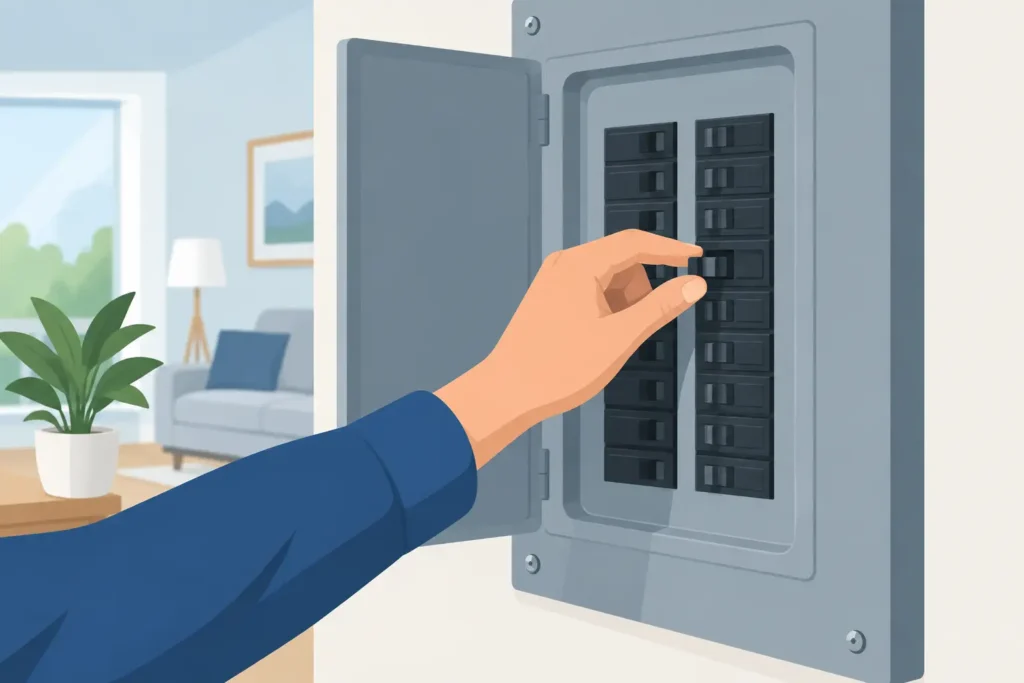
To reset it, move the AC breaker firmly all the way to the Off position first. Then move it firmly back to On. Do not force a breaker that feels damaged, loose, or difficult to move.
Once the breaker is on, leave the thermostat off for about five minutes. This short pause gives the system time for pressures to equalize and can help protect the compressor from a hard restart. Then set the thermostat to Cool and choose a temperature a few degrees below the current indoor temperature.
Listen and watch from a safe distance. The indoor blower may start first, followed by the outdoor unit. If the system begins cooling and the breaker stays on, continue to monitor it over the next cooling cycle. A single trip does not always mean the system is failing, but it is still worth noting when it happened and what the AC was doing at the time.
What not to do after resetting the breaker
Do not keep resetting a breaker to make the AC run. One reset is a reasonable safety check when there are no warning signs. A second trip is the point to stop and schedule service.
Avoid replacing the breaker yourself or installing one with a higher amp rating. Breaker size is matched to the wiring and equipment specifications. Using the wrong breaker can remove an essential layer of protection and create a serious fire risk.
It is also wise not to open the outdoor unit’s electrical compartment or touch wiring at the disconnect box. The disconnect near the condenser is different from the breaker in your home’s panel. It allows power to the outdoor unit to be shut off for service, but it does not fix the reason the circuit tripped.
Finally, do not assume a new thermostat battery or a thermostat reset will solve an AC breaker problem. Those steps can help with certain control issues, but a tripped breaker involves the electrical supply to the equipment and should be treated more carefully.
When an AC breaker reset is not enough
Call an HVAC technician if the breaker trips immediately after you turn it back on, trips when the outdoor unit tries to start, or shuts off again later the same day. Each pattern gives a technician useful information about where the problem may be.
For example, a breaker that trips as soon as cooling starts may indicate a compressor, capacitor, contactor, or wiring issue. A breaker that trips only after the system has run for a while can be related to overheating, restricted airflow, a dirty condenser coil, or a component that is failing under load. Diagnosis takes testing equipment and experience. Guessing can be costly and unsafe.
You should also request service right away if you notice any of the following:
- A burning, melting, or sharp electrical smell near the panel, thermostat, air handler, or outdoor unit
- Smoke, sparks, buzzing, or visible damage to electrical components
- Warm or discolored breaker-panel surfaces
- An AC system that hums but will not start
- Water pooling around electrical equipment or an outdoor unit damaged by storms or debris
If there is smoke, active sparking, or a burning smell, keep clear of the equipment and contact emergency services if you believe there is an immediate fire hazard. Do not attempt another reset.
Simple checks that can prevent another trip
While an electrical fault needs professional service, basic maintenance can reduce strain on your air conditioner. Start with the filter. A heavily clogged filter can limit airflow, make the system run longer, and contribute to overheating. Check it monthly during heavy-use months and replace it when it looks dirty or according to the filter manufacturer’s guidance.
Take a look at the outdoor condenser as well. Turn the thermostat off before checking around it, and keep leaves, grass clippings, stored items, and shrub growth away from the unit. The condenser needs open space to release heat. Do not spray electrical areas or take panels off, but keeping the surrounding area clear is a useful homeowner task.
Your thermostat settings matter, too. Setting the thermostat dramatically lower will not cool the house faster. It only tells the system to run longer. During extreme heat, choose a comfortable, realistic setting and give the equipment time to work.
Regular professional maintenance is another practical safeguard. A technician can inspect electrical connections, test starting components, clean coils when needed, check airflow, and catch small concerns before they cause a no-cooling call on a hot afternoon.
Get help before a small electrical issue grows
If your breaker stays on after one reset and the AC resumes normal operation, keep an eye on it and mention the event at your next maintenance visit. If it trips again, the safest choice is to leave it off and have the system inspected.
Neal HVAC helps homeowners throughout Georgetown and nearby Central Texas communities get clear answers when their heating or cooling system is not performing as it should. A trained technician can identify why the breaker tripped, explain the repair in straightforward terms, and help protect your comfort without taking unnecessary risks. Your home should feel cool and dependable, not like a system you have to keep resetting.