High Efficiency HVAC Installation at Home
If your energy bills keep climbing but some rooms still feel too warm or too cold, the problem may not be your thermostat. In many Central Texas homes, the real issue is an aging or poorly matched system. High efficiency HVAC installation is often the smartest way to improve comfort, cut waste, and avoid the cycle of repeated repairs.
A new system can do more than heat and cool the house. When it is chosen carefully and installed correctly, it can manage humidity better, run more evenly, and put less strain on major components. That matters in places like Georgetown, Round Rock, Hutto, Jarrell, and Leander, where long cooling seasons put HVAC equipment to work for months at a time.
What high efficiency HVAC installation really means
Many homeowners hear the word “efficient” and think it only refers to a lower electric bill. Lower operating costs are part of it, but they are not the whole story. High efficiency HVAC installation means pairing modern equipment with the right design, airflow, controls, and setup so the system performs the way it should.
A high-efficiency air conditioner or heat pump usually has a higher SEER2 rating than older equipment. A high-efficiency furnace may offer a higher AFUE rating, which reflects how much fuel turns into usable heat. Those ratings matter, but installation quality matters just as much. Even premium equipment can underperform if the ductwork leaks, the system is oversized, or the refrigerant charge is off.
That is why homeowners should think about the full installation, not just the brand name on the outdoor unit. Real efficiency comes from how the system works in your home, with your square footage, insulation levels, layout, and daily usage.
Why Central Texas homeowners look at efficiency first
In this part of Texas, air conditioning is not a luxury for a few months each year. It is a daily need through long stretches of spring, summer, and early fall. When a system runs that often, efficiency has a direct effect on utility costs and indoor comfort.
Older systems tend to struggle in predictable ways. They may cool unevenly, run longer than they should, or start and stop too often. Some homes get stuck with hot upstairs rooms, excess indoor humidity, or weak airflow in parts of the house. In those cases, replacing the system with a high-efficiency option can help, but only if the installation addresses the reason those issues developed in the first place.
For some homeowners, the biggest benefit is lower monthly costs. For others, it is quieter operation, better temperature control, or fewer breakdowns during the hottest weeks of the year. The right choice depends on the age of the current system, repair history, and how long you plan to stay in the home.
High efficiency HVAC installation is not one-size-fits-all
Two homes on the same street can need very different solutions. One may benefit from a variable-speed system that maintains steady comfort all day. Another may do well with a simpler high-efficiency setup because the home is smaller, newer, or already has solid duct performance.
This is where homeowners can get tripped up. Bigger equipment is not automatically better. An oversized unit may cool the home too quickly without removing enough humidity, which can leave the house feeling cool but clammy. Undersized equipment has the opposite problem. It may run constantly and still struggle to keep up.
A proper installation starts with evaluating the home, not guessing based on the old system. Square footage matters, but so do window placement, insulation, ceiling height, sun exposure, and duct layout. When those details are ignored, efficiency numbers on paper do not translate into comfort in real life.
What to expect during the installation process
A good installation experience should feel clear and straightforward. It usually begins with a home assessment and a conversation about the problems you are trying to solve. Maybe the system breaks down every summer. Maybe the back bedrooms never stay comfortable. Maybe energy bills have gotten hard to ignore.
From there, the contractor should recommend equipment that fits the home and explain the options in plain language. Some homeowners want the highest efficiency available. Others want the best balance between upfront cost and long-term savings. Both are valid. The best system is the one that fits your home and budget without overselling features you do not need.
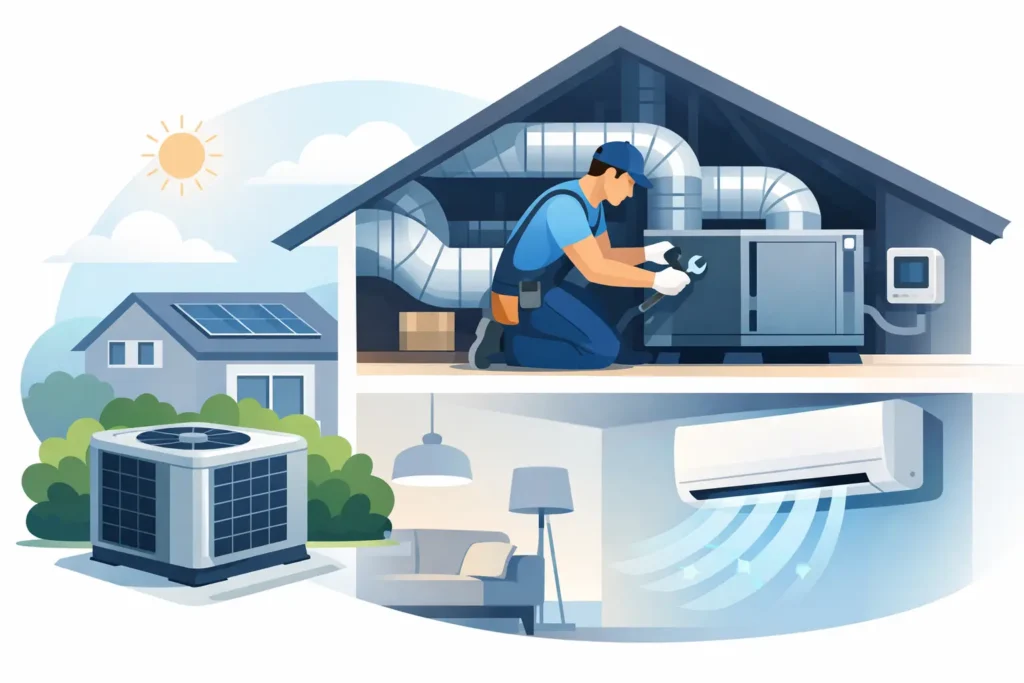
Once installation day arrives, the work may include removing old equipment, setting the new indoor and outdoor units, updating electrical or drain components, checking refrigerant levels, and testing airflow. In some homes, duct repairs or duct modifications are also part of the job. If the duct system is in poor shape, skipping that step can hold back the performance of the new equipment.
After setup, the system should be tested and fine-tuned. This is where installation quality shows up. Proper calibration, thermostat setup, and airflow verification help the equipment operate efficiently from day one.
When high-efficiency equipment makes the most sense
Not every home needs the top-tier model on the market. Sometimes a mid-range high-efficiency system is the better value. The right answer depends on how much you use the system, how long you expect to stay in the home, and whether your current comfort issues go beyond equipment age.
High-efficiency HVAC installation often makes the most sense when your current system is more than 10 to 15 years old, repair costs are adding up, or the home has ongoing comfort problems that basic service has not fixed. It is also a strong option if you are planning to stay in the home for years and want more predictable energy costs.
If your existing unit is relatively new and in good condition, replacement may not be the first move. In some cases, maintenance, airflow corrections, or duct sealing can improve performance enough to delay a full installation. A trustworthy contractor should be willing to say that when it is true.
The trade-off between upfront cost and long-term value
There is no way around it – high-efficiency systems usually cost more upfront than standard options. That can make the decision feel harder, especially when replacement is happening after a sudden breakdown. But focusing only on initial price can be shortsighted.
A better way to look at it is total value over time. A more efficient system may reduce monthly utility bills and may experience less wear when it is designed to operate more steadily. Variable-speed and two-stage systems can also improve comfort in ways homeowners notice every day, not just on the utility statement.
Still, the highest efficiency model is not automatically the best investment for every household. If the price jump is large and the payback period is long, a slightly lower efficiency option may be the smarter fit. The goal is not chasing the biggest number. The goal is reliable comfort, reasonable operating costs, and an installation that holds up.
Choosing the right installer matters as much as the equipment
This is the part many homeowners underestimate. Equipment ratings get the attention, but the installer has a huge influence on results. A poor installation can waste the benefits of even the best system.
Look for a contractor who takes time to evaluate the home, explains recommendations clearly, and talks honestly about trade-offs. If every answer sounds rushed or every option somehow points to the most expensive unit, that is a sign to slow down. Good service should feel informed, not pressured.
A local company also understands the demands of Central Texas weather and the expectations homeowners have during peak cooling season. That matters when you want a system that handles real summer conditions, not just mild test settings. Neal HVAC has served homeowners in the area since 2009, and that kind of local experience helps when comfort, efficiency, and long-term reliability all need to line up.
How to protect your investment after installation
A new system still needs regular care. High-efficiency equipment is designed to perform well, but it cannot do that if filters are neglected, coils get dirty, or small issues go unchecked.
Routine maintenance helps preserve efficiency and catch wear before it turns into a major repair. Homeowners can help by changing filters on schedule, keeping the outdoor unit clear, and paying attention to changes in airflow, noise, or humidity. Seasonal tune-ups add another layer of protection, especially before the hottest part of the year.
The best outcome is simple. You want a system that keeps your home comfortable without constant worry, surprise breakdowns, or energy bills that feel out of control. High efficiency HVAC installation can move you closer to that, but the real difference comes from choosing equipment that fits your home and having it installed by people who do the job right. When comfort matters every day, that kind of decision pays off long after installation day.