How Often Should HVAC Systems Be Serviced?
If your AC quits in August or your furnace struggles on the first cold night, the question gets real fast: how often should HVAC systems be serviced? For most homes, the safest answer is twice a year – once in the spring for cooling and once in the fall for heating. That schedule gives your system the best chance to run efficiently, catch small issues early, and keep your home comfortable when Texas weather puts it to work.
That said, not every home has the same service needs. A newer system in a well-kept house may have fewer problems than an older unit that runs hard through long Central Texas summers. Pets, dust, indoor air quality concerns, and how often the system runs all affect the right maintenance schedule.
How Often Should HVAC Systems Be Serviced for Most Homes?
For the average homeowner, professional HVAC maintenance twice a year is the standard. One visit should happen before cooling season, and one before heating season. If you have a heat pump, which handles both heating and cooling, that twice-yearly schedule still makes sense because the equipment works nearly year-round.
Spring service helps prepare your air conditioner for the hottest months, when it will likely run the longest and work the hardest. Fall service helps make sure your heating system is ready before temperatures drop. In both cases, the goal is simple: reduce the chances of a breakdown when you need the system most.
Some homeowners assume one annual visit is enough, and sometimes it is better than nothing. But if your system provides both heating and cooling, one visit can leave half the equipment unchecked for too long. Small electrical issues, airflow problems, dirty components, or worn parts can turn into expensive repairs if they sit through an entire season.
Why Twice-a-Year Service Usually Makes Sense
HVAC systems do not usually fail all at once. More often, performance slips first. Airflow gets weaker, energy bills rise, certain rooms stay warmer or colder than they should, or the system starts cycling more often. Regular service gives a technician the chance to spot those changes before they become major problems.
There is also the efficiency side. Dirty coils, clogged drain lines, loose electrical connections, low refrigerant, or neglected burners can all affect how well your system runs. When your HVAC equipment has to work harder than it should, you feel it in both comfort and monthly utility costs.
For homeowners in Georgetown, Round Rock, Hutto, Jarrell, Leander, and nearby areas, cooling maintenance matters especially because summer is not mild here. Long stretches of high heat can expose weaknesses quickly. A system that seemed fine in April may not hold up in July if it has underlying issues.
When You May Need More Frequent HVAC Service
Twice a year is the baseline, not a rule that fits every house perfectly. Some systems benefit from more attention.
If your equipment is older, usually around 10 to 15 years or more, extra monitoring can help. Aging systems tend to have more wear on motors, capacitors, contactors, and other working parts. They may still run, but they often lose efficiency and reliability as they age.
Homes with pets may also need closer attention. Pet hair and dander can affect filters and airflow faster than many homeowners expect. If the filter clogs early, the whole system can feel the strain.
If anyone in the home has allergies, asthma, or other respiratory concerns, more frequent filter changes and occasional system checks may be worth it. The same goes for homes with heavy dust, ongoing remodeling, or indoor air quality concerns.
You may also need more frequent service if your HVAC system runs almost constantly. That can happen in larger homes, houses with poor insulation, or homes with comfort issues that force the system to work harder than normal.
Signs Your HVAC System Should Be Serviced Sooner
Even if you stay on a regular maintenance schedule, there are times when you should call before the next planned visit. Strange noises are one of the biggest signs. Banging, buzzing, screeching, or rattling usually mean something has changed and needs attention.
Uneven cooling or heating is another common warning. If one room feels fine and another never catches up, the issue may be airflow-related, duct-related, or tied to system performance. A rising electric bill without a clear explanation can also point to an HVAC problem.
Other warning signs include weak airflow, short cycling, musty odors, water around the indoor unit, or a thermostat that does not seem to match how the house actually feels. These issues do not always mean a major repair is needed, but waiting rarely improves the situation.
What Happens During Routine HVAC Maintenance?
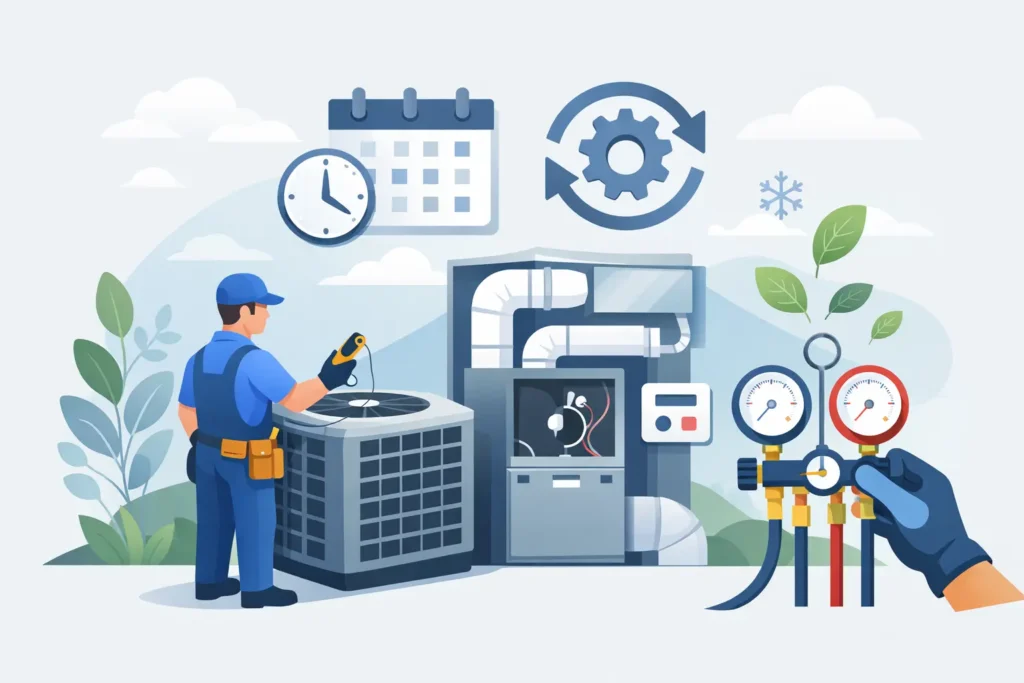
A proper maintenance visit is more than a quick filter check. The exact steps depend on the type of system in your home, but a professional tune-up typically includes inspecting major components, testing system performance, checking electrical parts, cleaning accessible components, and looking for wear that could lead to a failure.
For air conditioning service, that can include checking refrigerant levels, cleaning coils when needed, inspecting the condensate drain, measuring airflow, and confirming the thermostat and controls are working properly. For heating service, it may include inspecting burners, checking safety controls, examining the heat exchanger area, and making sure the system starts and runs as it should.
Maintenance also gives homeowners a clearer picture of what condition the system is in. Sometimes the best outcome of a service visit is not a repair at all. It is knowing your system is in good shape and ready for the season.
Homeowner Tasks Between Service Visits
Professional maintenance matters, but there are a few basic things homeowners should keep up with between visits. Changing the air filter on schedule is the most important. Depending on the filter type, pets, and air quality in the home, that may mean every 1 to 3 months.
It also helps to keep the outdoor unit clear of leaves, grass, and debris. Make sure supply and return vents inside the home are not blocked by furniture or rugs. If you notice new sounds, new smells, or reduced airflow, do not ignore them just because the system is still technically running.
These simple steps do not replace professional service, but they do support it. A clean filter and clear airflow can help your system perform better and reduce unnecessary strain.
Is HVAC Maintenance Really Worth It?
For most homeowners, yes. The cost of routine maintenance is usually far lower than the cost of an emergency repair, especially during peak season when a breakdown creates immediate stress. There is also the comfort factor. Preventive service helps you avoid being stuck in a hot house waiting for an AC repair during the middle of a Texas heat wave.
Maintenance does not guarantee your system will never fail. Parts can still wear out, and older equipment can still reach the point where replacement makes more sense than repair. But regular service improves your chances of catching problems early, extending equipment life, and keeping the system operating as efficiently as possible.
That trade-off matters. Skipping maintenance may save money today, but it often increases the risk of higher repair bills, reduced comfort, and a shorter system lifespan later.
How Often Should HVAC Systems Be Serviced in Central Texas?
In Central Texas, twice-yearly service is the best fit for most homes because cooling systems carry such a heavy workload. Summers are long, hot, and demanding. Even if your heating season is shorter, the full system still benefits from a fall check so you are not surprised when colder weather arrives.
If your AC is older, struggles to keep up, or has needed recent repairs, staying on schedule becomes even more important. The same is true if you have noticed humidity issues, poor airflow, or rooms that never seem comfortable.
A dependable local company like Neal HVAC can also help you judge whether your home needs the standard schedule or something more tailored. That kind of advice is useful because service timing should match how your equipment actually performs, not just what a general rule says.
The best maintenance plan is the one you will actually keep. If you cannot remember the last time your system was checked, that is usually your answer. A simple seasonal schedule gives your heating and cooling system the attention it needs before small problems have a chance to grow into inconvenient ones.