Why Is My Air Conditioner Not Cooling House?
When the thermostat says one thing and your living room feels another, frustration sets in fast. If your air conditioner is not cooling house the way it should, the problem may be something simple, or it may be an early sign that your system needs professional attention before the Texas heat gets worse.
In Georgetown and nearby communities, AC systems work hard for long stretches of the year. That means small issues can turn into bigger ones quickly. Weak airflow, warm air from the vents, rooms that never seem to cool down, or an outdoor unit that runs nonstop are all signs that something is off.
Why an air conditioner is not cooling house evenly
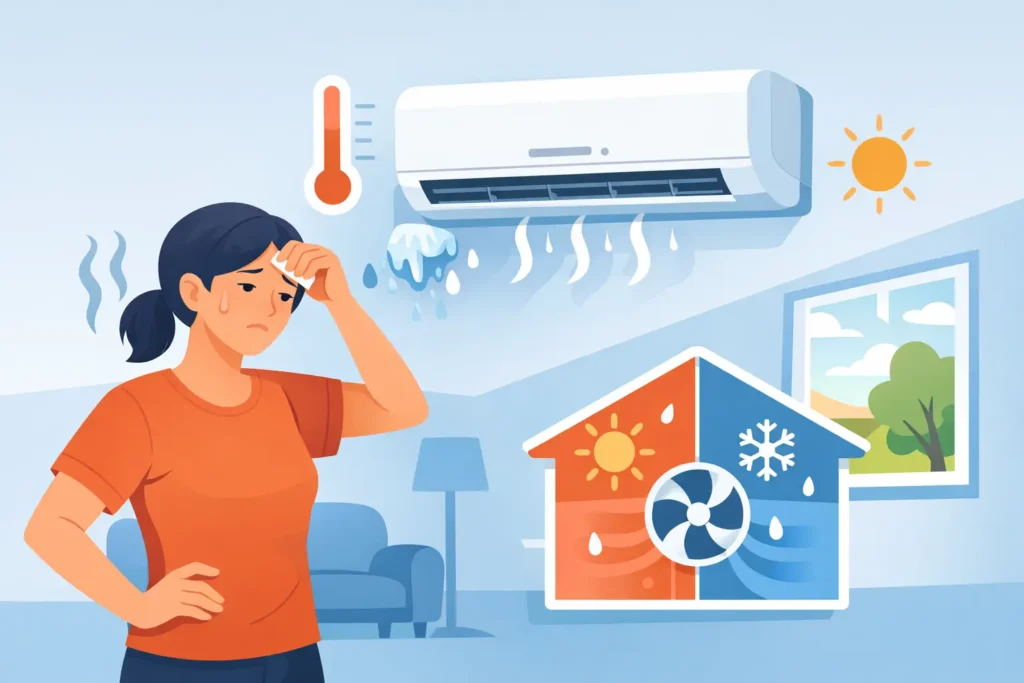
A cooling problem does not always mean the entire system has failed. Sometimes the AC is running, but it is not removing enough heat from the home to keep up. In other cases, one part of the system is working while another is not, which creates the feeling that the house is staying warm no matter how low you set the thermostat.
The reason can range from restricted airflow to a refrigerant issue to a thermostat problem. Age matters too. An older system may still turn on and blow air, but it may no longer have the capacity to cool efficiently during a Central Texas summer.
That is why it helps to look at the symptoms rather than just the temperature. Warm air, short cycling, constant running, rising electric bills, and hot spots around the house all point to different possible causes.
Start with the simplest checks first
Before assuming the worst, it makes sense to rule out a few common issues homeowners can check safely. Start at the thermostat. Make sure it is set to cool and not just fan, and confirm the temperature setting is lower than the current room temperature. Dead batteries or incorrect programming can sometimes create a problem that looks bigger than it is.
Next, check the air filter. A clogged filter is one of the most common reasons an AC struggles. When airflow is restricted, your system cannot move enough conditioned air through the house. That can make rooms feel stuffy and can also put extra stress on the equipment.
Look at the supply vents around the home as well. If several are closed or blocked by furniture, airflow becomes uneven. One or two blocked vents may not seem like a big deal, but throughout the house, that reduced circulation adds up.
Then step outside and inspect the outdoor unit. If leaves, grass, or debris are packed around it, the system may have trouble releasing heat. You do not need to take anything apart, but clearing away visible buildup around the unit can help it breathe better.
Common reasons your AC runs but does not cool
If the quick checks do not solve the issue, the problem often comes down to one of a few mechanical or system-related causes.
Dirty evaporator or condenser coils
Your AC depends on clean coils to absorb and release heat. When dirt builds up on the indoor evaporator coil or the outdoor condenser coil, the heat transfer process becomes less effective. The system may keep running, but cooling performance drops. In Texas, outdoor units can collect a lot of dust and yard debris over time, especially during long summer use.
Low refrigerant
Refrigerant is what allows your system to remove heat from indoor air. If levels are low, there is usually a leak somewhere in the system. Low refrigerant can lead to longer run times, reduced cooling, warm air from vents, or even ice forming on the indoor coil. This is not a DIY fix. Refrigerant problems need to be diagnosed and repaired correctly.
Frozen coil
A frozen evaporator coil can happen because of low airflow, low refrigerant, or both. It sounds backward, but ice on the coil can stop your system from cooling. If you notice ice on refrigerant lines or around the indoor unit, turn the system off and let it thaw before having it inspected. Continuing to run it can cause more damage.
Failing capacitor or compressor issues
Sometimes the outdoor unit is not doing its job fully, even though the system appears to be on. A weak capacitor, a struggling compressor, or an electrical issue can keep the AC from cooling properly. You may hear humming, clicking, or notice that the indoor fan runs while the outdoor unit behaves inconsistently.
Leaky ductwork
If cool air is escaping into the attic or crawl space, your house may never reach the temperature on the thermostat. Duct leaks can also cause uneven cooling, with one room comfortable and another constantly warm. This issue is especially common in older homes or homes with aging duct systems.
When the problem is the house, not just the AC
Sometimes an air conditioner not cooling house well is only partly an equipment issue. The home itself may be making the system work harder than it should.
Poor insulation, air leaks around doors and windows, sun exposure, and inadequate attic ventilation can all push indoor temperatures up. During peak afternoon heat, even a working AC can struggle if cooled air is escaping or outdoor heat is pouring in.
That does not mean the equipment is fine in every case. It means the real answer may involve both system performance and overall home efficiency. A unit that is properly sized and well maintained can still seem ineffective if the house cannot hold conditioned air.
Signs it is time to call for AC repair
There is a point where continued troubleshooting stops being useful and starts delaying the fix. If your system is blowing warm air, freezing up, making unusual noises, tripping the breaker, or running constantly without cooling the home, it is time to have it checked.
The same goes for sudden jumps in your electric bill. A system that has to fight to do basic cooling often uses more energy while delivering less comfort. That kind of strain can shorten equipment life if the root problem is left untreated.
For homeowners in Georgetown, Round Rock, Hutto, Jarrell, Leander, and nearby areas, local service matters here. Central Texas heat puts AC systems under real pressure, and a technician familiar with those conditions can usually spot the most likely issues faster.
Repair or replace when air conditioner is not cooling house?
This is where the answer depends on the age of the system, the cost of the repair, and how the unit has been performing overall.
If your AC is newer and the issue is isolated, repair is often the smart move. A bad capacitor, clogged drain line, dirty coil, or refrigerant leak repair may restore normal performance without much debate.
If the system is older, needs frequent repairs, or has struggled with comfort and efficiency for a while, replacement may be the better long-term value. That is especially true if the unit is undersized, oversized, or simply worn out after years of summer demand.
A good service company should walk you through both sides honestly. Sometimes the lowest immediate cost is not the lowest cost over the next few summers.
How to reduce the chances of another cooling problem
Regular maintenance makes a real difference. Seasonal tune-ups help catch worn parts, dirty components, refrigerant issues, and airflow problems before they turn into a no-cooling call in the middle of a heat wave.
Homeowners can help by changing filters on schedule, keeping vents open, clearing vegetation around the outdoor unit, and paying attention to early warning signs. If your system starts running longer than usual or cooling unevenly, it is better to address it early than wait for a full breakdown.
It also helps to be realistic about thermostat settings during extreme heat. If outdoor temperatures are very high, your AC may not drop the indoor temperature as quickly as it does on milder days. That is normal to a point. What is not normal is air that feels warm, weak airflow, or a system that never catches up.
A local, practical next step
If your house is staying warm and the AC cannot keep up, waiting rarely improves the situation. Problems that start with reduced cooling can turn into frozen coils, compressor strain, or a complete loss of cooling when you need it most.
Neal HVAC works with homeowners across Georgetown and surrounding communities to diagnose cooling issues clearly and recommend the right fix for the home, the system, and the budget. When comfort slips in a Texas summer, the best next step is a straightforward inspection and a clear answer you can trust.
A cool house should not feel like a guessing game, and with the right help, it does not have to.