When Should HVAC Be Serviced?
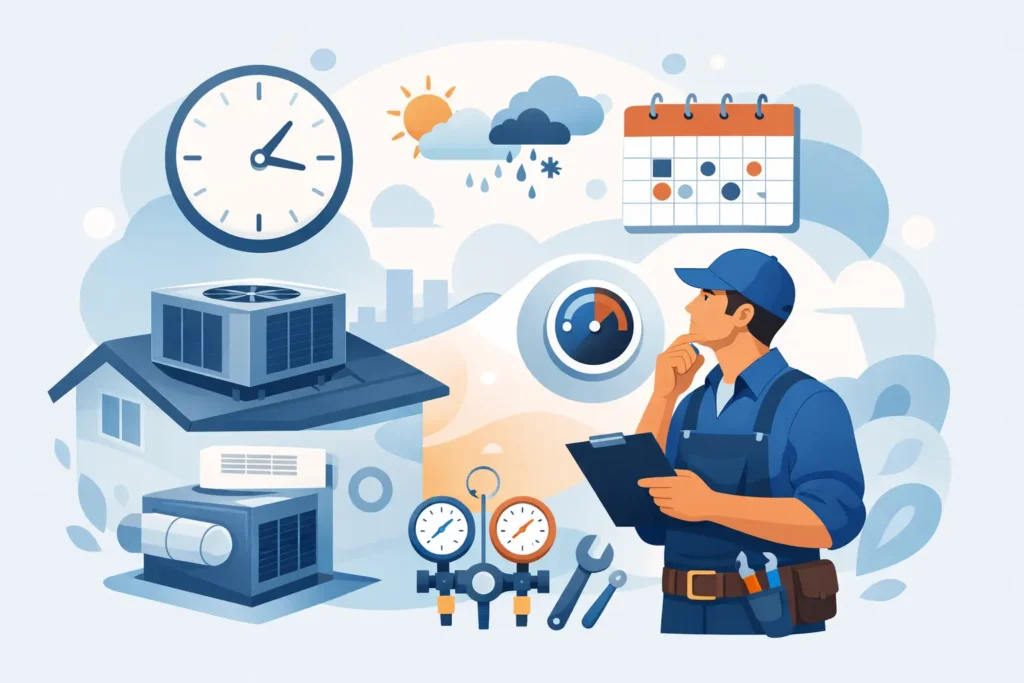
If your AC quits on a 102-degree Georgetown afternoon or your heater struggles through a cold January night, the timing for maintenance suddenly feels obvious. But when should HVAC be serviced if you want to avoid breakdowns instead of reacting to them? For most homes, the right answer is twice a year – once before cooling season and once before heating season.
That simple rule covers most systems, but real life is a little more nuanced. A newer unit in a lightly used home may seem fine for longer, while an older system in Central Texas heat can need more attention. The goal is not just keeping the equipment running. It is keeping your home comfortable, your utility bills reasonable, and small problems from turning into expensive repairs.
When should HVAC be serviced in a typical home?
For most homeowners, spring and fall are the best times to schedule service. Spring maintenance gets your air conditioner ready before the hottest months arrive. Fall service prepares your furnace or heat pump before cooler weather sets in.
That timing matters because HVAC systems work hardest when outdoor temperatures are extreme. In Georgetown, Round Rock, Hutto, Jarrell, Leander, and nearby areas, the cooling side of your system often takes the biggest beating. Long stretches of high heat can expose weak capacitors, dirty coils, low refrigerant, and airflow problems fast. A spring tune-up gives a technician a chance to catch those issues before your system is under real pressure.
Fall service is just as worthwhile, even if your heater does not run as often as your AC. Heating problems tend to show up right when you need warmth the most. A seasonal check helps confirm safe operation, proper airflow, and reliable startup before temperatures dip.
Why twice-a-year service usually makes sense
A lot of homeowners ask whether annual service is enough. Sometimes it is, especially if you have a mild climate and a newer system. In Central Texas, though, twice-a-year maintenance is usually the smarter call.
Your HVAC system is not just one machine. It is a full heating and cooling setup with moving parts, electrical components, filters, drainage, coils, safety controls, and thermostat communication. The cooling side and heating side have different wear patterns. Checking both on a seasonal schedule helps address each part when it matters most.
There is also a practical reason. Preventive maintenance is easier to schedule before peak season than emergency service during it. Once summer hits, service calendars fill up fast because breakdowns spike when systems run nonstop.
Signs your HVAC should be serviced sooner
Even if you already plan seasonal tune-ups, there are times when waiting is not the best choice. If your system is giving you warning signs, it should be looked at sooner rather than later.
Higher utility bills are one common clue. If your usage habits have not changed but your costs suddenly climb, your system may be working harder than it should. Dirty coils, restricted airflow, failing parts, or thermostat issues can all make an HVAC system less efficient.
Weak airflow is another red flag. If some rooms never seem to cool down or heat up properly, the problem may be a clogged filter, duct issue, blower problem, or something more technical. Strange noises also deserve attention. Buzzing, rattling, grinding, and banging are not normal background sounds.
You should also schedule service if your system starts short cycling, struggles to maintain temperature, gives off unusual smells, or creates water around the indoor unit. These symptoms do not always mean major failure, but they usually mean something needs attention.
When should HVAC be serviced if the system is older?
As systems age, maintenance becomes less optional and more essential. Once your equipment gets past the 10-year mark, it makes sense to stay consistent with professional service, even if it seems to be running fine.
Older systems often lose efficiency gradually. Because the decline happens slowly, many homeowners do not notice it right away. A technician can spot wear that is easy to miss, such as weakened electrical parts, blower issues, dirty evaporator coils, or signs that a compressor is under strain.
This does not automatically mean an older unit needs to be replaced. In many cases, regular service can help you get more dependable life out of your current system. But it does mean timing matters more. Waiting until an older system fails in the middle of summer can limit your repair options and add stress to an already uncomfortable situation.
New systems still need service
A newer HVAC system may run better and more efficiently, but that does not mean you should ignore maintenance for the first several years. New equipment still collects dust, experiences normal wear, and depends on proper airflow and clean components to perform the way it should.
Routine service also helps protect the investment you made in the system. Many manufacturers require documented maintenance to keep warranty coverage valid. Skipping service might save money in the short term, but it can create bigger costs later if a covered part fails and there is a dispute over upkeep.
In addition, installation quality and home conditions affect how a new system performs. Even a high-efficiency unit can struggle if filters are neglected, drain lines clog, or refrigerant performance is off.
What happens during a service visit?
Homeowners sometimes put off maintenance because they are not sure what they are paying for. A proper HVAC service visit is more than a quick glance at the unit.
In a typical tune-up, a technician checks system performance, inspects major components, tests electrical connections, evaluates thermostat operation, and looks for wear that could lead to failure. Cooling service may include checking refrigerant-related performance, cleaning coils when needed, clearing the condensate drain, and measuring airflow. Heating service may include inspecting burners, heat exchanger conditions, ignition components, and safety controls, depending on the system type.
Just as important, service gives you a clearer picture of your system’s overall condition. If a part is wearing out, you can plan ahead instead of being surprised later.
The Central Texas factor
Service timing is not the same everywhere. In Central Texas, cooling season is long, and AC systems often run hard well before summer officially starts. That is why early spring service is usually better than waiting until June.
Dust, pollen, and long runtime can all affect system performance here. Air filters may need more frequent attention than some homeowners expect, especially in homes with pets, kids, or ongoing construction nearby. Heat pumps and air conditioners in this region also tend to show wear from extended use, even if winters are milder than in northern states.
A local company understands those patterns better than a one-size-fits-all maintenance schedule. That matters when you are trying to prevent trouble instead of just reacting to it.
Can you do any HVAC maintenance yourself?
Yes, but only part of it. Homeowners can and should handle basic upkeep between professional visits. The biggest task is checking and replacing the air filter on schedule. A dirty filter restricts airflow, reduces efficiency, and can strain the system.
It also helps to keep the outdoor unit clear of leaves, grass, and debris. Make sure supply and return vents inside the home are not blocked by furniture or rugs. If you notice standing water near the indoor unit or hear unusual sounds, do not ignore them.
Still, DIY maintenance has limits. Electrical testing, component inspection, refrigerant diagnostics, and deeper cleaning are jobs for a trained HVAC technician. Trying to troubleshoot beyond the basics can waste time or make a problem worse.
The cost of waiting too long
Delaying service often feels cheaper until it is not. Small issues are usually less expensive to fix than full system failures. A weak capacitor, clogged drain line, or dirty coil can often be addressed before it causes a breakdown. If left alone, the same issue can lead to loss of cooling, water damage, or additional stress on major parts.
There is also the comfort factor. Emergency breakdowns rarely happen at a convenient time. They tend to show up during the hottest week of the year or right when you have family visiting. Preventive service does not guarantee you will never need a repair, but it lowers the chances of getting caught off guard.
For homeowners who want dependable comfort, the best answer to when should HVAC be serviced is simple: schedule it before the season changes, and do not ignore warning signs in between. A little attention at the right time can save a lot of frustration later. If you live in the Georgetown area and want a trusted local team to keep your system ready, Neal HVAC is here to help.