7 AC Installation Mistakes Texas Homes Should Avoid
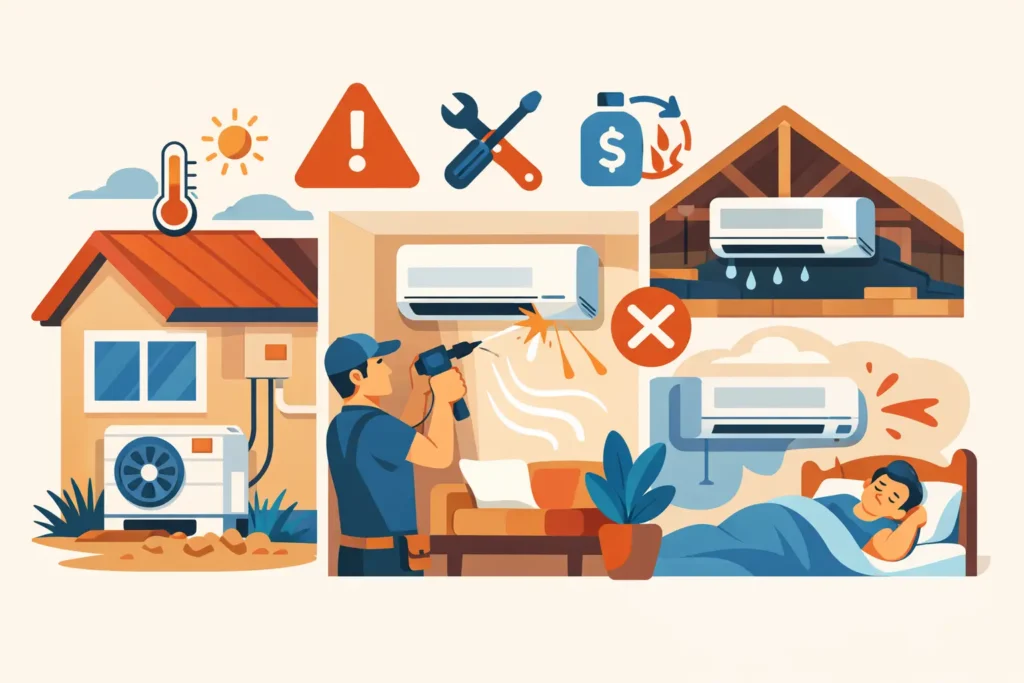
A new air conditioner should bring relief when the Central Texas heat settles in, not surprise repair bills or rooms that never feel cool. Unfortunately, ac installation mistakes can reduce comfort, raise monthly energy costs, and shorten the life of equipment that should serve your home for years. The good news is that most of these problems can be avoided with careful planning and qualified installation.
For homeowners in Georgetown, Round Rock, Hutto, Jarrell, Leander, and nearby communities, the right system is about more than choosing a brand or finding the lowest quote. Your home, ductwork, insulation, electrical system, and daily comfort needs all play a role.
1. Choosing Equipment by Square Footage Alone
One of the most common mistakes is selecting an AC unit based only on a home’s square footage. A quick online chart may offer a rough starting point, but it cannot account for the details that determine how much cooling your home actually needs.
Ceiling height, window placement, shade, insulation levels, duct condition, household size, and heat from appliances all affect the cooling load. A two-story home with west-facing windows may need a very different solution than a similarly sized single-story home with mature tree cover.
A professional load calculation considers these factors before recommending equipment. This process helps avoid an oversized or undersized system, both of which can create expensive comfort problems.
2. Installing an Oversized Air Conditioner
Bigger is not always better with air conditioning. An oversized unit can cool the house quickly, but it may shut off before it has removed enough humidity from the indoor air. The result can be a home that feels cool but clammy, especially during humid stretches of Texas weather.
Short cycling is another concern. Frequent starts and stops place extra strain on components and may cause more wear over time. The system can also use more energy than expected because starting up requires significant power.
On the other hand, a unit that is too small may run for long periods without reaching the desired temperature during the hottest afternoons. Proper sizing is about steady, efficient comfort, not simply maximum cooling capacity.
3. Ignoring Existing Ductwork
New equipment cannot fully perform if the ductwork delivering conditioned air is leaking, undersized, disconnected, or poorly designed. This is one of the ac installation mistakes that can leave homeowners disappointed even when they have invested in a high-efficiency system.
Leaky ducts can send cooled air into an attic, garage, or wall cavity instead of your living spaces. Restricted ducts may make some rooms feel stuffy while others receive too much airflow. In certain homes, correcting duct issues may be as important as replacing the outdoor unit.
Before installation, ask whether the duct system will be inspected for leakage, insulation, sizing, and airflow. Some duct repairs are simple. Others may require a larger conversation about redesigning sections of the system. The right approach depends on the home’s layout and the condition of the ducts.
4. Skipping Airflow and Ventilation Details
Airflow is the part of AC performance you feel every day. A properly sized unit still needs the correct amount of return air and balanced supply vents to operate as intended. If returns are too small or too limited, the system can struggle to pull warm air back for cooling.
Closed or blocked vents, furniture placed over registers, and dirty filters can also make a good installation appear ineffective. During installation planning, the technician should consider where air enters and exits each area of the home, not only where the equipment will sit.
Ventilation deserves attention as well. Homes that are tightly sealed for efficiency can hold onto moisture and indoor pollutants if ventilation is inadequate. There is no one-size-fits-all fix, but a knowledgeable contractor can explain whether your home would benefit from adjustments.
5. Poor Drainage and Condensate Setup
Your AC removes moisture from indoor air as it cools. That moisture has to drain safely away from the system. A poorly installed condensate line can lead to water damage, mold concerns, ceiling stains, or a system shutdown at the worst possible time.
Drain lines need proper slope, secure connections, and appropriate termination. In many installations, a secondary drain pan or safety switch provides another layer of protection if the primary line becomes clogged. These details may not be visible after the job is complete, but they matter greatly.
Ask how the condensate drain will be routed and how the installer will protect against overflow. Regular maintenance should also include checking and clearing the drain line when needed.
6. Overlooking Electrical Requirements and Permits
A new AC system may have different electrical requirements than the equipment it replaces. Using undersized wiring, an incorrect breaker, or outdated disconnect components is not a shortcut worth taking. Electrical work must support the system safely and meet applicable code requirements.
Permits and inspections can feel like extra steps, but they help confirm that installation work follows local standards. Requirements can vary by city and project type, so a dependable contractor should explain what applies to your installation and handle the process clearly.
This is especially relevant when replacing an older system. A home that has served a family well for decades may need electrical updates before new high-efficiency equipment can be installed correctly.
7. Focusing Only on the Upfront Price
A low quote can be appealing, particularly when an aging AC fails unexpectedly. But comparing installation estimates only by the final number can hide meaningful differences in equipment, labor, duct modifications, thermostat options, warranty coverage, and startup procedures.
A higher-efficiency system can reduce energy use, but it may not be the best choice for every household. The value depends on your budget, how long you plan to stay in the home, utility costs, available equipment options, and the condition of the rest of the system. Straightforward guidance should help you weigh those trade-offs without pressure.
When reviewing a quote, make sure you understand what is included. Ask about the equipment model, warranty terms, any needed duct or electrical work, removal of old equipment, and how the system will be tested before the job is finished.
What a Careful AC Installation Should Include
A quality installation is a process, not just a replacement. It begins with evaluating the home and selecting properly sized equipment. It continues with attention to ductwork, electrical connections, refrigerant charging, drainage, thermostat setup, and airflow.
After the equipment is installed, it should be tested under operating conditions. The installer should verify that temperatures, pressures, airflow, and controls are working as expected. Homeowners should also receive clear instructions on thermostat operation, filter changes, maintenance needs, and warranty registration.
Neal HVAC believes homeowners deserve clear answers before work begins and dependable support after the system is running. A careful installation can make the difference between simply having an AC unit and having a system that keeps your home comfortable through a long Texas summer.
If your current system is failing, do not let urgency force a rushed decision. Ask questions, review the full scope of work, and choose an installer who takes the time to understand your home. That little extra care at the beginning can protect your comfort, budget, and peace of mind for years to come.