How to Spot Ductwork Leaks in Your Home
A cool room near the thermostat and a warm bedroom down the hall can feel like an AC problem. Sometimes it is. But when your air conditioner seems to run constantly, certain rooms never catch up, or dust keeps collecting around vents, the real issue may be hidden in your attic, walls, or crawlspace. Knowing how to spot ductwork leaks can help you recognize the warning signs early and make a better decision about service.
In Georgetown and nearby Central Texas communities, duct leaks are especially noticeable during long stretches of summer heat. Conditioned air that should reach your living spaces can escape into unconditioned areas instead. Your system then has to work harder to keep up, which can affect comfort, energy use, and equipment wear.
Why Ductwork Leaks Cause More Than Uneven Temperatures
Your duct system carries cooled or heated air from the HVAC equipment to each room in your home. When joints separate, tape fails, insulation is damaged, or a duct is punctured, that air can leak before it reaches the vent.
Supply-side leaks send conditioned air into the attic or another unused space. Return-side leaks can be just as troublesome because they may pull hot, dusty, or humid attic air into the system. That added heat and moisture makes cooling more difficult, particularly on a hot Texas afternoon.
A small leak may not create an obvious problem on its own. Several small leaks across an older duct system, however, can add up to meaningful comfort loss. The right solution depends on where the leaks are, how accessible the ducts are, and whether the ductwork is otherwise in good condition.
7 Signs That Help You Spot Ductwork Leaks
1. Some rooms are consistently warmer or cooler
A room that is always uncomfortable is one of the clearest signs to investigate. If one bedroom remains warm while the rest of the house cools down, check whether the supply register is open and unobstructed first. Furniture, closed dampers, and dirty filters can also restrict airflow.
If those basics look fine, a disconnected or leaking duct branch may be the cause. This is common in attics where flexible duct connections can loosen over time.
2. Your energy bills rise without a clear reason
Higher utility bills can come from many sources, including extreme weather, thermostat changes, an aging AC unit, or poor attic insulation. Still, leaking ducts should be part of the conversation when energy use rises and your household habits have not changed.
When cooled air escapes before reaching the rooms you use, your thermostat keeps calling for more cooling. The longer run times can increase electricity use without making your home feel more comfortable.
3. Airflow from certain vents feels weak
Hold your hand near a supply vent while the system is running. You do not need a special tool to notice a major difference between a strong vent and one with barely any airflow. Compare rooms that feel comfortable with rooms that do not.
Weak airflow does not automatically mean a duct leak. A clogged air filter, blower issue, undersized duct, or closed damper can create similar symptoms. But uneven airflow is a useful detail to share with an HVAC technician.
4. The attic feels unusually cool while the AC runs
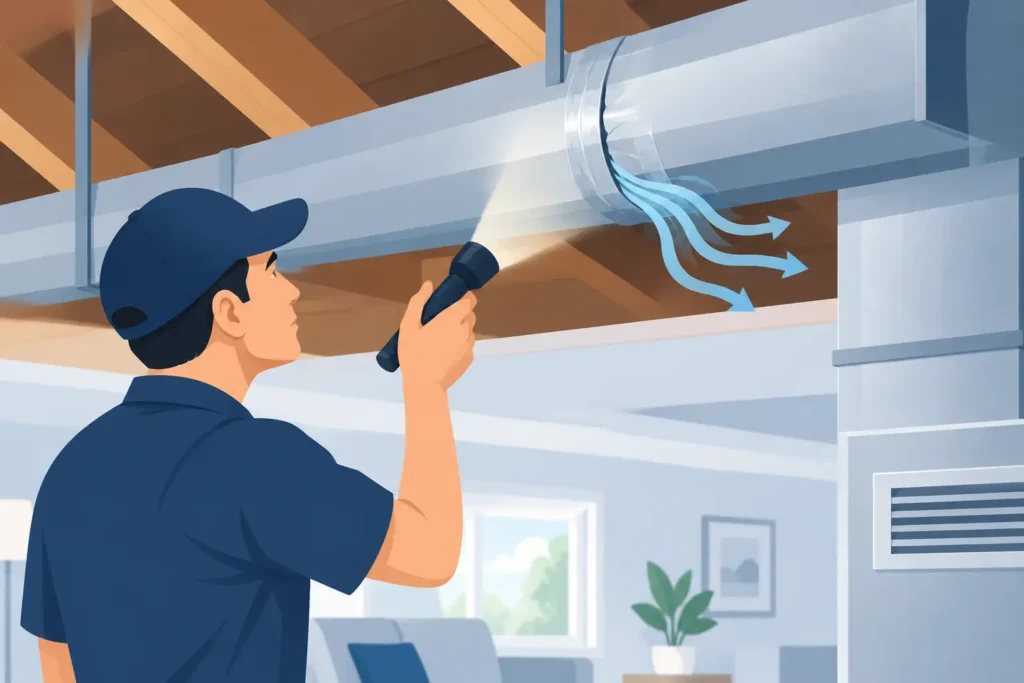
If it is safe to enter your attic, you may notice a surprisingly cool area near a duct connection while the air conditioner is operating. You might also hear a faint rushing or hissing sound. Do not step on ceiling drywall, disturb wiring, or attempt to move ducts around in a tight attic.
A visual check from a stable, safe location can reveal obvious issues such as a loose connection, crushed flex duct, torn insulation, or a section that has come apart. Take a photo if possible. It can help a technician understand what you found.
5. Dust builds up quickly around registers
Return duct leaks can draw dusty air from attics, garages, wall cavities, or crawlspaces into the HVAC system. You may see more dust near vents, on furniture, or around the return grille even after regular cleaning.
Dust alone does not prove there is a duct leak. Homes with pets, construction nearby, leaky doors, or overdue filters can have the same issue. When dust is paired with weak airflow, hot rooms, or high bills, it becomes a stronger clue.
6. You notice musty odors or extra humidity
Leaky return ducts may pull humid air into the system from areas outside your conditioned living space. In Central Texas, that can make a home feel sticky even when the thermostat is set low. You may also notice a stale or musty smell when the system first starts.
Odors should not be ignored, but they need a proper diagnosis. Moisture issues, drain problems, dirty components, and indoor air quality concerns can overlap with duct symptoms. A professional inspection can identify the source instead of treating the smell alone.
7. Your system runs longer than it used to
Long cooling cycles are normal during periods of extreme heat. The concern is a noticeable change: your home once cooled reliably, but now the system runs for long periods and still struggles to reach the set temperature.
Duct leakage may be one cause, along with refrigerant issues, dirty coils, poor insulation, thermostat problems, or equipment that needs maintenance. Looking at the full system matters because replacing parts without addressing air loss can leave the comfort problem unresolved.
Where Homeowners Can Safely Look
Start inside the home. Check that all registers and return grilles are open, clean, and not blocked by rugs, curtains, or furniture. Replace a dirty air filter with the correct size and type for your system. Then make a simple note of which rooms are too warm, too cool, dusty, or low on airflow.
If your ducts are visible in an attic, garage, basement, or crawlspace, look for disconnected sections, sagging flexible ducts, damaged insulation, and old tape peeling away from joints. Metal-backed HVAC tape and mastic are commonly used for proper duct sealing. Standard cloth duct tape is not a lasting repair, despite its name.
Avoid sealing anything you cannot clearly identify. Ductwork can be near electrical wiring, refrigerant lines, drainage components, and combustion equipment. Never cover vents, alter gas furnace venting, or enter an unsafe attic. A repair that restricts airflow or creates a safety issue can cost more than a professional evaluation.
When a Professional Duct Inspection Makes Sense
Call for an inspection when you have persistent comfort issues, obvious duct damage, unexplained high bills, or a system that cannot maintain temperature. This is particularly worthwhile before replacing an air conditioner or furnace. A new high-efficiency system cannot deliver its best performance if a significant amount of conditioned air leaks out before it reaches the rooms.
A trained HVAC technician can inspect accessible connections, measure airflow, check system performance, and determine whether duct sealing, insulation repairs, balancing, or another repair is appropriate. In some homes, the problem is limited to one accessible connection. In others, aging or poorly designed ductwork needs a more thorough plan.
For homeowners in Georgetown, Round Rock, Hutto, Jarrell, Leander, and surrounding areas, Neal HVAC can help identify whether ductwork is contributing to uneven comfort or inefficient cooling. Clear answers matter, especially when summer heat puts your system under pressure.
Protect Comfort Before the Next Heat Wave
You do not need to wait for a complete AC breakdown to address a comfort problem. Keep up with filter changes, pay attention to rooms that never feel right, and schedule service when longer run times or uneven airflow become a pattern. A properly sealed, well-supported duct system gives your heating and cooling equipment a better chance to do the job it was installed to do: keep your home comfortable when you need it most.