How to Spot a Refrigerant Leak in Your AC
Your air conditioner may still be running, but if it is blowing lukewarm air during a Georgetown summer afternoon, it is not doing the job your home needs. One possible reason is a refrigerant leak. Refrigerant is what allows your AC to pull heat out of indoor air, so even a small loss can quickly affect comfort, energy use, and the health of your equipment. Knowing how to spot a refrigerant leak can help you call for service before a minor repair turns into a much larger problem.
What a Refrigerant Leak Means for Your AC
A central air conditioner is a closed system. Under normal conditions, it should not need refrigerant added year after year. If the level is low, there is usually a leak somewhere in the system, such as a damaged line, a worn connection, or a corroded coil.
Low refrigerant is not simply an inconvenience. Your AC has to work longer to move less heat, which can increase your utility bill and place extra strain on the compressor. The compressor is one of the system’s most expensive components, so catching a leak early can make a meaningful difference.
In Central Texas, the signs may become especially clear when outdoor temperatures climb. A system that seemed slightly weak during mild weather can struggle to keep up once the heat settles in.
How to Spot a Refrigerant Leak: Common Warning Signs
No single symptom confirms a refrigerant leak on its own. A dirty air filter, clogged drain, failing capacitor, or aging equipment can cause some similar problems. However, several signs together are a good reason to schedule an AC inspection.
The Air From Vents Is Not Cold
If your thermostat is set correctly and the system is running, the air coming from supply vents should feel noticeably cooler than the room. Air that feels cool but not cold, or becomes warmer as the day goes on, can point to low refrigerant.
Check that the filter is clean and that all major supply vents are open first. If those basics are in order and cooling remains weak, it is time for a professional diagnosis.
Your AC Runs for Long Periods Without Cooling the House
During a hot Texas afternoon, long cycles can be normal. But your home should still gradually reach and maintain the thermostat setting. If the AC seems to run almost constantly while indoor temperatures keep rising, low refrigerant may be reducing its cooling capacity.
Pay attention to changes from prior summers. An AC that once handled the heat without trouble but now runs all day is telling you something has changed.
Ice Forms on the Refrigerant Line or Indoor Coil
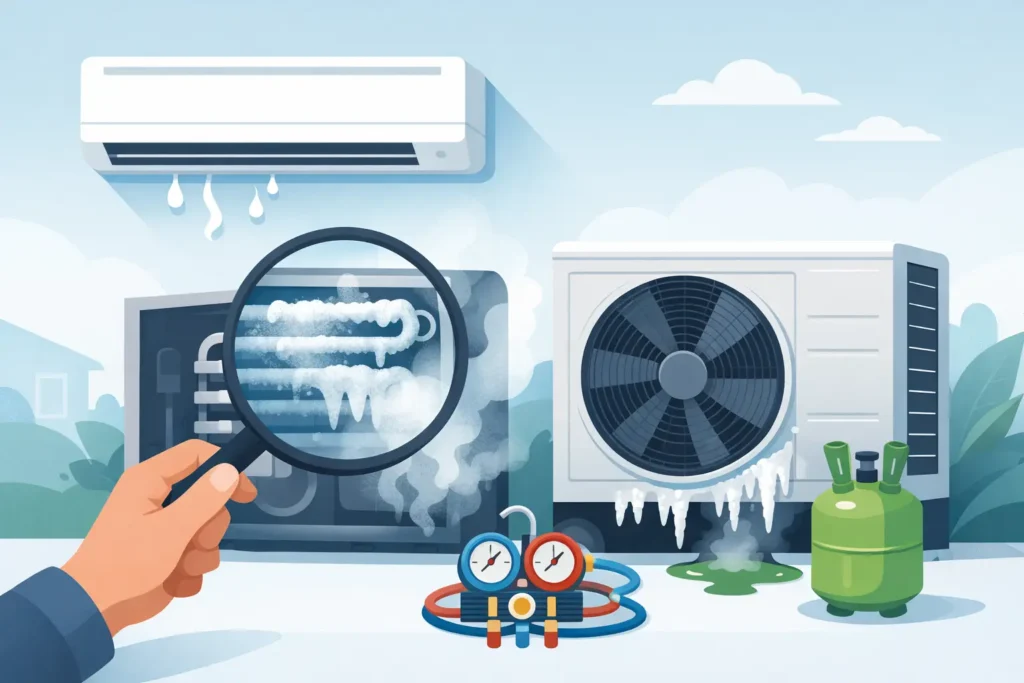
Look at the insulated copper line near the outdoor unit, but do not remove panels or touch exposed wiring. Frost or ice on that line is a common warning sign. You may also see ice around the indoor coil area, although that part of the equipment is often not easily visible.
Low refrigerant can cause coil temperatures to drop below freezing, allowing moisture in the air to freeze. Restricted airflow from a clogged filter or blower issue can also create ice, which is why a technician needs to identify the actual cause.
If you see ice, turn the cooling mode off and set the thermostat fan to ON if it will run. This can help the ice thaw. Do not chip or scrape ice from the equipment. Schedule service before restarting the AC, especially if it has frozen more than once.
You Hear Hissing or Bubbling Near the Equipment
A larger refrigerant leak can sometimes make a hissing sound as pressurized refrigerant escapes. A bubbling or gurgling sound may also occur when refrigerant moves through the lines with an improper charge. These sounds can come from the indoor unit, refrigerant lines, or outdoor condenser.
Not every unusual sound is a leak. Rattling may be a loose panel, while buzzing can involve electrical components. Still, new hissing or bubbling deserves prompt attention.
Your Home Feels More Humid Than Usual
Your air conditioner does more than cool the air. It also removes moisture as warm indoor air passes over the cold evaporator coil. When refrigerant is low, the coil may not absorb heat and humidity as effectively.
If the thermostat reading seems reasonable but rooms feel sticky, especially in the afternoon, your AC may not be dehumidifying properly. This symptom is worth mentioning when you request service because it gives the technician useful context.
Energy Bills Rise Without a Clear Reason
Higher summer bills are expected when temperatures stay high. A sharp increase that does not match your usual seasonal pattern is different. An undercharged system often runs longer and works harder, using more electricity while providing less cooling.
Compare recent bills with the same period last year when possible. If your household habits have not changed and your bill has jumped, an AC performance inspection can help find the reason.
What You Can Check Safely Before Calling
Homeowners do not need special tools to notice a problem, but refrigerant work is not a DIY repair. Refrigerants must be handled with the right equipment and procedures, and simply adding refrigerant without fixing the leak will not solve the underlying issue.
Before scheduling a visit, check the thermostat setting, replace a visibly dirty filter, and make sure the outdoor unit has clear space around it. Leaves, grass clippings, and stored items can restrict airflow. Also note when the problem started, whether the system is icing up, and whether you have noticed any sounds or water around the indoor unit.
Avoid using store-bought leak sealants or attempting to recharge the system yourself. These products can damage components, complicate later repairs, and may not address the location of the leak. If you suspect a leak, the safest choice is to let a licensed HVAC professional test the system.
How an HVAC Technician Finds and Repairs a Leak
A proper refrigerant leak repair involves more than connecting a gauge and adding refrigerant. A technician first checks system pressures, airflow, coil condition, and other operating factors. Depending on the system and suspected location, leak detection may involve electronic equipment, UV dye, pressure testing, or a soap-bubble test at accessible connections.
Once the leak is found, the repair depends on where it is. A loose fitting may be repairable. A damaged refrigerant line may need replacement. If an indoor or outdoor coil has widespread corrosion, replacing the coil or considering a larger equipment replacement may make more financial sense. It depends on the system’s age, warranty status, repair cost, and overall condition.
After repairing the leak, the technician evacuates the system to remove moisture and non-condensable air, then charges it according to the manufacturer’s specifications. The system should be tested again to confirm it is cooling correctly and holding the proper charge.
When to Turn Off Your Air Conditioner
Turn off cooling and request service if your AC is frozen, blowing warm air for an extended period, making a loud hissing sound, or repeatedly tripping a breaker. Continuing to run a frozen or undercharged system can put the compressor at risk.
If the AC is still producing some cool air and there is no ice or electrical issue, you may choose to run it sparingly until service arrives. Keep in mind that this can increase operating costs and may worsen equipment strain. For households with young children, older adults, pets, or medical needs, prioritize a quick service call and use fans or another safe cooling option in the meantime.
Get Clear Answers Before the Heat Gets Worse
A refrigerant leak is not something to ignore or guess at. The earlier the source is found, the more options you are likely to have for a practical repair. For homeowners in Georgetown, Round Rock, Hutto, Jarrell, Leander, and nearby communities, Neal HVAC provides straightforward AC diagnostics and repair focused on restoring dependable comfort. When your system stops keeping up, a timely inspection can help protect both your home and your equipment.