Variable Speed Versus Single Stage AC Systems
A Central Texas air conditioner can look fine on paper and still leave parts of the house warm, sticky, or noisy. When homeowners compare variable speed versus single stage equipment, the real question is usually not which option is “best.” It is which system will keep their particular home comfortable without creating an unnecessary upfront expense.
For homes in Georgetown, Round Rock, Hutto, Jarrell, Leander, and nearby communities, the answer often comes down to your home’s layout, insulation, ductwork, humidity concerns, and how long you plan to stay. Here is what those terms mean and how to make a practical choice.
What Single-Stage and Variable-Speed Mean
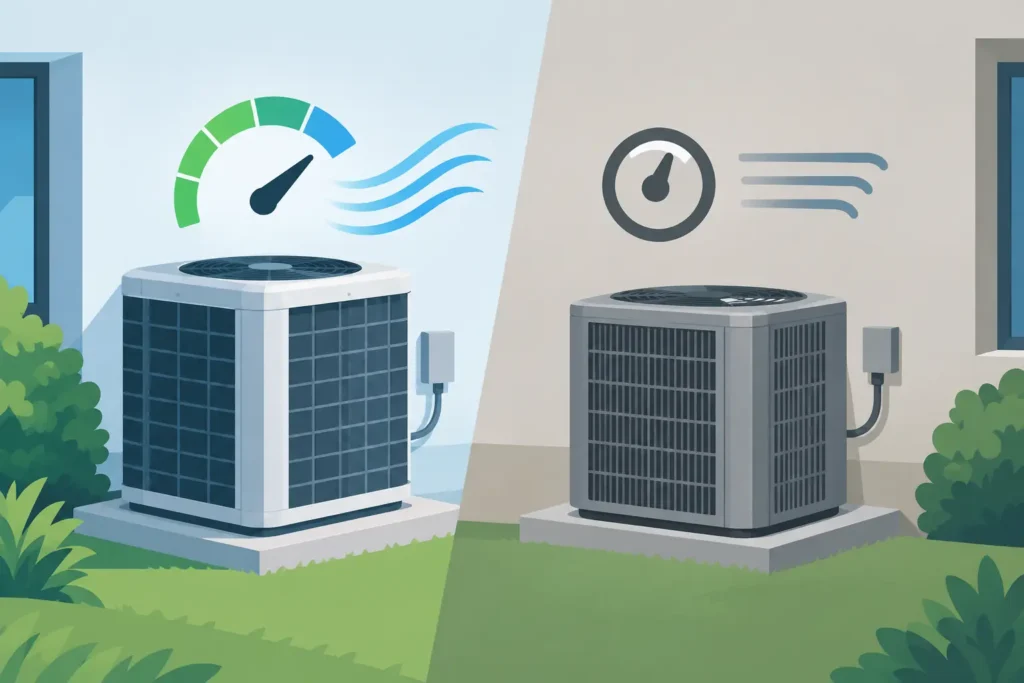
A single-stage air conditioner has one cooling output. When the thermostat calls for cooling, the compressor runs at full capacity. Once the desired indoor temperature is reached, it shuts off. It is a straightforward design that has cooled Texas homes reliably for many years.
A variable-speed system can adjust its output across a range rather than operating at only full power. On a milder afternoon, it may run at a lower level for a longer period. When outdoor temperatures climb and the home needs more cooling, it can increase capacity.
The terminology can get confusing because “variable speed” may describe different components. A system may have a variable-speed indoor blower but a single-stage outdoor compressor. A fully variable-capacity system typically has both an inverter-driven outdoor unit and controls designed to communicate with the indoor equipment.
That distinction matters when comparing proposals. Ask exactly what is variable: the blower, the compressor, or both. Two systems described with similar language may deliver very different comfort and efficiency results.
Variable Speed Versus Single Stage: The Comfort Difference
The clearest difference is how each system handles everyday temperature changes. A single-stage unit delivers a strong burst of cooling, then stops. That can work well in a properly sized home with good insulation and well-designed ducts. Many homeowners are perfectly comfortable with this setup.
Variable-speed equipment is designed for steadier operation. Instead of frequent on-and-off cycles, it can operate for longer periods at lower output. This may help reduce temperature swings from room to room and can make the home feel more consistent throughout the day.
Longer, lower-speed cooling cycles can also improve humidity removal. Humidity is a real comfort issue in Central Texas, especially during rainy stretches and the shoulder seasons when it is warm but not hot enough for a single-stage system to run very long. When air conditioning cycles are short, there may be less time for moisture to condense and drain away.
A variable-capacity system often has more opportunity to remove that moisture. The result can be air that feels more comfortable at a slightly higher thermostat setting. That does not mean it will solve every humidity problem. Duct leaks, oversized equipment, poor ventilation, and moisture entering through the home can still affect indoor humidity.
Noise is another consideration. Since variable systems spend much of their time running at lower capacity, they are often quieter than a unit that starts at full output every cycle. Homeowners with bedrooms near the outdoor unit or people who spend time on a patio may notice that difference.
Efficiency Can Help, but It Is Not the Only Cost
Variable-speed systems are generally more efficient because they can match their output more closely to the home’s needs. They also avoid some of the energy demands associated with repeated full-speed starts and stops. Over a long Central Texas cooling season, that can lower energy use.
Still, efficiency ratings should not be treated as a promise of a certain utility bill. Your monthly cost also depends on thermostat habits, insulation levels, window exposure, duct condition, family routines, and the electric rate you pay. A high-efficiency system installed on undersized ducts or paired with poor airflow will not perform the way it should.
Single-stage systems usually cost less to purchase and install. Their simpler design can make them an appealing choice for a homeowner who needs a reliable replacement on a defined budget. If the existing system served the home well and the replacement is correctly sized, a quality single-stage unit may be the most sensible option.
Variable-speed equipment costs more upfront. It uses more advanced electronics and controls, and repairs can sometimes be more specialized and expensive outside of warranty coverage. The potential payoff is better comfort, quieter operation, humidity control, and lower operating costs over time. Whether that payoff justifies the higher price depends on the house and the homeowner’s priorities.
Your Home Must Be Part of the Decision
The equipment alone does not determine comfort. A good replacement recommendation starts with evaluating the home, not simply matching the size of the old unit.
An HVAC professional should consider square footage, ceiling height, insulation, windows, shade, duct layout, return-air capacity, and the number of people living in the home. A formal load calculation helps avoid installing equipment that is too large or too small.
Oversizing is especially harmful to comfort. An oversized single-stage unit can cool the thermostat area quickly and shut off before it has adequately mixed air through the house or removed enough humidity. A variable-speed system has more flexibility, but it is not a free pass to ignore proper sizing.
Ductwork deserves close attention as well. Restricted returns, leaky ducts, or rooms with weak airflow can make a new system seem disappointing no matter how efficient it is. Before investing in premium equipment, it is worth identifying whether the home has airflow problems that need to be addressed at the same time.
Thermostats and System Compatibility
Many variable-capacity systems use communicating controls that allow the indoor and outdoor components to adjust together. These controls can provide detailed diagnostics and more precise operation, but they are often specific to the equipment manufacturer. Reusing an older thermostat may not allow the new system to deliver all of its available features.
Single-stage systems can work with simpler thermostats, though proper programming still matters. Aggressive temperature setbacks may cause a single-stage system to run hard for long periods when the home is recovering, particularly during a hot Texas afternoon.
When reviewing an estimate, ask what thermostat is included, whether it is required for full performance, and how the system will operate during a power interruption or service issue. Clear answers now can prevent surprises after installation.
When a Single-Stage System Makes Sense
A single-stage system can be a strong choice when the priority is dependable cooling at a lower initial cost. It is often well suited to a home with solid insulation, balanced airflow, and no major hot-and-cold room concerns.
It may also make sense for homeowners who plan to move in the near future, have a limited replacement budget, or need to replace failed equipment quickly. A properly selected and professionally installed single-stage unit is not a compromise in quality. It is a practical solution for many households.
Routine maintenance remains essential. Changing filters, keeping the outdoor unit clear, maintaining drain lines, and scheduling seasonal service all help a single-stage system perform reliably through the summer.
When Variable Speed Is Worth Considering
Variable-speed equipment is often worth a closer look for homeowners who notice uneven temperatures, uncomfortable indoor humidity, frequent cycling, or excessive noise from their current equipment. It can also be a good fit for households where someone is home most of the day and comfort is a high priority.
A homeowner planning to remain in the house for many years may have more time to benefit from energy savings and improved comfort. Larger homes, homes with multiple levels, and homes with substantial afternoon sun exposure may also benefit from the system’s ability to adjust output instead of operating at one fixed level.
For some households, the biggest benefit is not a dramatic change in the electric bill. It is walking into a home that feels consistently comfortable, with fewer temperature swings and less clammy air.
Questions to Ask Before You Choose
Before approving an installation, ask the contractor how the equipment size was determined and whether the duct system can support the recommended airflow. Ask whether the proposal includes a variable-speed blower, a variable-capacity compressor, or both. You should also understand the warranty, required thermostat, maintenance needs, and expected repair considerations.
It is helpful to compare more than the equipment price. Look at the full installation scope, including any duct modifications, electrical updates, drain protection, thermostat replacement, and removal of the old system. A lower bid that leaves out necessary work can cost more later.
Neal HVAC helps homeowners evaluate these decisions with straightforward recommendations based on the home, the budget, and the comfort concerns that matter most.
Before choosing between systems, pay attention to how your current home feels at its worst: the upstairs bedroom that never cools down, the afternoon humidity, the loud outdoor unit, or the rooms that receive little airflow. Those details give a qualified local technician the information needed to recommend a system that supports your comfort for years to come.