
Gas Furnace Versus Electric Furnace Choices
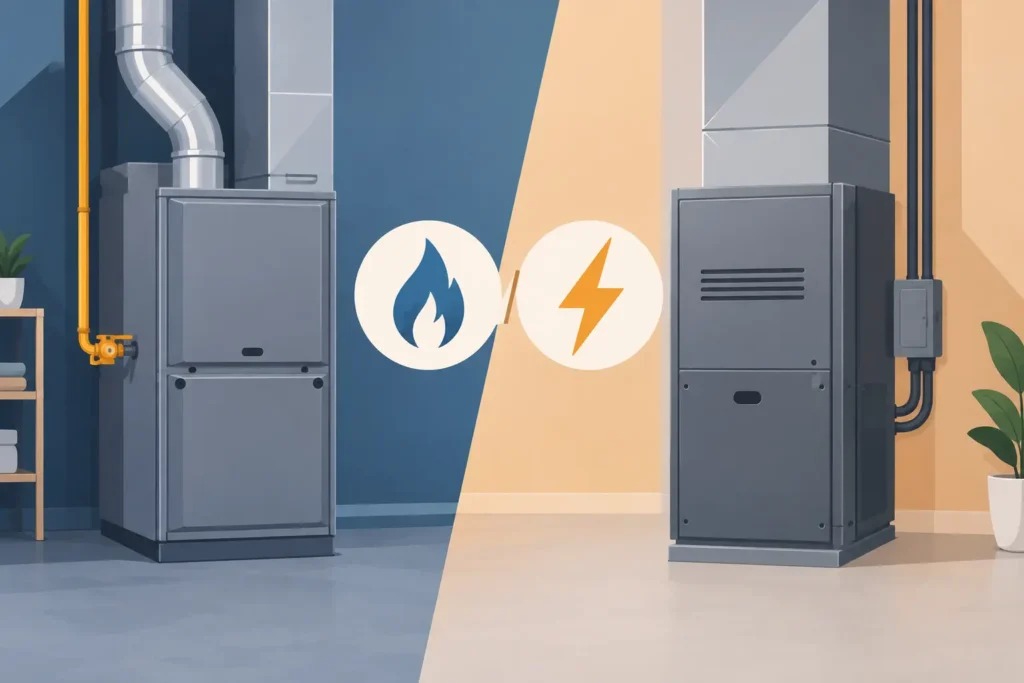
A furnace replacement is not something most homeowners plan for until the heat stops working, repair costs rise, or an older system starts becoming unreliable. When comparing a gas furnace versus electric furnace, the right choice for your Georgetown-area home comes down to more than the equipment price. Your available utilities, home layout, monthly energy costs, and long-term comfort all matter.
Central Texas winters are generally mild, but we still get cold nights and sudden freezes that put a heating system to work. A properly selected and installed furnace helps your household stay comfortable without paying for more capacity or energy use than you need.
How Gas and Electric Furnaces Work
A gas furnace creates heat by burning natural gas or propane in a sealed combustion chamber. A heat exchanger transfers that heat to the air, and the blower sends warm air through your ductwork. It requires a gas line, a venting system to safely carry combustion gases outside, and electricity to operate the controls and blower motor.
An electric furnace uses electric resistance heating elements, much like a large version of a toaster element. Air moves across those elements and then through the ducts. It does not burn fuel, so it does not need a gas connection, flue pipe, or combustion venting.
One point often causes confusion: an electric furnace is not the same as a heat pump. Both run on electricity, but a heat pump moves heat rather than generating it with resistance elements. For many Central Texas homes, a heat pump can be another worthwhile replacement option because our winter temperatures are relatively moderate. A qualified HVAC technician can explain whether it fits your home and existing system.
Gas Furnace Versus Electric Furnace: The Main Differences
The biggest practical difference is usually operating cost. Natural gas is often less expensive than electricity on a per-unit-of-heat basis, which can make a gas furnace more affordable to run during cold weather. That advantage depends on local utility rates, how much you heat your home, and the efficiency of the equipment being replaced.
Electric furnaces are highly efficient at the equipment itself because nearly all the electricity they consume becomes heat in the home. However, electricity can cost more than natural gas, so a system that is technically close to 100% efficient may still have higher monthly heating costs. This matters most for households that use heat frequently or keep the thermostat warmer through the winter.
Upfront cost can go either way. If your home already has a safe, properly sized gas line and venting in place, replacing an existing gas furnace may be straightforward. Installing gas service and venting where none exists can add significant expense. An electric furnace may be simpler to install in a home without gas access, although it may require electrical panel upgrades or a dedicated high-amperage circuit.
Heating Performance and Comfort
Gas furnaces typically produce hotter supply air than electric furnaces. Homeowners often notice that a gas furnace feels warmer sooner at the registers, particularly during a chilly morning. Gas systems also tend to recover indoor temperature quickly after the thermostat has been turned down overnight.
Electric furnaces provide steady, dependable heat, but the air may feel less hot as it comes through the vents. That does not mean the system is failing. It simply reflects how resistance heat is produced and distributed. Correct sizing, healthy ductwork, and a properly calibrated thermostat have as much to do with comfort as the fuel source.
For either option, oversized equipment can create problems. It may cycle on and off too frequently, leave uneven temperatures around the home, and add unnecessary wear. Undersized equipment may run too long and struggle during the coldest weather. A replacement should be selected based on the home, not just matched to the size of the old furnace.
Safety and Maintenance Needs
Electric furnaces have fewer components related to combustion. There is no burner, gas valve, flame sensor, or heat exchanger exposed to combustion gases. That simpler design can be appealing to homeowners who do not have natural gas service or prefer to avoid fuel-burning equipment.
Modern gas furnaces are safe when they are professionally installed, vented, maintained, and inspected. Still, they need regular service because they rely on combustion. During maintenance, technicians check the burners, ignition system, gas connections, venting, blower operation, and heat exchanger. Carbon monoxide detectors should also be installed and working in every home with gas appliances.
Neither system should be ignored between service visits. A clogged filter can restrict airflow, make the blower work harder, and lead to overheating or comfort issues. Changing filters on schedule is one of the simplest ways to protect either furnace.
Efficiency Ratings and What They Mean
Gas furnace efficiency is measured by AFUE, or Annual Fuel Utilization Efficiency. An 80% AFUE furnace turns about 80% of its fuel into usable heat, while the remaining energy leaves through the venting process. High-efficiency gas furnaces can reach 90% AFUE or higher and may use different venting materials and drainage for condensation.
Electric furnaces are generally close to 100% efficient at converting electricity into heat at the unit. But homeowners should look beyond one efficiency number. The cost to create that heat depends on the price of the energy source. It is also worth comparing a conventional electric furnace with a heat pump, which can deliver more heat energy than the electricity it consumes under many Central Texas conditions.
The most efficient system on paper is not automatically the best investment. A homeowner who expects to move soon may prioritize a dependable, budget-conscious replacement. Someone planning to stay for many years may see more value in higher-efficiency equipment, duct improvements, or a heat pump installation.
When a Gas Furnace May Make Sense
A gas furnace is often a strong fit if your home already has natural gas service and you want fast, powerful heat. It can also make financial sense when local natural gas rates are favorable and your household uses heating regularly during the winter.
Homeowners replacing an older gas furnace may be able to use portions of their existing infrastructure, although every installation should be evaluated individually. Venting requirements, equipment location, duct condition, gas line sizing, and local code requirements all need to be checked before a new unit is selected.
When an Electric Furnace May Make Sense
An electric furnace can be a practical choice for homes without a gas line, properties where venting is difficult, or homeowners who prefer a system without combustion. It may also be a reasonable replacement when the existing electrical capacity and ductwork support the new equipment.
For a mild-weather area like Central Texas, it is especially useful to ask whether a heat pump would provide better long-term operating value than a standard electric furnace. The answer depends on your equipment budget, cooling needs, insulation, thermostat preferences, and electrical setup. There is no one-size-fits-all answer.
Do Not Choose Based on Equipment Price Alone
The lowest quote can become the most expensive choice if the system is poorly sized, the ductwork leaks, or needed electrical and venting upgrades are overlooked. A clear replacement estimate should account for the furnace, labor, permits when required, thermostat compatibility, drainage or venting work, electrical requirements, and any recommended duct repairs.
It also helps to consider the age of the air conditioner. Because furnaces and air conditioners often share the same blower and indoor cabinet, replacing both components together may offer better efficiency, equipment compatibility, and installation value when the cooling system is also nearing the end of its service life.
Get a Recommendation Built Around Your Home
The gas furnace versus electric furnace decision is easier when someone evaluates the whole system instead of recommending a fuel type by default. A home assessment should include your current equipment, utility access, ducts, electrical panel, comfort concerns, and plans for the property.
For homeowners in Georgetown, Round Rock, Hutto, Jarrell, Leander, and nearby communities, Neal HVAC can help you compare practical heating options with straightforward guidance and a free replacement quote. The best next step is a conversation before a breakdown forces a rushed decision – so you can choose a system that keeps your home comfortable for the years ahead.
