How to Clean a Condensate Drain Safely at Home
A small puddle near your indoor AC unit can turn into a bigger problem quickly during a Central Texas summer. Your air conditioner removes humidity from the air as it cools your home, and that moisture has to go somewhere. It travels through the condensate drain line. When that line clogs, water can back up into the drain pan, trigger a safety shutoff, damage ceilings or flooring, and leave you without cooling when you need it most.
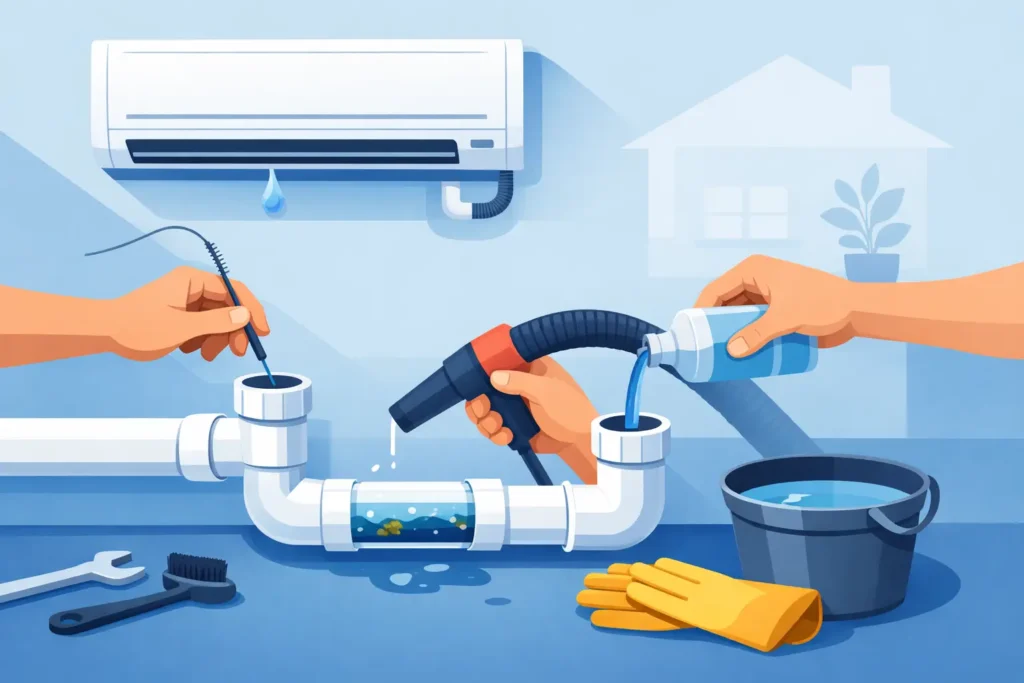
Knowing how to clean a condensate drain can help you handle minor buildup before it causes trouble. The key is using a gentle process that clears the line without damaging your system or forcing debris farther into the drain.
What a Condensate Drain Does
Inside your indoor air handler or furnace cabinet, the evaporator coil pulls heat and moisture from the air. The collected moisture drips into a shallow drain pan below the coil, then flows through a PVC drain line to the outside or to a nearby plumbing drain.
In Georgetown, Round Rock, Hutto, Jarrell, and Leander, AC systems work hard for long stretches of the year. That steady condensation creates a damp environment where algae, mold, dust, and slime can build up inside the drain line. A partial clog may drain slowly. A complete clog can stop the system from running if it has a float switch designed to prevent an overflow.
A drain issue is not always a simple clog. A cracked pan, disconnected pipe, poor drain slope, or dirty evaporator coil can also create water problems. That is why it helps to know what you are seeing before starting a DIY fix.
Signs Your AC Drain Line May Be Clogged
Look for changes around the indoor unit, especially after the AC has been running for several hours. Water around the air handler is the most obvious warning, but it is not the only one.
You may notice a musty smell from supply vents, water stains near the indoor unit, unusually high indoor humidity, or a system that suddenly stops cooling even though the thermostat is set correctly. Some systems have a drain safety switch that shuts off the equipment when water rises in the pan. This is a helpful safeguard, but it means a small drain blockage can feel like a full AC breakdown.
If water is already leaking through a ceiling, turn the system off at the thermostat and avoid running it until the cause is identified. Continuing to operate it can add more water to an already overflowing pan.
How to Clean Condensate Drain Lines Step by Step
For a light blockage, homeowners can often clean the accessible portion of the line. Plan to work carefully, and stop if you cannot locate the cleanout opening or if the water level in the pan is high.
1. Turn off the HVAC system
Set the thermostat to Off. Then turn off power to the indoor unit at its nearby service switch or the appropriate breaker. This reduces the risk of the system starting while you are working and protects equipment if water has collected near electrical components.
2. Find the drain line and cleanout cap
The condensate drain is usually a white PVC pipe near the indoor air handler, furnace, or attic unit. Many installations include a vertical tee with a removable cap near the unit. This is the cleanout opening.
In some homes, the drain line exits outside near the condenser or along an exterior wall. You may see a small PVC pipe dripping water while the AC runs. That outdoor opening is often the best place to remove a clog with a wet/dry vacuum.
3. Check the drain pan first
Remove the access panel only if you can do so safely and the pan is accessible. If you see standing water, use towels or a wet/dry vacuum to remove as much as possible. Do not poke at the evaporator coil or try to remove components inside the cabinet.
A little moisture in the pan is normal while the system runs. A pan full of water is not. If the pan is rusted, cracked, or difficult to reach, professional service is the better choice.
4. Clear the line with a wet/dry vacuum
At the outdoor end of the drain line, place the hose of a wet/dry vacuum over the pipe opening. Use a towel or cloth around the connection to create a better seal, then run the vacuum for one to two minutes.
You may pull out dark sludge, algae, or standing water. That material is unpleasant, but it is often the reason the line stopped draining. Avoid using high-pressure air, a plumbing snake, or a garden hose. Those methods can separate PVC joints, damage fittings, or push debris into a part of the line that is harder to clear.
5. Flush the drain from the cleanout
After vacuuming, return to the indoor cleanout opening. Pour about one cup of distilled white vinegar into the line. Vinegar can help loosen light organic buildup without the harshness of bleach.
Wait about 30 minutes, then flush the line with a small amount of warm water. Check the outdoor drain opening to make sure water is flowing freely. If it backs up or does not appear outside, the blockage may be deeper in the line.
Do not pour bleach into the condensate line unless your HVAC manufacturer or technician specifically recommends it. Bleach can create strong fumes, affect metal components, and may not be appropriate where the drain connects to certain plumbing systems. Vinegar is a more homeowner-friendly option for routine maintenance.
6. Restore power and watch the system
Replace the cleanout cap, restore power, and set the thermostat back to Cool. Let the system run long enough to produce condensation. Then inspect the drain area and outdoor pipe for normal flow.
If the system immediately shuts off again, water returns to the pan, or you still see a leak, turn it back off. The issue may involve the float switch, drain pan, condensate pump, or a blockage that needs professional equipment to remove.
When Cleaning the Drain Yourself Is Not Enough
A basic flush works best for minor algae buildup in an accessible drain line. It does not fix every source of condensate trouble. Call for HVAC service if the line clogs repeatedly, the drain pan overflows, or you cannot find a clear path from the indoor cleanout to the outdoor outlet.
You should also leave the work to a technician if your equipment is in a tight attic, the drain runs through a wall or ceiling, or you have a condensate pump. A pump can fail electrically or mechanically, and cleaning the line alone will not restore proper drainage.
Recurring clogs can point to an underlying maintenance issue. A dirty air filter can restrict airflow and contribute to coil problems. A dirty evaporator coil can shed debris into the pan. An improperly installed drain line may not have enough slope for water to move consistently. These are the kinds of details a routine AC tune-up can catch before peak summer heat arrives.
Keep the Drain Clear Between Service Visits
The best time to clean a condensate drain is before it creates a water emergency. During cooling season, check the area around your indoor unit once a month for moisture, unusual odors, or water stains. Replace your air filter on schedule so dust does not collect unnecessarily around the system.
A light vinegar flush once or twice during the heavy cooling season can be useful if your system has an accessible cleanout. However, frequency depends on your home, drain design, and humidity levels. More frequent flushing is not a substitute for correcting a line that repeatedly clogs.
For homeowners who prefer not to work around the air handler, Neal HVAC can inspect the drain line, pan, float switch, coil, and overall AC performance as part of professional maintenance. A clear drain line is a small detail, but it protects your comfort and helps your system keep up when Central Texas temperatures climb.