One Stage vs Two Stage: Which HVAC Fits?
When a Georgetown homeowner is replacing an aging air conditioner or furnace, the biggest decision is often not the brand name. It is whether a one stage vs two stage system makes sense for the home, the family’s comfort expectations, and the budget. Both can keep your home cool through a Central Texas summer and warm on a chilly winter night, but they do it differently.
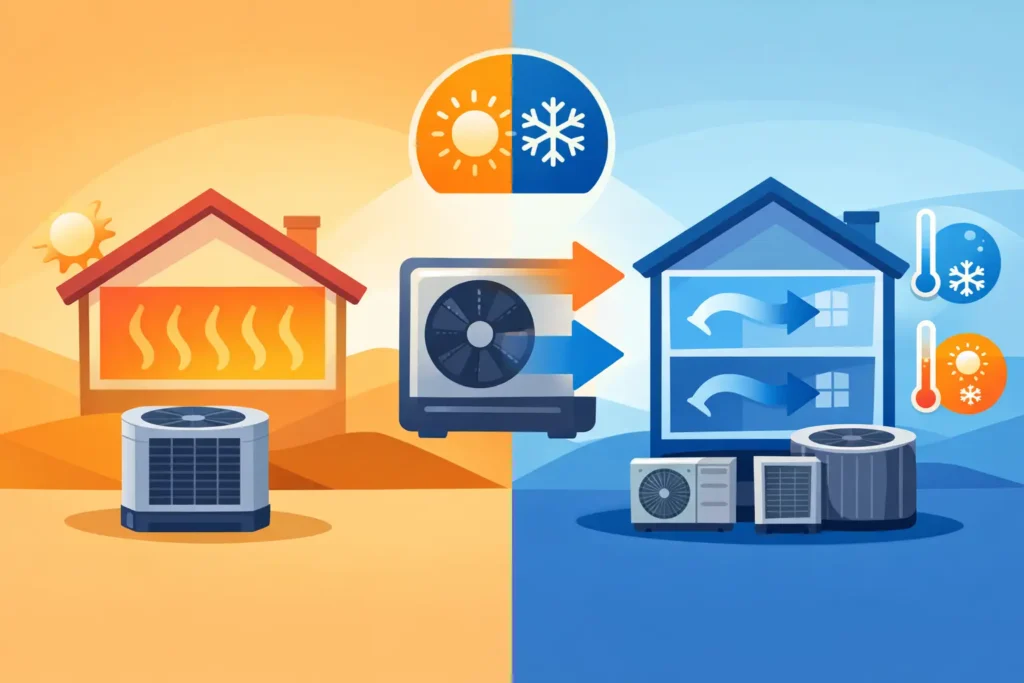
A one-stage system is the familiar, straightforward option. It runs at full capacity whenever the thermostat calls for cooling or heating. A two-stage system can operate at a lower level most of the time, then move to full capacity when outdoor conditions or indoor demand require it. That additional operating level can improve comfort, but it is not automatically the best investment for every house.
One Stage vs Two Stage HVAC: The Basic Difference
A one-stage air conditioner has one output setting: 100 percent. When your home is warmer than the thermostat setting, the system turns on, runs at full power until it reaches the set temperature, and shuts off. The same general idea applies to a one-stage furnace, which delivers heat at one fixed level.
A two-stage system has two levels of output. In many systems, the lower stage runs at roughly 60 to 70 percent of full capacity. It is designed to handle the everyday cooling or heating load. When temperatures are extreme or your home needs more help catching up, the equipment shifts to its higher stage.
For homeowners, the practical difference is run time and consistency. A two-stage system typically runs longer at a lower output, while a one-stage system usually runs in shorter, full-power cycles. Neither approach is wrong. The better choice depends on how your home performs and what you want from a new HVAC system.
Why Two Stages Can Feel More Comfortable
Central Texas weather is hard on cooling equipment. A mild morning can turn into a hot afternoon quickly, and high humidity can make a home feel warmer than the thermostat reading suggests. Longer, lower-stage cooling cycles can help keep indoor temperatures more even from room to room.
Two-stage air conditioning can also provide better humidity removal. Air conditioners pull moisture from the air as they run. A system that runs longer at low capacity has more time to remove that moisture, which can make a home feel more comfortable without lowering the thermostat several extra degrees.
This is especially helpful in homes with hot upstairs rooms, large open living areas, sun-facing windows, or several people coming and going throughout the day. It can also help homeowners who notice their current system cools quickly but leaves the air feeling damp or uneven.
On the heating side, a two-stage furnace can avoid the sudden blast of hot air some homeowners associate with an older one-stage unit. Lower-stage heating can deliver steadier warmth during normal winter weather, then provide full output when a stronger cold front moves through the area.
Where a One-Stage System Makes Sense
One-stage HVAC equipment remains a dependable choice for many homes in Georgetown, Round Rock, Hutto, Jarrell, Leander, and nearby communities. Its design is simpler, its initial cost is generally lower, and it can provide reliable comfort when it is properly sized and installed.
If your current one-stage system has kept your home comfortable, your ductwork is in good condition, and you are looking for a practical replacement without adding equipment cost, another one-stage unit may be the right fit. A well-installed one-stage system is far better than a poorly designed or oversized two-stage system.
One-stage equipment can also be a sensible option for a smaller home, a rental property, or a homeowner who expects to move soon and wants a reliable replacement that meets the home’s immediate needs. Maintenance is still essential, but the system has fewer staging controls and components to diagnose over its service life.
The trade-off is that full-capacity operation can create more noticeable temperature swings. You may feel the system turn on and off more often, particularly during moderate weather when your home does not need its full cooling or heating capacity.
Cost, Efficiency, and the Long-Term Picture
Two-stage systems usually cost more upfront than comparable one-stage equipment. The equipment itself is more advanced, and correct installation may involve compatible controls, thermostat settings, airflow adjustments, and ductwork evaluation. That higher initial cost should be part of an honest conversation, not something to gloss over.
Energy savings are possible with a two-stage system because it can spend more time operating at lower capacity. However, savings vary based on your home’s insulation, windows, duct condition, thermostat habits, and the efficiency rating of the equipment being compared. A higher-efficiency one-stage system may make more sense than a lower-efficiency two-stage model in some situations.
The same is true of comfort improvements. Two stages can make a noticeable difference in a home with uneven temperatures or humidity concerns, but equipment alone cannot solve major air leaks, undersized return ducts, blocked vents, or poor attic insulation. A good installation starts with looking at the entire home comfort system.
Proper Sizing Matters More Than the Number of Stages
It is tempting to assume bigger equipment will cool a house faster and perform better during a Texas heat wave. In reality, oversized equipment can short-cycle. It may cool the thermostat area quickly, shut off too soon, remove less humidity, and create uneven temperatures elsewhere in the home.
Undersized equipment has the opposite problem. It may run continuously on the hottest days and still struggle to maintain the desired indoor temperature. A two-stage system does not eliminate the need for proper sizing. It makes accurate sizing even more valuable.
Before recommending an AC replacement or furnace installation, a qualified HVAC professional should consider the home’s square footage, layout, insulation, window exposure, ceiling height, ductwork, occupancy, and existing comfort concerns. This is more useful than choosing a system based only on the size of the old unit.
If your current system is ten to fifteen years old, it may have been selected under different building conditions. A remodel, new windows, added insulation, or a converted garage can change the heating and cooling load significantly.
Questions to Ask Before Choosing
A clear conversation with your HVAC contractor can make the decision much easier. Ask whether your current system is correctly sized, whether your ducts can support the recommended equipment, and whether humidity or uneven temperatures are recurring issues in your home.
It also helps to ask what percentage of the time the proposed two-stage system would likely operate in low stage. If the home has a very demanding cooling load for much of the summer, the higher stage may run frequently. That does not make the system a poor choice, but it helps set realistic expectations.
Discuss the full installed cost, warranty coverage, expected maintenance needs, and thermostat compatibility. If comparing proposals, make sure you are comparing similar efficiency levels and installation scope, not just the headline price.
Choosing for Your Central Texas Home
For homeowners who want dependable performance at a lower initial cost, a properly sized one-stage system can be an excellent solution. For homeowners who prioritize steadier temperatures, better humidity control, and quieter low-demand operation, a two-stage system may be worth the additional investment.
The right answer is rarely based on stages alone. Your home’s construction, your current comfort problems, your budget, and the quality of the installation all matter. Neal HVAC can help evaluate those details and provide a straightforward recommendation based on what your home actually needs.
A new HVAC system should leave you feeling confident when the forecast calls for another long Texas summer. Ask for an assessment that looks beyond the equipment label, so your choice supports comfortable, reliable living for years to come.