Repair or Replace Air Conditioner?
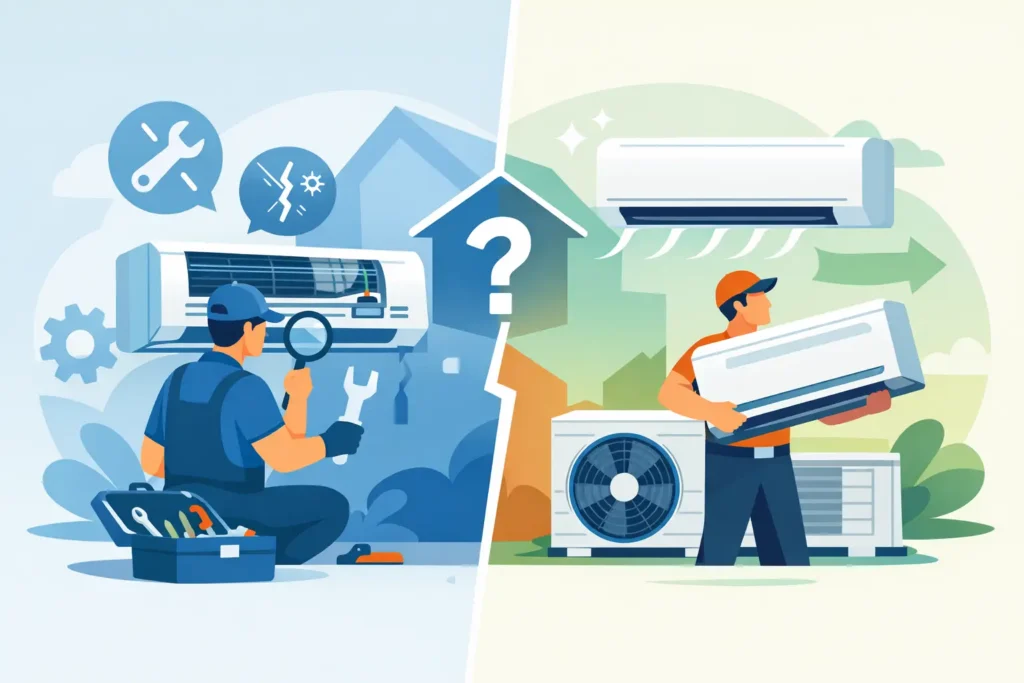
When your AC starts struggling in the middle of a Georgetown summer, the question gets real fast: should you repair or replace air conditioner equipment that is no longer keeping up? For most homeowners, the answer is not just about the unit itself. It is about comfort, budget, energy bills, and whether you can trust the system to make it through another Texas heat wave.
This decision is rarely as simple as “old means replace” or “broken means repair.” Some air conditioners have plenty of life left and need one solid fix. Others keep asking for money without giving you dependable cooling in return. The right choice depends on age, repair history, efficiency, and how your home actually feels day to day.
How to decide whether to repair or replace air conditioner equipment
A good starting point is the age of the system. Many central air conditioners last around 10 to 15 years, sometimes longer with regular maintenance. Once a unit gets into the later part of that range, repairs start to deserve more scrutiny. A newer system with a failed capacitor, contactor, or fan motor may be worth repairing. A 14-year-old unit with repeated refrigerant issues is a different story.
The type of problem matters just as much as age. Minor electrical repairs, thermostat issues, clogged drain lines, and some component replacements can often be handled without turning the repair into a major investment. But if the compressor is failing, the evaporator coil is leaking, or the system uses outdated refrigerant, replacement may make more financial sense.
You should also look at how often the unit has needed service. One repair every few years is normal. Several repairs in one or two cooling seasons usually means the system is wearing down as a whole. Even if each repair seems manageable on its own, the pattern tells you something important.
Signs repair is still the smart move
In many homes, repairing the AC is the right call. That is especially true when the unit is under 10 years old, has been maintained well, and has not had a string of major breakdowns. If the problem is isolated and the rest of the system is in good shape, a repair can restore performance without putting you into a larger project.
You may be a good candidate for repair if your air conditioner still cools evenly, your utility bills have stayed fairly stable, and the current issue is the first major problem you have had. In that case, fixing the problem can buy you several more seasons of reliable operation.
Repair also makes sense when the cost is reasonable compared to the value you are getting. Homeowners sometimes hear a repair estimate and immediately start thinking replacement, but a moderate repair on a system that still has years left can be the practical choice. What matters is not whether a repair costs money. Of course it does. What matters is whether that money extends the life of the equipment in a meaningful way.
When it is time to replace instead of repair
There comes a point when repair stops being economical. If your AC is near the end of its expected life and major parts are failing, replacement often saves money over time. It also reduces the stress of wondering when the next breakdown will happen.
Frequent service calls are one of the clearest warning signs. Another is rising energy use. If your system runs longer, struggles to reach the thermostat setting, or leaves rooms warm even when it is technically operating, the equipment may be losing efficiency. In Central Texas, that can show up quickly on your electric bill.
Older systems can also become harder and more expensive to fix because of parts availability or refrigerant issues. If your unit uses R-22 refrigerant, repairs involving refrigerant leaks can get expensive fast. At that point, putting more money into the old system may not be the best use of your budget.
Replacement can also improve day-to-day comfort. A new system is not just about avoiding repairs. It may cool more evenly, manage humidity better, run quieter, and keep temperatures more consistent across the house. For many homeowners, that quality-of-life improvement is part of the value.
The cost question: repair now or pay more later
Most homeowners want a clear number that settles the issue. Unfortunately, there is no one-size-fits-all price point that answers whether to repair or replace air conditioner equipment. Still, there are a few practical ways to think about it.
One common rule of thumb is to compare the repair cost with the age of the unit and the likelihood of future issues. A large repair on an aging system often leads to another large repair later. In that case, the first repair is not really solving the problem. It is delaying the replacement.
On the other hand, a repair that restores a newer unit to normal operation can be money well spent. It keeps your upfront cost lower and gives you time to plan for eventual replacement rather than rushing into it during a heat emergency.
Energy efficiency should be part of the math too. An older system may still run, but it can cost much more to operate than a newer high-efficiency unit. If your cooling bills have been creeping up and your AC runs constantly, replacement may help offset costs over the long run. That does not mean every older unit should be replaced immediately. It means operating cost deserves a place in the conversation.
Comfort problems that point toward replacement
Some systems technically work, but they no longer keep the home comfortable. That matters more than many homeowners realize. If certain rooms stay hot, airflow feels weak, or the system cycles on and off without fully cooling the house, there may be deeper issues than a simple repair can solve.
Sometimes the equipment is undersized or oversized for the home. Sometimes ductwork problems are involved. Sometimes the unit has simply lost too much capacity over time. A repair may restore one failed part, but it may not fix the bigger comfort issue.
If your AC has become noisy, struggles on very hot afternoons, or leaves the indoor air feeling sticky, it is worth looking beyond the immediate symptom. A reliable cooling system should do more than barely function. It should keep your home consistently comfortable without constant adjustment and concern.
Why local conditions matter in Central Texas
The repair-versus-replace decision is different in this part of Texas than it is in milder climates. Our AC systems work hard for a long stretch of the year. Long runtimes, high outdoor temperatures, and heavy summer demand put real wear on compressors, motors, and coils.
That means an older system in Georgetown, Round Rock, Hutto, Jarrell, or Leander may reach its practical limit sooner than a similar unit in a cooler region. It also means reliability matters more. If your air conditioner is already showing signs of decline in spring, waiting until peak summer to deal with it can leave you with fewer options and more urgency.
For homeowners here, planning ahead has real value. If your system is aging and showing multiple warning signs, replacing it before a total failure can be less stressful than making the same decision during a 100-degree week.
Getting an honest answer from an HVAC professional
The best service call is not the one that pushes you toward the most expensive option. It is the one that gives you a clear picture of your system’s condition, the immediate repair need, and what to expect over the next few years.
A trustworthy HVAC technician should be able to explain what failed, whether the repair addresses the full problem, and how the age and condition of the unit affect the recommendation. If replacement is suggested, you should understand why. If repair is still reasonable, you should hear that too.
That straightforward approach is what homeowners deserve. At Neal HVAC, that means looking at the whole system, not just the broken part, and helping local families make a decision that fits their home and budget.
If you are stuck between one more repair and a full replacement, the right next step is not guessing. It is getting clear information before the next hot day turns a warning sign into a breakdown.