Furnace Filter Replacement for Homeowners
A furnace can be working hard without making much noise, which is why a clogged filter is easy to overlook. But furnace filter replacement is one of the simplest ways to protect your comfort, support healthy airflow, and help your heating system run as it should. For homeowners in Georgetown and across Central Texas, it also matters during cooling season because most homes use the same air filter for both the furnace and air conditioner.
A clean filter does not solve every heating or cooling problem. It will not repair a failing blower motor, a worn-out thermostat, or an aging system. What it can do is remove a common source of restricted airflow before it leads to uneven temperatures, higher energy use, or unnecessary strain on your HVAC equipment.
Why furnace filter replacement matters
Your HVAC filter catches dust, pet hair, pollen, lint, and other particles before they enter the equipment. Over time, that material builds up across the filter surface. Air can still pass through, but the system has to work harder to move enough of it through your home.
Restricted airflow can show up in a few frustrating ways. Rooms may heat or cool unevenly. The system may run longer than usual. You may notice more dust around vents and furniture, or hear the blower working harder. In more serious cases, a severely dirty filter can contribute to overheating and a system shutdown.
Central Texas homes have their own challenges. Long cooling seasons, outdoor pollen, construction dust, pets, and frequent indoor-outdoor traffic can load a filter faster than many homeowners expect. Even if your furnace is not running much, your air conditioner may be using that same filter every day.
Replacing the filter on time is low-cost maintenance with a meaningful payoff. It helps preserve airflow, supports energy efficiency, and gives your heating and cooling system a better chance to deliver consistent comfort.
How often should you replace a furnace filter?
There is no single schedule that fits every home. Filter replacement depends on the filter type, how often the HVAC system runs, the number of people and pets in the home, and local air conditions.
For many households, checking the filter every month is a smart habit. A basic 1-inch filter often needs replacement every 30 to 90 days. Homes with multiple pets, allergy concerns, or heavy system use may need a fresh filter closer to every 30 days. A home with no pets and light seasonal use may be able to go longer, especially with a thicker filter designed for a longer service life.
Do not rely only on the calendar. Pull the filter out and look at it. If the surface is visibly gray, coated with debris, or difficult to see through, it is time for a replacement. If you cannot remember when it was last changed, replacing it is usually the safer call.
A simple reminder on your phone can prevent the task from slipping through the cracks. Many homeowners also keep a spare filter on hand so there is no delay when it is time to change one.
Choosing the right replacement filter
The correct filter is not always the most expensive one on the shelf. It needs to fit your system properly and provide the level of filtration your home needs without restricting airflow.
Start with the size printed on the existing filter
Look along the frame for dimensions such as 16 x 20 x 1 or 20 x 25 x 4. Use the size specified for your return grille or filter cabinet. A filter that is too small can allow unfiltered air to pass around it. One that is too large may bend, leave gaps, or simply not fit.
Keep in mind that the labeled size may be a nominal size rather than the filter’s exact measurements. If you are ordering filters or have trouble getting a snug fit, compare the actual dimensions printed on the frame.
Understand MERV ratings before choosing a higher number
MERV is a rating that indicates how effectively a filter captures particles. A higher rating generally captures smaller particles, but it can also make it harder for air to pass through the filter if the system is not designed for it.
For many residential systems, a MERV 8 to MERV 11 filter offers a practical balance between filtration and airflow. Homes with allergies or pets may benefit from a higher-quality filter, but the right choice depends on the equipment and the filter cabinet. Going straight to a very high MERV rating can create airflow problems in some systems.
If you are unsure what your furnace or air handler can accommodate, ask an HVAC professional during seasonal maintenance. The goal is cleaner indoor air and dependable system operation, not simply the highest number on the package.
Avoid the wrong filter type
Disposable pleated filters are common in residential homes and are usually easy to replace. Washable filters can be reused, but they must be completely clean and dry before going back into the system. Installing a damp washable filter can encourage mold growth and create other indoor air concerns.
Electrostatic and specialty filters can also be useful in the right application. Still, a good filter only helps when it fits correctly and is maintained on schedule.
How to replace a furnace filter correctly
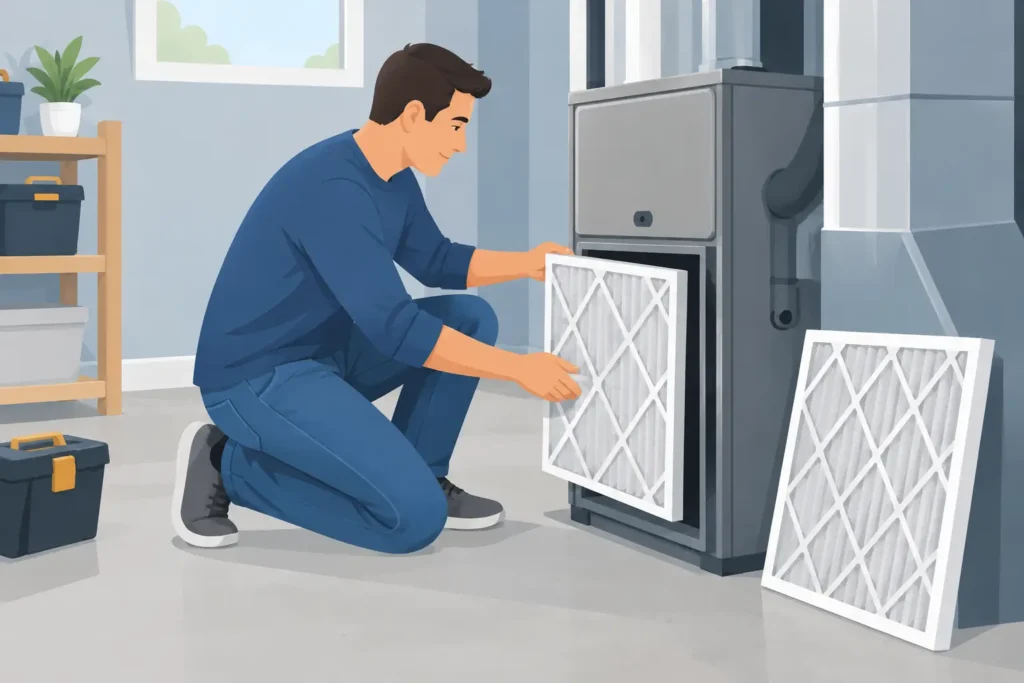
Furnace filter replacement is usually a quick job, but paying attention to the direction and fit matters. Start by turning off the HVAC system at the thermostat. This is not always required, but it prevents the system from pulling loose debris into the equipment while the filter is out.
Find the filter location. It may be behind a large return-air grille in a hallway, ceiling, or wall. In other homes, it is installed in a slot beside the furnace or air handler. Remove the old filter carefully so collected dust does not spill into the cabinet or living space.
Before sliding in the new filter, check the arrow on its frame. The arrow should point in the direction of airflow, toward the furnace or air handler. If the filter is located behind a return grille, airflow moves from the room through the grille and into the ductwork. If it is beside the unit, the arrow generally points toward the equipment.
Make sure the filter sits flat and secure with no open gaps around the edges. Then turn the system back on and listen for normal operation. Write the installation date on the frame or set a reminder for your next check.
Signs a dirty filter may be affecting your system
A dirty filter is not the only possible cause of HVAC trouble, but it is one of the first things worth checking. Replace the filter and monitor the system if you notice weak airflow from vents, rooms that are harder to heat or cool, more dust than usual, or longer run times.
Other warning signs call for professional attention. If your furnace repeatedly turns on and off, makes unusual noises, produces burning smells that do not quickly fade, or fails to keep your home comfortable after a clean filter is installed, the issue may be deeper than routine maintenance.
Do not keep resetting a furnace that shuts down repeatedly. Modern systems have safety controls for a reason. A trained technician can identify whether the problem involves airflow, ignition, electrical components, ductwork, or another part of the system.
Make filter changes part of year-round HVAC care
Your filter should be part of a larger home comfort routine. Keep return vents clear of furniture and rugs, make sure supply registers are open, and pay attention to changes in system performance. Regular professional maintenance adds another layer of protection by checking components that are not visible during a basic filter change.
For homeowners in Georgetown, Round Rock, Hutto, Jarrell, Leander, and nearby communities, Neal HVAC can help when a clean filter does not restore normal comfort. A dependable system starts with simple care, and a fresh filter is one small step that helps your home stay comfortable through every season.