Furnace Making Noise? What Your Home May Need
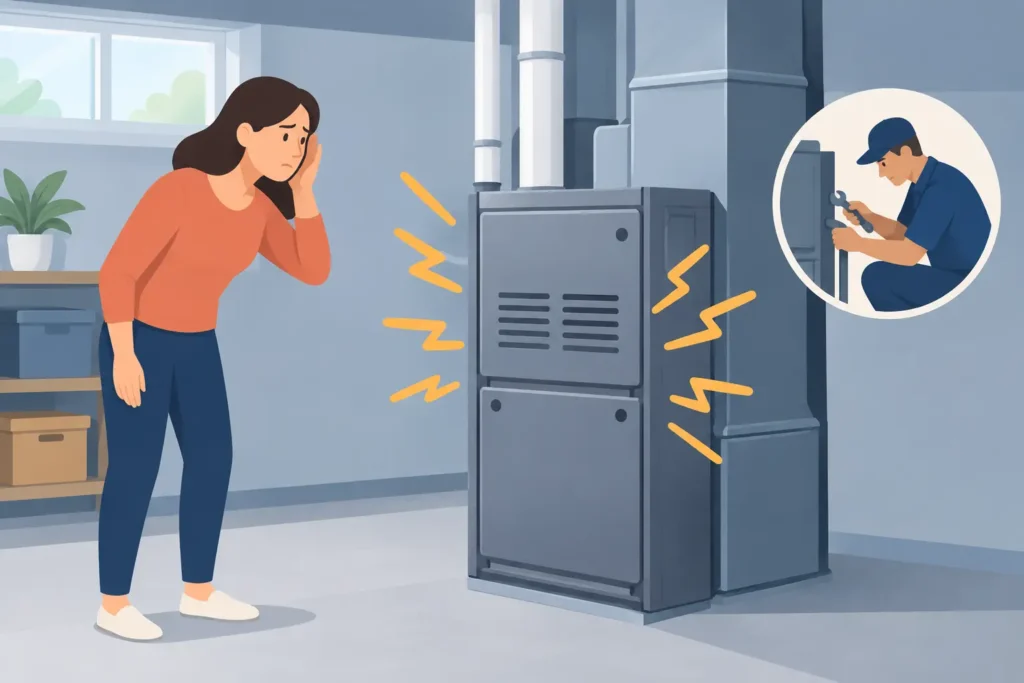
A furnace making noise can be easy to ignore at first, especially when it still keeps your Georgetown-area home warm. But unusual sounds often tell you something about the system before a small issue turns into a no-heat call. The key is noticing when the sound occurs, what it resembles, and whether it comes with other changes such as weak airflow, uneven heating, or a higher utility bill.
Some furnace noises are harmless. Metal parts expand and contract as temperatures change, and a brief soft ticking can be normal. Other sounds deserve prompt attention, particularly banging, screeching, repeated clicking, or anything paired with a burning smell or a carbon monoxide alarm. Knowing the difference helps you make a calm, safe decision for your household.
When a Furnace Making Noise Needs Immediate Attention
Turn the furnace off and arrange professional service right away if you smell natural gas, notice smoke, see soot around the unit, or hear a loud boom when the furnace starts. Leave the home and contact your gas utility or emergency services if you smell gas indoors. Do not try to locate or repair a suspected gas leak yourself.
A carbon monoxide alarm is another situation that should never wait. Get everyone outside, call emergency services or your gas utility from a safe location, and do not reenter until you have been told it is safe. Carbon monoxide has no color or odor, which is why working alarms are essential in homes with fuel-burning equipment.
Even without those warning signs, a noise that is suddenly much louder than usual deserves a service call. Your furnace does not need to stop working completely before it needs attention.
What Common Furnace Sounds Can Mean
Banging or booming at startup
A single loud bang when the burners ignite may point to delayed ignition. This can happen when burners are dirty or gas does not ignite as quickly as it should. The issue may seem minor because the furnace continues to run, but repeated delayed ignition puts unnecessary stress on the equipment and should be inspected.
Banging can also come from ductwork. Sheet metal ducts can flex as warm air moves through them, particularly in homes with restricted airflow or ducts that were not secured well. A technician can help determine whether the sound is coming from the furnace cabinet or the duct system, since the repair approach is different.
Squealing or high-pitched screeching
A sharp squeal often involves a moving part. Depending on your furnace type, the blower motor, bearings, belt, or inducer assembly may need adjustment, lubrication where applicable, or replacement. Continuing to run the system can lead to a larger failure if a motor is working harder than it should.
This is one of those sounds where timing matters. If you hear it only briefly at startup, write down when it happens and how long it lasts. If it continues through the heating cycle, turn the system off if the noise becomes severe and schedule service soon.
Rattling, vibrating, or buzzing
A light rattle may be as simple as a loose access panel, screw, or piece of ductwork. Before calling for service, you can safely check that the furnace door and filter compartment are fully closed. Do not remove panels, touch wiring, or reach into the unit while it has power.
Persistent rattling can also signal a loose blower component or a problem inside the cabinet. Buzzing may be related to an electrical component, such as a transformer or relay. Electrical noises are not a DIY repair. A trained HVAC technician can test the component and make sure the system is operating safely.
Clicking that repeats without heat
Most furnaces make a few normal clicks as they begin a heating cycle. Repeated clicking, especially when the furnace does not start, is different. It can indicate an ignition problem, a faulty control component, or a safety switch keeping the system from firing.
Check your thermostat setting first. Set it to Heat and raise the temperature several degrees above the current room temperature. If the filter is extremely dirty, replace it with the correct size and type. If the clicking continues or the furnace starts and stops repeatedly, it is time for professional diagnosis.
Whistling or rushing air
Airflow noises often come down to a clogged filter, closed supply vents, or an undersized return air path. Central Texas homes collect plenty of dust and pollen, and a filter that looks only slightly dirty can still restrict airflow enough to make the blower louder.
Replace a dirty filter and make sure supply and return vents are open and clear of furniture, rugs, and drapes. Avoid closing multiple vents to force heat into one room. That can create pressure problems and make your furnace work harder. If the whistling remains after basic airflow checks, the ductwork or blower settings may need attention.
What You Can Check Safely Before Calling
Homeowners can handle a few basic checks without taking risks. Start with the thermostat, the air filter, and the exterior condition of the furnace area. Make sure the thermostat has fresh batteries if it uses them, confirm the filter is installed in the correct direction, and remove stored items from around the furnace.
For high-efficiency furnaces, check that the outdoor intake and exhaust pipes are not blocked by leaves, nests, or debris. Do not insert anything into the pipes. A clear visual check is enough.
It also helps to notice the pattern. Does the noise begin only at startup? Does it happen when the blower turns on? Does it stop after a few minutes? A short phone recording, made from a safe distance, can help a technician identify the likely source faster. Do not delay service just because the sound disappears for a day or two. Intermittent problems often return when the system is under the most demand.
Why Furnace Maintenance Helps Prevent Noise Problems
Many furnace noises begin with ordinary wear, dust buildup, or airflow restrictions. Seasonal maintenance gives a technician the opportunity to inspect burners, electrical connections, safety controls, the blower assembly, and the venting system before heating season puts those parts under regular strain.
Maintenance cannot prevent every repair. Older equipment may eventually need a motor, igniter, or control part regardless of how carefully it has been maintained. Still, a clean filter, proper airflow, and regular inspection can reduce avoidable wear and help your system operate more quietly and efficiently.
For homeowners in Georgetown, Round Rock, Hutto, Jarrell, Leander, and nearby communities, Neal HVAC provides straightforward furnace service focused on finding the cause of the noise, explaining the repair clearly, and helping restore dependable comfort. If replacement makes more financial sense than a major repair, the decision should be based on the furnace’s age, condition, repair history, and efficiency, not pressure.
Do Not Wait for a Complete Breakdown
A noisy furnace is not always an emergency, but it is rarely a problem that improves on its own. Addressing a new sound early can protect your comfort, limit the chance of a mid-season breakdown, and give you more control over repair decisions. Keep your filter clean, pay attention to changes in operation, and trust your instincts when your heating system no longer sounds like itself.