Why Does Furnace Smell Dusty When You Turn It On?
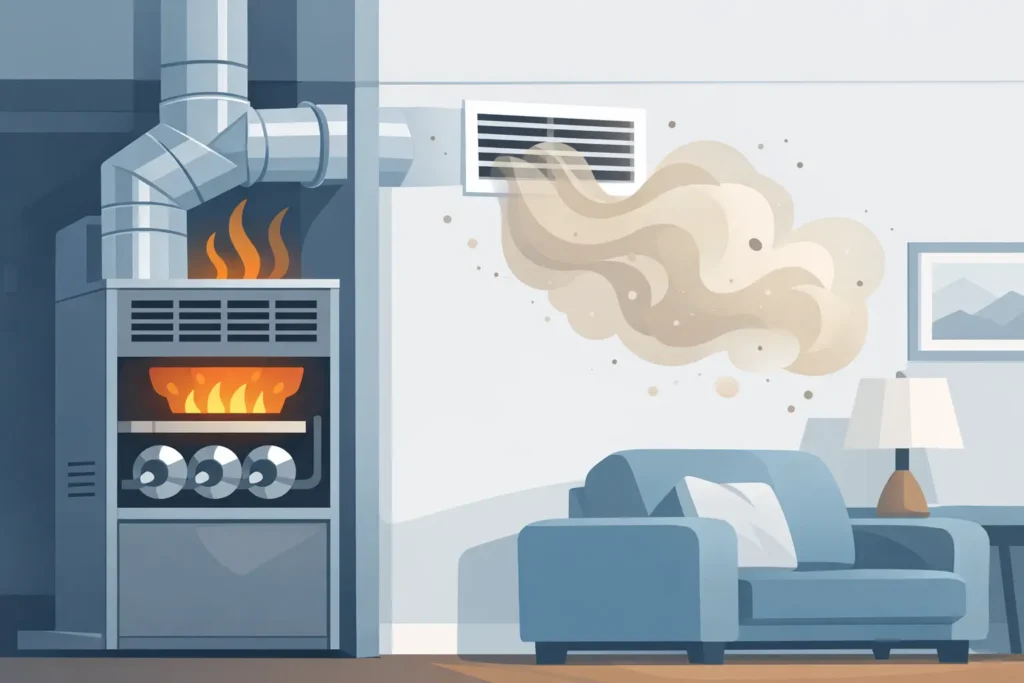
The first time you turn on the heat after a long Central Texas summer, a dusty smell can travel through the house quickly. If you are asking, “why does furnace smell dusty?” the most common answer is simple: dust has settled on parts of the heating system and is burning off as the furnace warms up.
A brief dusty odor is usually normal, especially when the heater has not run for months. But an odor that lingers, gets stronger, or smells like something other than dust deserves attention. Knowing the difference can help you protect your comfort, your equipment, and your home.
Why does furnace smell dusty at the start of heating season?
Your furnace and ductwork collect dust all year, even while the air conditioner is doing most of the work. Dust can gather on the heat exchanger, burners, blower components, vents, and the air filter. When heat begins moving through the system again, that buildup warms up and creates the familiar dry, dusty smell.
In many homes, the odor lasts from a few minutes to a few heating cycles. It should gradually fade as the system clears the light layer of dust. A little extra smell may occur if the home has been closed up for a while, if there is ongoing construction nearby, or if pets and daily household activity create more airborne dust.
The timing matters. If the smell appears only at the beginning of the season and disappears quickly, it is generally not a cause for alarm. If it returns every time the furnace runs or fills the home for hours, there may be more dust buildup than usual or a maintenance issue worth checking.
A dirty air filter can make the odor worse
The air filter is one of the first places to look. A clogged filter does not create every furnace odor, but it can restrict airflow and allow more dust to circulate through your system. It can also make your furnace work harder to deliver heat, which is not ideal for comfort or energy use.
Check the filter before the heating season and replace it if it is visibly dirty or has been in place longer than the manufacturer recommends. Many homes need a filter change every one to three months, though the right schedule depends on the filter type, pets, allergies, and how often the system runs.
A fresh filter is a practical first step, not a cure-all. If the dusty smell remains after changing it and running the furnace for a few cycles, a professional inspection can identify whether the issue is inside the equipment or connected to airflow through the home.
When a dusty furnace smell is not normal
A dusty odor should fade. Call for service if it does not, especially if you notice poor heating performance, unusual noises, repeated system cycling, or a rise in your utility costs. Persistent odors can point to a heavily soiled blower, dirty internal components, or other issues that are best handled by a trained HVAC technician.
Be especially cautious when the smell changes character. Homeowners sometimes describe all heating odors as “dusty,” but a burning electrical smell, a plastic odor, smoke, or a sulfur-like smell can signal a different problem.
Electrical or burning plastic odors
A sharp electrical smell or burning plastic odor may come from overheated wiring, a failing motor, or another electrical component. Turn the furnace off at the thermostat if it is safe to do so, and arrange service promptly. Do not keep running the system to see if the smell goes away.
Smoke or a strong burning smell
A strong burning smell, visible smoke, or signs of scorching require immediate action. Turn off the system, leave the area if smoke is present, and contact emergency services if there is any risk of fire. Once the home is safe, an HVAC professional can assess the equipment.
Musty odors
A musty smell is different from dust. It may be related to moisture, mold growth near the indoor unit, a dirty drain area on a combined heating and cooling system, or damp ductwork. Central Texas humidity can make moisture-related issues more noticeable, even after a long cooling season.
Rotten egg or sulfur odors
Natural gas is treated with an odorant that smells like rotten eggs or sulfur. If you smell gas, do not operate switches, light matches, or use anything that could create a spark. Leave the home, contact your gas utility or emergency services from a safe location, and then arrange for qualified HVAC service as needed.
What you can safely do before calling
For a mild dust smell at startup, begin with a few simple checks. Make sure the thermostat is set correctly, inspect and replace the air filter if needed, and confirm that supply vents and return grilles are not blocked by furniture, rugs, or storage.
Then let the furnace run for a short period while you pay attention to the odor. If it fades, the system is likely clearing ordinary seasonal dust. Open a window briefly if weather allows and you want to freshen the indoor air.
Do not remove furnace panels, clean burners, or attempt repairs inside the unit. Gas furnaces, electrical connections, and safety controls require the right tools and training. A quick do-it-yourself fix can create a larger repair or introduce a safety concern.
Preventing a dusty furnace smell next season
Annual heating maintenance is the most reliable way to reduce startup odors and catch small issues before they become inconvenient breakdowns. During a maintenance visit, a technician can inspect key safety controls, evaluate airflow, clean appropriate components, check the filter setup, and make sure the furnace is operating as it should.
Maintenance cannot guarantee that you will never notice a little dust on the first cold morning of the year. Homes naturally collect dust, and furnaces sit unused through much of the Texas summer. Still, a well-maintained system is less likely to circulate excessive debris or surprise you with an odor tied to a failing component.
Keeping up with filter changes also helps year-round. Your heating and cooling system shares airflow in most homes, so habits that support cleaner air during cooling season can benefit the furnace when temperatures drop.
When to schedule furnace service
Schedule an inspection if the dusty smell lasts more than a day or two of normal operation, becomes more intense, or appears alongside weak airflow, strange sounds, uneven temperatures, or frequent shutdowns. It is also wise to have an older furnace checked before relying on it through a cold snap.
For homeowners in Georgetown, Round Rock, Hutto, Jarrell, Leander, and nearby communities, Neal HVAC provides straightforward residential heating service focused on finding the cause and explaining the next step clearly. Whether the solution is a filter change, cleaning, repair, or routine maintenance, you should know what is happening with your system before work begins.
A furnace that smells lightly dusty for a few minutes may simply be waking up for the season. A furnace that continues to smell wrong is asking for attention. Trust your senses, change the filter when needed, and have a local professional take a look when the odor does not clear.